2 November 2026
Product of the Month: Amari Floodlight range by Aurora Lighting
 
11 November 2026
Energy, AI and smart buildings: register now for EMEX 2026
 
11 November 2026
Solar and batteries could cut electricity costs by 40%, data finds
 
11 November 2026
EIC confirmed as ECN Awards 2026 charity partner
 
11 November 2026
Acrospire to support Green Frog's European expansion
 

Latest News


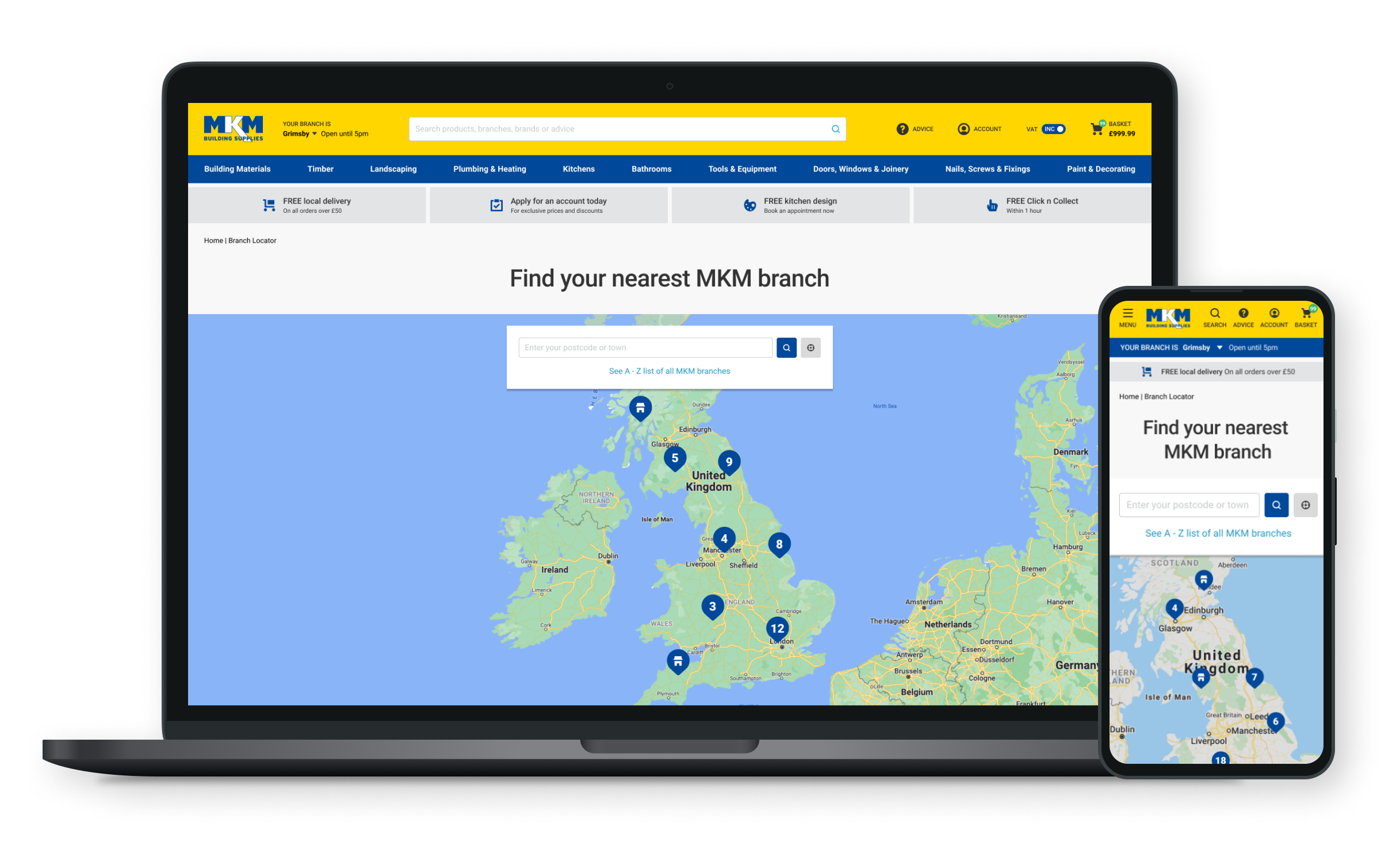
MKM launches new website
The site utilises world-first technology to offer an advanced user experience and personalised journey for MKM customers. With more products and information available than ever before, all at the click of a button, it means finding the right products or tools, whatever the project, is simpler and faster for customers. The site features an Intelligent, flexible product search function based on shoppers’ behaviour, hyper-personalisation that remembers users preferences and tailors the customer journey accordingly, and curated product collections and targeted suggestions. This, coupled with enhanced site speed, makes the site easy to use. Andy Pickup, Digital and Marketing Director at MKM, says: “As a business, we have developed an excellent reputation for providing outstanding service in branch. We wanted to replicate this online too, that’s why we’ve invested to improve our online presence and digital service offering. “With an end-to-end curated customer experience, our website sets the industry benchmark for how merchants should be interactive with customers online and we are delighted to launch this fantastic new service.” The website also features a new blog section, with handy hints and tips for completing projects, how-to guides, plus all the latest news from the branch network. The site is also packed full of advice and technical support, covering all the latest trends and equipment. Front and centre of the new site is easy access to the complete range of renewable and sustainable products and services offered by MKM, making it easier and quicker for customers to find supplies and information about greener solutions.

New research reveals the most economical vans for tradespeople
New research has revealed the Vauxhall Corsavan to be the most efficient van for tradespeople when it comes to fuel. The diesel model costs just £13,875 and will take you 847 miles on one tank. The van that covers the most miles on a full tank in the data is the Citroen Dispatch - reaching close to 968 miles. This is according to new research by Toolstation, after analysing the fuel efficiency of some of the most popular petrol and diesel vans on the market. Electric alternatives have also been analysed for their distance on one full charge, for those who are looking to drive green. The top five most fuel-efficient diesel vans Diesel vans are also far more common than petrol vans as they offer a much more fuel-efficient drive, essential for larger makes and models. Taking the top spot is the Vauxhall Corsavan, travelling as far as 847 miles on a full tank - that’s equivalent to driving from London to Manchester and back twice. The diesel model also boasts the cheapest cost to purchase from new at £13,875 - so it’s perfect for those on a budget. This van is on the smaller side, so while it’s a perfect run-around van, it may be less suitable for tradesmen carrying hefty cargo. A larger alternative is the Peugeot Partner which ranks second overall on the list. This van will cost £15,825 to purchase from new and £290 per year in road tax. The distance on a full tank for the Partner is also one of the longest, at 884 miles. In fact, the only van to beat this distance is the Citroen Dispatch (ranking third overall) which will return a total of 968 miles on a full tank. It does cost a little more, coming in at £20,495 from new, but thanks to its fuel efficiency, many may deem it worth the extra investment. The top five most fuel-efficient petrol vans Though petrol is cheaper than diesel at the pump, the distance on a full tank is lower across the board - meaning a petrol van will likely have you spending more on fuel overall. The Vauxhall Corsavan comes in as the most fuel-efficient van in the petrol ranking too. The van costs just £12,038 to purchase from new, and just £190 per year in road tax. At 52.3MPG, the petrol van will take you 517 miles on a full tank. The only downfall is the limited space in the back of the van, meaning that for some trades it might not be suitable - particularly if a lot of tools are needed for the job. The Citroen Berlingo ranks fifth overall in the list, but will take you the furthest of all petrol vans at 574 miles per full tank. The model misses out on a higher ranking due to a greater cost to purchase and tax per year - but with its large fuel capacity and distance on a full tank, it could be worth the investment. The top five most economical electric vans Electric vans are continuing to grow in popularity, but they do come with a higher price tag. While some are on the more affordable side at £27,855 (Fiat E-Doblo), some are priced as high as £70,665 (Mercedes-Benz EQV). You will save money by not having to pay road tax each year - an average saving of £300 per year on road tax alone - but it’s still a more costly option up-front than petrol and diesel alternatives. The Fiat E-Doblo takes the top spot as the most economical electric van thanks to its more affordable cost of £27,855. The model also boasts a large battery capacity and will reach 173 miles on one charge (the fifth furthest distance). The vehicle you’ll have to charge the least is the Renault Zoe Van, which will take you 245 miles per charge - that’s 112 miles over the average. The average distance on one charge for electric vehicles is 133 miles - comfortably taking you from London to Nottingham, but not quite all the way to Manchester or Liverpool. This makes electric vans perfect for tradespeople who stay close to base, but not so much for those who cover longer journeys.

Wrexham Mineral Cables shortlisted for sustainability-focused awards
Wrexham Mineral Cables (WMC) has been shortlisted for three sustainability-focused industry awards. The company was shortlisted for the Made in Wales Awards, organised by Insider Media (Sustainable/Ethical Manufacturer of the Year), and the upcoming Make UK Manufacturing Awards for the Wales region (Energy and Sustainability category) and two awards at the Materials Recycling World (MRW) National Recycling Awards (Circular Economy Initiative - Business Model and Recycling Excellence). With increasing demand across the construction sector for products to be more sustainable and to have reduced, or be completely free of, plastic components, WMC believes specifiers and building designers can have the best of both worlds when it comes to building safety - the principal purpose of its products - and environmental credentials. WMC has set out to create as little waste as possible during the production and installation of its Mineral Insulated Copper Cables (MICC), focusing on three key principles: designing away waste, reducing maintenance costs and returning materials into the cycle. MICC Cable combines a total of just two elements - copper and Magnesium Oxide (MgO). Copper is an almost 100% recyclable material and can be used over and over again, whilst MgO is a natural element of massive abundance. The use of pure raw materials makes its cables suitable for most environments as it will not deteriorate and is a non-aging product; an initiative which has the circular economy at its core. This also reduces onward maintenance and replacements to practically zero. WMC is hoping to remove the usual performance enhancers such as plastics and halogens. Most polymeric/PVC ‘fire-resistant’ cables can contain around 270g of plastic per 1m length, which works out to around 54 plastic bags. To compare, WMC use equivalent to zero plastic bags with its MICC cable. Steve Williams, Commercial Manager at Wrexham Mineral Cables comments: “As a responsible manufacturer, we understand the role we can play in reducing the impact that our products have on the world around us. Over the last 30 years the company has worked hard to ensure our products are not only best in class but respond to growing demand for sustainable building products. To be recognised for the work we have done, and will continue to do so, demonstrates our commitment as an ethical manufacturer.”

Global Recycling Day: expert advice for dealing with each type of trade waste
To mark Recycling Week 2022 (17-23 October), experts have shared their top bits of advice for tradespeople on how to dispose of each type of waste. Research by IronmongeryDirect found that more than four in five (83%) UK tradespeople aren’t sure exactly which materials can and can’t be recycled, and almost nine in 10 (87%) aren’t confident about waste management regulations. With this in mind, IronmongeryDirect partnered with William Hobbs, sustainability and recycling expert at MyJobQuote, and Pauline Marchant, Customer Service Administrator at iWaste, to provide expert advice on what to do with each type of work waste and the rules that you need to follow. Which materials can and can’t be recycled? Recyclable Non-recyclable Cardboard Plastic bags Plasterboard Polystyrene bubble wrap Cables/WEEE waste Oils Monitors Ceramics Paper Ovenware Scrap metal Lightbulbs Garden waste   Tyres   Glass bottles and jars (green, clear, brown)     Pauline explains further: Cardboard - as heavy-duty paper, it can be easily recycled due to its fibres being previously processed from trees. Plasterboard - it is possible to recover the gypsum from the plasterboard and recycle the component parts back into raw materials to help produce new plasterboard. Cables/WEEE waste - these can be separated into components and the raw materials reused. Monitors - the components can be removed and sent to a specialist glass processor. The glass and other elements can be separated and reused. Paper - paper will be separated into different types and grades, before being washed to remove the ink and glue, and then be made into new products. Scrap metal - it can be smelted down and reused. Tyres - they can either be turned into tyre-derived fuel or fed into a shredder and be reused as rubber. What should I do with each type of waste material? William explains: 1) Hazardous waste It has been illegal to mix hazardous and non-hazardous waste during the disposal process since 2004. Once the hazardous waste has been identified, it must be kept separate from non-hazardous waste. To dispose of hazardous materials, you should use authorised businesses and complete and keep all necessary paperwork. Examples of hazardous waste include oils and filters, fluorescent lightbulbs and tubes, oily rags, lithium batteries and paints. 2) Landfill waste Inert and food waste are both included in landfill waste. Landfill waste can result from both domestic and commercial activity. To stop waste from being disposed of in a landfill, you should take steps to recover or reuse it. Any waste that cannot be disposed of in another way can be processed at a landfill. 3) Scrap waste Scrap can refer to various wastes, including metal and other by-products of the manufacturing process. Scrap metal should be classified as magnetic or non-magnetic. If applicable, separate it into hazardous and non-hazardous waste. A permit may also be required. 4) Bulky waste Bulky waste includes oversized items such as mattresses and furniture, refrigerators, and other white goods. Large objects are disposed of separately from regular commercial waste, as they are difficult to lift. Bulky items are typically discarded as needed. When you need to dispose of an item, decide with your waste management company or local council for a unique collection. 5) Other trade waste Most construction or renovation waste, such as plaster, rubble, and tiles, is classed as builders' waste. Because builders' waste encompasses a wide range of materials, it is governed by a variety of waste codes, identifying which are hazardous and non-hazardous. Which waste rules and regulations do I need to be aware of? Waste carrier license William states: “Anyone who collects waste from a client's location must have an Environment Agency waste carrier licence. It is illegal to remove waste for customers without a licence, and fines of up to £5,000 are levied. “Lower tier and upper tier waste carrier licences are available. If you are only removing your waste and not construction or demolition waste, you should register as a lower tier carrier. Upper tier is the most common and is used by anyone who removes other people's waste, including construction and demolition waste. “Soil, concrete, bricks, glass, wood, plasterboard, asbestos, metal, and plastics are standard construction and demolition waste components. Plumbers removing an old boiler and kitchen installers removing an old kitchen, for example, both require an upper tier licence.” Waste disposal registration Pauline says: “You should always ensure your waste disposal company is registered with the environment agency, has the correct insurances, provides you with waste transfer notes/duty of care note, can provide evidence of correct disposal and has separate arrangements for hazardous waste.”

FireAngel collaborates with Women in Fire Safety Awards
FireAngel has collaborated with the Women in Fire Safety Awards to honour the achievements and contributions of all women within the fire safety community whilst championing for a more progressive industry. This years’ event will be held on 10 November at the Tower Hotel in London. To further support the outstanding individuals within the industry, FireAngel has sponsored this year’s ‘Inspirational Award’, which will be presented to one of the finalists at the awards evening. Finalists were announced earlier this year after being nominated for their outstanding contribution to the fire safety industry. Striving to address the historical gender imbalance throughout the sector, the Women in Fire Safety Awards are being hosted for the second consecutive year to recognise the different roles and disciplines that all contribute towards the fire safety community, whilst promoting the women who improve fire safety standards. Speaking of the partnership, Elizabeth Mitchel, National Key Account Manager for FireAngel, says: “At FireAngel, we’re passionate about supporting progression and positive change in our industry. We respect and admire the hard work, determination, and pure passion from the amazing women within our sector, and we are proud to support and be partnering with Women in Fire Safety for this year’s awards. “FireAngel has always promoted diversity, equality and opportunities for all in our business regardless of gender, and we look forward to a fantastic partnership with Women in Fire Safety as we work together to achieve this.” Chloe Vickery, Co-Founder of the Women in Fire Safety Awards, says: “Throughout our journey, we hope to encourage the next generation to see fire safety as an astounding career opportunity by highlighting how varied, inclusive, diverse and rewarding the industry is as a collective. “We are looking forward to announcing our winners on 10 November and thank FireAngel for their support.”

JTL hosts apprenticeship academy opening ceremony with Enerveo
JTL has officially opened its first ever apprenticeship academy with Enerveo, following its opening ceremony at JTL’s Birmingham training centre on 11 October. The ceremony, which took place in Aston, celebrated the 19 JTL learners who recently completed six-week traineeships with Enerveo, and will now go on to undertake their apprenticeships at the multi-disciplinary contracting business. The traineeships featured sector-specific training alongside the development of each learner’s English, maths and digital skills. Those learners will now further hone those skills with an apprenticeship at Enerveo that will see them conduct work in areas such as electrical, high voltage, test and inspection services, EV charging, mechanical and street lighting. During the event, the new apprentices were each ceremonially presented with academy sweatshirts, as well as complimentary starter toolkits supplied by Edmundson Electrical and UK Plumbing Supplies. A free starter toolkit is part of the entry support given to each JTL apprentice, which also includes the appointment of a dedicated training officer and free online support packages. Judi Wheeler, National Delivery Director at JTL, says: “The event was a fantastic way to officially mark our new partnership with our trusted colleagues at Enerveo, as well as a great opportunity to celebrate our new apprentices’ success in their traineeships.” Carolyn Reed, Human Resources Director at Enerveo, comments: “Thanks to JTL, we’ve already had the chance to get to know these new apprentices as trainees, and with the continued support JTL provides them, we’re now ready to welcome them as a part of our workforce. This next step gives them the chance to fully explore different areas of our business as they gain valuable experience on-site.”

Schneider Electric’s EcoStruxure Transformer Expert with IoT sensors
Schneider Electric is offering a new solution that extends a transformer’s lifetime. By incorporating digital transformation through the implementation of IoT sensors and expert analysis, Schneider Electric can now monitor transformer insulation health. The EcoStruxture Transformer Expert, designed for affordable and accurate transformer monitoring, has the ability to offer automated insights that identify assets of concern and recommend action. Periodic oil sample data is collected using new sensors, which allow data analysis and correlation with insights to predict irreversible patterns. Potential risks can thus be assessed, and data-driven life extension, risk reduction, and maintenance programmes can be developed. The most common cause of failure for transformers is insulation failure; it deteriorates due to partial discharge, water content in oil and paper, and temperature. The EcoStruxure Transformer Expert difference EcoStruxture Transformer Expert (ETE) allows users to assess, track and forecast 'insulation state' and 'life left' through automated online analysis. The solution offers a fleet-wide dashboard and configurable alerts. By using low-cost and multi-sensor probes and automated algorithms and alerts, this solution can provide an accurate state assessment through modelling and prediction. The optimisation of transformation life The ETE platform uses an innovative sensor to monitor key parameters in order to optimise transformer life. These include: Engineering data: this is inclusive of temperature, water activity, PD and vibration, as well as fleet-wide and individual trends to aid in forecasting. Operating state: this focuses on measuring temperature and water activity. This also involves a breakdown voltage of oil, and offers sage limits and trend alerts. Insulation ageing: the new system can calculate effective age, ageing rate and life left to prevent risk and offer maintenance strategies. Maintenance management: this includes features such as identifying leaks, incorporating cooling optimisation and dry-out impacts/modelling to aid with decision making. Asset management: In addition to measuring maintenance issues, the solution implements fleet-wide replacement ranking and a scenario analysis, which forecasts the impact of load changes on temperature and 'life left'. The science behind the EcoStruxure Transformer Expert In three simple steps the sensor is ready to start monitoring the transformer using built-in mobile communications - meaning no network configuration. This data is then analysed and insights are provided, enabling the prediction of irreversible tendencies. Ultimately, extending the life of your transformer. “Automated data collection, analysis and recommendations are essential components to optimising the life of your transformer”, says Lee Slaymaker, Power Services Commercial Lead at Schneider Electric. “The three main root causes of insulation decay can quickly and easily be monitored, with no special training required, allowing you to make an informed decision that will avoid irreversible trends”.

Scolmore is awash with industry awards!
Scolmore has announced that it has picked up three prestigious Supplier of the Year awards from some of the industry’s leading buying groups. The company received the first Supplier of the Year Award at the IBA Buying Group’s trade show and gala dinner held on 22 September. This was followed by the highest recognition from AWEBB, which saw Scolmore win the Supplier of the Year award for the second year running. The hattrick of awards was completed with the top accolade from the AIEW buying group, awarded at its annual trade event held on 1 October. In each case, the awards were voted for by buying group members and designed to recognise excellence in customer service, taking into account a range of measures including price competitiveness, field sales support, stock availability and product quality. Kevin Beech, Group Sales Director, Scolmore Group, was in receipt of the various awards on behalf of the company and comments: “We are delighted to have received these awards and would like to thank all the members from across the three buying groups for their votes and continued support. We believe these awards recognise the all-round package of products, service, and support that we provide to the buying groups membership which is at the heart of our business success. It is an extremely competitive market, and we understand the importance of working closely with our customers to fully understand their needs and provide the levels of support and service that helps them to maintain and grow successful, profitable businesses.”

EVs can be half as expensive to run than petrol or diesel vehicles
New AutoMotive has launched a fuel cost tracker to measure car running costs - and shows home-charged electric cars can be more than half as expensive as petrol and diesel. The online tool converts the latest available energy prices into a cost-per-mile figure and compares the difference in running costs between fuel types in an interactive chart. Energy price rises have made it harder to monitor changes to the relative running cost of petrol, diesel and electric cars - but the tracker solves this problem. It shows that electric cars are now more than half as cheap (just over 56%) to run than a petrol or diesel vehicle when charged at home on a dedicated EV energy tariff. They are nearly a quarter cheaper (24%) for those who charge at home on a standard energy tariff. Electric car running cost savings compared to diesel and petrol cars have led to their swift adoption in the UK and remain a strong selling point. Opec’s recent decision to cut oil production is likely to make them even more competitive. The tracker updates weekly as the relevant energy prices shift and is available on the New AutoMotive website. Ben Nelmes, CEO of New AutoMotive, says: “One of the key benefits of switching to an electric car is that they are much cheaper to run than petrol or diesel vehicles. At a time of fluctuating energy prices, many have wondered whether EVs are still cheaper to run, and we’ve seen myths around the costs of running EVs putting people off making the switch. “Our new Fuel-Cost Tracker tool will bring clarity for motorists, analysts, and policy makers by providing an authoritative and up-to-date way to monitor how running costs are changing over time. A key finding of our analysis is that the government’s new energy price cap means that EVs are still cheaper to run than the polluting alternative of diesel or petrol cars. “Our Fuel-Cost Tracker shows that for the majority of motorists who charge at home, EVs are just over 56% cheaper to run than a fossil fuelled car when charged on an EV energy tariff, and around 24% cheaper when charged on a standard variable tariff. That’s great news for anyone thinking of making the switch to an electric car. “Electric cars are likely to become even cheaper to run than petrol or diesel cars in the imminent future, as OPEC’s recent decision to impose the largest cuts to oil production since the beginning of the COVID-19 pandemic means fuel prices will continue to rise. Fluctuating energy prices and the cost-of-living crisis means that the savings EVs offer have never been more important for British motorists.”

Value to help trade remain competitive
Screwfix has launched its Unbeatable Value commitment to help tradespeople remain competitive and meet the needs of their customers. At a time when value is key for both the trades and consumers, Screwfix has made the commitment to offer Unbeatable Value through a combination of price cuts, price locks, low prices on pro products, and bulk-save offers. The new campaign runs across many ranges including 1,000 prices cuts and more than 8,000 bulk-save options. In addition, Screwfix is locking hundreds of prices on essentials until the end of the year, providing the certainty tradespeople need for quoting on jobs. Customers can rely on the great value and high quality of a wide range of must-have products, including DeWalt Safety Boots, which have remained at the same low price for six years - locked until at least at the end of 2022 - and the Makita 18V Brushless Cordless Combi Drill, at a breakthrough price to get the job done affordably and right first time. What’s more, with energy prices being crucial, Screwfix has exclusively secured the Tado Smart Thermostat Starter Kit for under £100, allowing customers to save up to 28% on their energy bills. Jack Wallace, Marketing Director at Screwfix, comments: “We know tradespeople are seeking great value to ensure they can be as competitive as possible when quoting for work. That’s why we’ve launched Unbeatable Value. “We’re committed to ensuring we deliver Unbeatable Value day in, day out so tradespeople can get what they need, when they need it, to get their jobs done quickly, affordably, and right first time.” Unbeatable Value is also supported by Screwfix’s convenient services including click and collect in as little as one minute, next-day delivery every day, and Screwfix Sprint, which allows delivery to site or home in under one hour via the Screwfix app. Tradespeople can access the Unbeatable Value products offered by Screwfix through the app, online, via the 24/7 contact centre, or by visiting one of its stores.