2 November 2026
Product of the Month: Amari Floodlight range by Aurora Lighting
 
11 November 2026
Energy, AI and smart buildings: register now for EMEX 2026
 
11 November 2026
Solar and batteries could cut electricity costs by 40%, data finds
 
11 November 2026
EIC confirmed as ECN Awards 2026 charity partner
 
11 November 2026
Acrospire to support Green Frog's European expansion
 

Latest News


JTL launches new campaign for school-leavers
JTL is reminding school-leavers of the many benefits of taking on an apprenticeship with its new campaign, A Trade is Always with You. The campaign reminds students that are due to receive their A Levels and GCSE exams results that there is an alternative option to continuing the traditional route of academia, with an apprenticeship taking them into a trade that can provide them with a career for life. Allowing learners the chance to combine practical training with studying, apprentices can earn a wage whilst they learn. With apprenticeships taking four years to complete, learners can then expect to earn on average around £32k per year once qualified as either an electrician or a plumbing and heating engineer. Learners who opt to train with JTL can be matched with an employer if they do not already have one in place when they apply. They will also be assigned a training officer and an apprentice support officer to support them throughout their apprenticeship journey. In addition, they will receive a complimentary starter toolkit and free study books, as well as access to JTL’s online Power Up short-course resources and Tune Up short films. Liam Sammon, Director of Learning and Innovation at JTL comments: “August is an important month in the educational calendar, with many school and college leavers questioning which next step is the right one for them. Our new campaign highlights the benefits of an apprenticeship and encourages those looking at their options to seriously consider a career in the trades. The idea that you can earn whilst learning and avoid the significant debt of university is an extremely attractive prospect. “During the four years of an apprenticeship, learners will be equipped with the technical and work skills that not only allow them to thrive and progress within their career in the construction industry, but in the day-to-day projects they take on.” www.jtltraining.com

Lighthouse Construction Industry Charity report shows increase in charitable giving
The Lighthouse Construction Industry Charity has published its 2021 impact report, detailing who it has helped and how it supports the construction community. The report highlights a 95% increase in charitable giving to £2,511,214 and an increase of 23% in the number of the construction workforce seeking support. The charity also increased its contribution to social value from £7.42 to £7.82 for every £1 of charitable spend. 2021 continued to be a tough year for many in the industry, starting with another partial lockdown and soaring material costs, so it was of little surprise to see that the numbers of people needing support increased significantly, with 47% of calls for immediate financial support. 1787 cases needed intensive caseworker intervention, an increase of 10% on the previous year. The caseworkers holistically review all complex cases and use their expertise to pull together multiple support providers to ensure the best and most sustainable support for the beneficiary. This service often includes immediate financial assistance to meet the costs of daily living, including energy bills, rent arrears and ensuring food was on the table for families - as well as access to telephone counselling to support mental wellbeing. During 2021 the caseworkers leveraged a staggering £1.43 million from third parties. This support included accessing benefit entitlements, supplying white goods and acquiring match funding to pay for home adaptations for those incapacitated by injury or illness. 31% of workers contacting the helpline mentioned a mental health problem and in a year that saw many people struggling to reach support services via their doctor, the charity was able to provide fast access to professional telephone counselling. 233 people were referred for further specialist support to help with a variety of emotional wellbeing issues including bereavement, relationship counselling, anger management and physical abuse. Bill Hill, CEO of the Lighthouse Construction Industry Charity says, “Our figures show that over 90% of our calls for help come from the trades and the ‘boots on the ground’ workforce. We are pleased to see that they are reaching out for support, but it also means that we have to work even harder to ensure that we are getting our proactive support to them at an early stage so that problems do not escalate out of control. We’re already addressing this with our ‘Help Inside the Hard Hat On Site’ campaign and our team is visiting sites and builders’ merchants across the country to ensure that we get the message in at grass roots level. Our ‘On Site’ team all work in the trades, are mental health first aiders and have lived experiences that they are able to share in a relaxed and informal way. The feedback from these tours has been tremendously positive and we know first-hand that we have helped save the lives of some of those we have met on site.” Sarah Bolton, Director of Charitable Services says, “In an industry where two construction workers are taking their own life every day, it is vital that the hard-to-reach groups know about the support we can give them. We are working tirelessly to ensure that we maximise the access points to our charitable services and increase our partnerships with other providers to give our workforce the specialist support they need. Our ultimate aim is to fulfil our mission of ensuring that no construction worker or their family feels alone in a crisis.”

BGEN appoints Envirovue as part of net zero goals
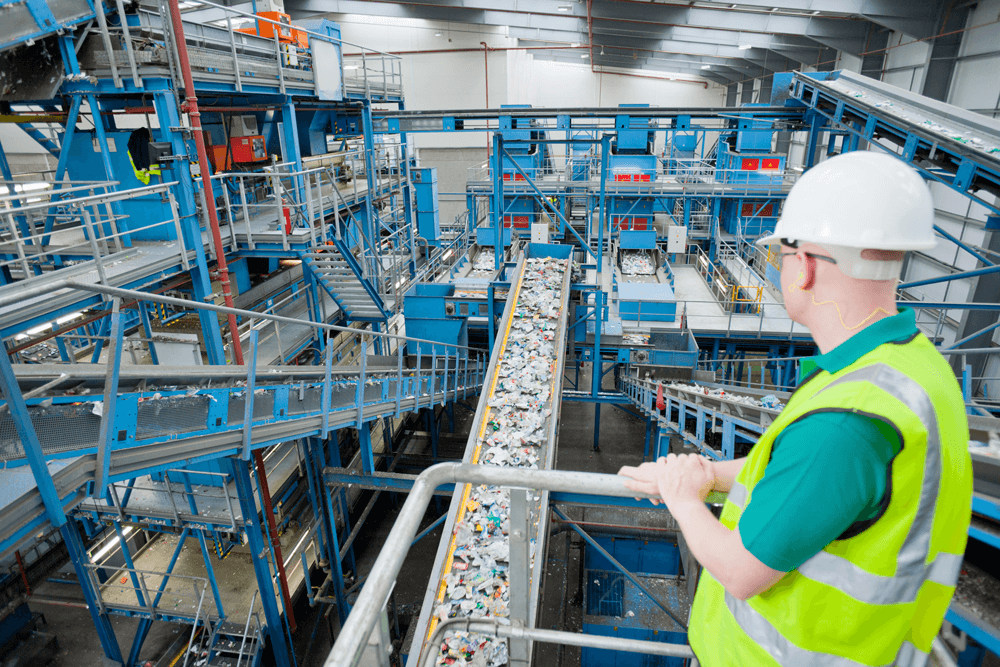
BGEN has partnered with sustainable waste management expert, Envirovue, to help hit its net zero plans by reducing waste outputs across the organisation. BGEN works internationally with businesses such as ExxonMobil and EDF. As well as focusing on the reduction of single-use waste and increasing recycling levels across its site, the organisation has committed to being net zero by 2035. The scope of work includes BGEN transitioning all of its waste streams, including site waste plastics, packaging, WEEE and hazardous waste from office and factory locations across the business to Envirovue in order to increase recycling levels. BGEN appointed Envirovue as the organisation was able to offer the end-to-end solutions to help meet its waste-based sustainability goals. In addition to combing waste management models with circular economy principals to ultimately reduce waste and lower BGEN’s carbon footprint, Envirovue will be off-setting residual emission through innovative ‘gold standard’ partnership programmes in Africa. An example of one of these projects is providing more efficient cookstoves for coffee farmers in Ethiopia, which reduces the use of wood and CO2 emissions by 40%. The scheme also decreases deforestation, improves biodiversity and prevents the inhalation of harmful smoke. Daniel Redfern, Director at Envirovue says: “Supporting businesses to play their part in reducing carbon emissions and improving their sustainability initiatives is key to what we do, so we are thrilled to be working with BGEN to manage its waste streams in the most environmentally friendly way possible. We’ve already implemented some quick changes that can minimise waste, and we are looking forward to seeing how our work will support the organisation and its clients in the long term”. “As a business we are committed to reducing our carbon footprint as soon as possible, with the £500,000 investment to transform our headquarters into a net zero building a good example of this” says Oliver Groarke, Head of Sustainability at BGEN. “We’ve partnered with Envirovue to help transform how our waste is managed and processed. Its offsetting programme in Africa was of particular interest given our own operation and sustainability objectives in Nigeria.”

Now’s the time to recession-proof your business, says Fergus
High inflation, low growth and spiralling energy costs - we are facing a cost-of-living-crisis like never before and the Bank of England has now stated that the UK will slip into recession later this year and not recover until 2024. But despite the bleak forecast, it doesn’t have to spell disaster for your firm. Dan Pollard, Founder of Fergus, is offering some top tips for tradespeople to recession-proof their business’ by checking cash flow, quick invoicing, strong leadership and great customer service - all of which will result in confidence in your team, healthy finances and more business. Dan says, “A realistic cash flow forecast is your first step. It is essential to know your monthly revenue and fixed commitments so that you can always pay all of your overheads. “If you’re not sure you will make enough, you can ask ‘what needs to change?’. Take a look at your debtors. Set up payment plans to retrieve any owed money. Don’t give credit, always take deposits, and invoice every day. If you invoice in 24 hours, a customer is more likely to pay in 24 hours.” Other areas that Dan suggests concentrating on include using delivery services, ordering only what you need, reducing non-productive time away from site, boosting chargeable hours and getting everyone on board with working remotely. “Remote ‘stand ups’ - brief meetings where the team remains on-site but catches up via video call - can do wonders for business,” says Dan. “They allow you to check in with your team to find out how the jobs are going and what everyone needs in order to finish on time, meaning that you can remind everyone to keep up with paperwork. By doing this remotely a few times a week and keeping it brief, everyone can stay on-site to maximise working hours but remain connected and offer a great customer service.” With the downturn in the market and spiralling costs, Fergus can help you stay ahead of the game. It allows you to create quotes on the spot, send out invoices or chase late payments with automated SMS messaging. The cost and purchase of all materials can be logged, and by uploading price books, material costs will appear in quotes automatically and can be adjusted by creating tiered mark-ups for different clients or job types. Staying on top of admin doesn’t just mean keeping your business in excellent shape; it means ensuring jobs finish on time and on budget so you can offer a great customer service that sets your business ahead of the rest.

Gibbons launches Plug&Drive to offer cost-effective vehicle charge points
In response to the increase in demand for electric vehicle (EV) charging points from businesses, organisations, and homeowners, Gibbons Engineering Group has launched Plug&Drive. This new division aims to expand the EV charger network across East Anglia, the South East, and London - making it easy and efficient to purchase, install, and manage EV chargers. Plug&Drive has partnered with ABB to sell and install its top-of-the-range Terra AC Wallbox electric vehicle chargers; however, it has also recently launched the first in its own range of charge points. Compatible with all electric vehicles and plug-in hybrid electric (PHEV) models, the Plug&Drive 7.4kW EV charge point is a cost-effective, easy to use, and simple to set up charge point that provides customers with everything they need to charge their EVs at home or at work. It comes with three RFID (Radio Frequency Identity Cards) cards, perfect for guests or for use without the app, and when using public charging stations. Matthew Gibbons, Director, Plug&Drive comments: “Electric vehicles have seen a real boom in popularity in recent years with the latest developments in technology making them easily accessible to a wider eco-conscious market. With the manufacturing of petrol and diesel cars being phased out in the UK by 2030, the world of electric vehicles is set to expand rapidly. “Plug&Drive was born out of a desire to support the switch to EVs, helping those who might just need one charge point to those who require multiple chargers across multiple sites to meet environmental objectives and employee demand.” OZEV grants Plug&Drive is an Office for Zero Emission Vehicles (OZEV) grant-approved installer, meaning that business owners can claim a government grant worth £350 per socket. Plug&Drive is able to apply for the grant on behalf of its business customers to reduce their administrative burdens. Management of EV charge points Plug&Drive has partnered with Fuuse to simplify payment processes for EV drivers, as well as create a user-friendly system so that businesses can track and manage the use of their EV chargers. The platform aggregates all brands of EV chargers, so businesses can see information in one interface rather than needing to log into multiple brands’ management systems. Plug&Drive will offer training and maintenance of the management system and charge points as well as providing advice about maximising performance. Matthew continues: “We know that some users are hesitant to switch to EVs because of concerns about cost but our range of electric vehicle charge points have smart charging technology, which means they can be confident in the fact that the charge points make the most of lower tariffs and utilise a greater amount of green energy. “Offering electric vehicle charging is not only a massive perk for employees but it also demonstrates a business’s commitment to making positive changes for the future of our planet. We want to help as many organisations and individuals as possible make this important switch.”

New HMI covers provide screen protection in harsh environments
Stahlin Enclosures has introduced Stahlin SolarShield HMI covers, providing the ultimate HMI screen protection in the harshest of environments. The new Stahlin SolarShield HMI covers offer the most innovative, durable, non-metallic HMI covers for use with all enclosure material types. They are ideal for protecting HMI screens from UV and harsh environmental conditions and are the industry’s only non-metallic HMI covers with side shields. Stahlin SolarShield HMI covers are ideal for demanding applications in non-hazardous industrial and commercial markets including industries such as oil and gas, equipment manufacturing, industrial machines, water/wastewater, marine, and food and beverages. Extremely tough and durable, Stahlin SolarShield HMI covers can be used in both outdoor and indoor applications. They provide superior protection of the Human Machine Interface (HMI) screens from the sun, dust, water (rain, sleet and snow), sand, flames, oils, chemicals, grease, dirt, foreign objects, and other environmental conditions that cause corrosion and damage. Stahlin SolarShield HMI covers fit standard 10in x 8in and smaller HMI screens and maintain a NEMA 4X rating of enclosures and screens when paired with a NEMA 4X HMI device. These universal covers can be used with either non-metallic or metallic enclosures. Performance benefits of Stahlin SolarShield HMI covers: Simple and functional: they are easy to use. A hinged design includes supporting inner doors for hands-free use and better visibility of the HMI screen in the sun. Superior Protection: maintains NEMA 4 and 4X rating when paired with a NEMA 4 or 4X HMI device. Stahlin SolarShield HMI covers protect HMI screens and electrical equipment from corrosion and damage due to UV, oils, dirt, and sand, greatly reducing equipment replacement costs. Strength: impact resistant but light-weight opaque polycarbonate cover and base construction with UV inhibitors provide a long, dependable life in harsh conditions. Reliable sealing featuring a robotically applied foam-in-place seamless polyurethane gasket. Stahlin SolarShield HMI covers come with a stainless steel hardware kit included and are padlock-able for increased security. Installation is simple and easy with the use of common tools.

Half of UK tradespeople have delayed or refused work because of the materials shortage
The materials shortage has plagued the UK trade industry for two years, and now new research has revealed the stark impact that this has had on workers in the sector. The study, conducted by IronmongeryDirect, found that more than three-quarters (78%) of tradespeople have struggled to source materials that they’ve needed in the past year. As a result, almost half (46%) have had to delay or turn down work, and nearly a fifth (19%) have been forced to let customers down after committing to jobs. When asked which specific materials they’ve found difficult to find, the most common replies were paint (21%), timber (19%) and steel (17%). The 10 materials that UK tradespeople found the hardest to source in the last year were: Paint (21%) Timber (19%) Steel (17%) Blocks (14%) Bricks (13%) Coatings (13%) Semi-conductors (13%) Plasterboard (12%) Cement (12%) Microchips (12%) Unfortunately, more than one in five (22%) respondents said that they can’t see the shortage easing, and that they believe problems will continue into 2023. Inflation is the main factor they blame (20%), with record levels driving up prices across the board and affecting the supply chain. The impact of COVID-19 (17%), rising energy costs (15%) and Russia’s invasion of Ukraine (15%) are also perceived to be responsible. While the shortage has been felt across the industry, some trades have struggled to source materials more than others. The study found that plasterers (92%), surveyors (88%) and joiners (87%) have been hit the hardest. Roofers, however, are the most likely workers to have had to turn down work (60%) as a result of the issue. Dominick Sandford, Managing Director at IronmongeryDirect, says: “The materials shortage continues to be one of the industry’s main challenges, with workers across all trades finding it hard to source what they need to meet the demand for their services. “The impact is felt in many ways - financially, as many have had to refuse work as a result, but also personally, as our recent Mental Health in the Trades report found that the shortage is one of the main causes of stress for tradespeople in 2022. “In recent weeks, there have been signs of the situation easing slightly, so hopefully things will continue to improve as the year goes on.”

Schneider Electric brings visibility and connectivity with Acti9 Active Safety System 
Schneider Electric has announced the launch of the Acti9 Active Safety System, the latest in the Acti9 range of safety system controls offering a digitally enhanced, connected system with complete visibility at final distribution. The next generation of Acti9 Active, which features the hybrid Acti9 Active arc fault distribution board (AFDD), brings an innovative addition to the Acti9 Isobar P range of distribution boards, incorporating efficiency, safety, and best-in-class connectivity - compliant with the latest wiring regulations (BS7671 18th Edition Amendment 2). Through alarms and pre-alarms, the Acti9 Active Safety System alerts and protects against electrical faults, providing electricians with the ability to detect a fault and work efficiently and safely to fix it. The Active Safety System consists of three elements that simplify what would be a complex connected system: Acti9 Active device and Hybrid distribution board - a single 36mm device that acts as an active all-in-one breaker, offering enhanced visibility and greater protection from arc-fault related fires EcoStruxure Panel Server - the gateway allowing the connectivity down to the final circuit in the distribution board EcoStruxure Power Monitoring Expert - the software platform that enables electricians to easily view the information coming from the distribution board at final circuit levels Historically, energy metres were used in distribution boards to show an aggregated view of multiple circuits. However, the Acti9 Active Safety System’s total integration of circuit protection, gateway, and software mean that, for the first time, enhanced visibility is available at the final circuit level. This allows electricians to be one step ahead of the electrical system so they can proactively address potential faults and issues before they occur. Furthermore, the level of information provided by the Acti9 Active improves operational resilience and reduces overall downtime for the electrical system. By having complete visibility of what is happening within the system itself, electricians and building owners have unprecedented control, allowing them to make informed decisions to achieve their energy efficiency goals and make changes to support their sustainability journeys. Nico van der Merwe, VP Home and Distribution at Schneider Electric, says “The Acti9 Active Safety System brings unprecedented visibility and connectivity for electricians, without compromising on safety. The electrical industry is undergoing monumental changes, and this solution helps electricians to navigate the complex changes by providing a ready-made offering compliant to the latest regulations.”

UK heatwaves lead to massive spike in air conditioning interest
We are currently in the second heatwave of summer 2022, with temperatures rising once again well into the upper 30s for many parts of the country. In response to increased consumer demand to keep cool during July's record temperatures, Logic4training saw a massive spike in interest in related training. ‘F Gas course' queries - an essential part of AC training - rose by 129%. While we might miss the dizzy heights of 40+ this time around, it's still going to be hot and if this year is anything to go by, ‘hot' is something we will all have to get used to. To date, mechanical cooling in the UK has been the preserve of commercial buildings, such as offices and manufacturing facilities, but with the unfortunate grip of global warming clearly taking hold, the marketplace is changing. According to a report published last year, less than 5% of homes in the UK currently have AC, but by the turn of the century it is predicted that 85% of cooling demand will be domestic. The report, which was issued by government department, BEIS, echoed Logic4training's findings, stating that ‘…hot weather spikes (consistent high temperatures for one or two weeks) can trigger much higher levels of enquiries resulting in installations within the year, or through customers planning for the following year.’ What's clear is that cooling is becoming an increasing concern, providing new market opportunities for air conditioning engineers. Air conditioning for the home A knee-jerk reaction to the heat wave means many homeowners opt for a portable air conditioning unit, which can simply be plugged in. This is not the most efficient solution and will add considerable pounds to electricity bills which are usually lower in the summer. In the future, energy efficient and dual-purpose technologies, like air source heat pumps (ASHPs) that provide both heating and cooling will become more popular. F Gas training is relevant for both AC and ASHPs, delivering year-round business for suitably trained installers. What is F Gas training? Flourinated gases (F-Gases) are used in air conditioning, refrigeration and some heat pump systems. Engineers working on these technologies need F Gas training to understand how to deal with these potentially dangerous substances safely and effectively, covering leak checking, refrigerant recovery, servicing, maintenance and installation. The most harmful F-Gases, which are known as ‘Ozone Depleting Substances' (ODS), are being phased out across Europe and the UK under the F-Gas Regulations, ensuring the latest cooling and heating technologies are energy efficient with minimal environmental impact.

Energy crisis calls ‘unfair’ taxpayer-funded heat pump subsidy into question
Speculation that the energy price cap will soar to over £3,300 by October and further to £4,200 in January 2023 has called into question whether subsidising heat pump installations is the best use of taxpayer’s cash. According to the latest figures for the Boiler Upgrade Scheme, 2,000 heat pump installations were given a subsidy of £5,000 in July, costing the taxpayer £10 million. In response, not-for-profit trade body the Energy and Utilities Alliance (EUA) has stated the subsidy would be more effective if it was targeted towards energy efficiency measures in the home, reducing bills for people reportedly already in debt to profiting energy companies. Data from the Energy Savings Trust indicates £10 million would provide 19,000 lofts with insulation, saving households £4.8 million a year on bills, while reducing carbon emissions by 11,400 tonnes. If used to fit cavity wall insulation, 8,400 homes would benefit, saving £2.4 million a year on bills and reducing carbon emissions by 5,600 tonnes. Fitting a heat pump to 2,000 homes reduces carbon by 3,200 tonnes, but total household bills will increase by £186,000 a year. Chief Executive of the Energy and Utilities Alliance, Mike Foster says: “We are in the middle of a cost-of-living crisis, bills are soaring and consumers hurting. Is now the time for taxpayers to pay a middle-class bung to fit a heat pump when there are better ways of reducing bills for more people and cuts greater levels of carbon? The former Chancellor, Rishi Sunak, has spotted the problem and called for this unfair subsidy to be scrapped. Will the bookies favourite to be the next PM, Liz Truss, do the same? “When times are tough, there is an even greater importance on the government providing the best use of hard-earned taxpayers’ cash. It simply isn’t the time to give £5,000 cash handouts to those who can afford their energy bills, compared to helping the millions in dire need of support. “The scheme isn’t even living up to expectations. We know Whitehall officials are worried it is failing. The total scheme, over three years, amounts to £450 million subsidising 90,000 heat pumps. That same amount means nearly one million homes could get free insulation, cutting bills by nearly £220 million a year. Surely that’s the greater prize in these difficult times?”