2 November 2026
Product of the Month: Amari Floodlight range by Aurora Lighting
 
11 November 2026
Energy, AI and smart buildings: register now for EMEX 2026
 
11 November 2026
Solar and batteries could cut electricity costs by 40%, data finds
 
11 November 2026
EIC confirmed as ECN Awards 2026 charity partner
 
11 November 2026
Acrospire to support Green Frog's European expansion
 

Latest News


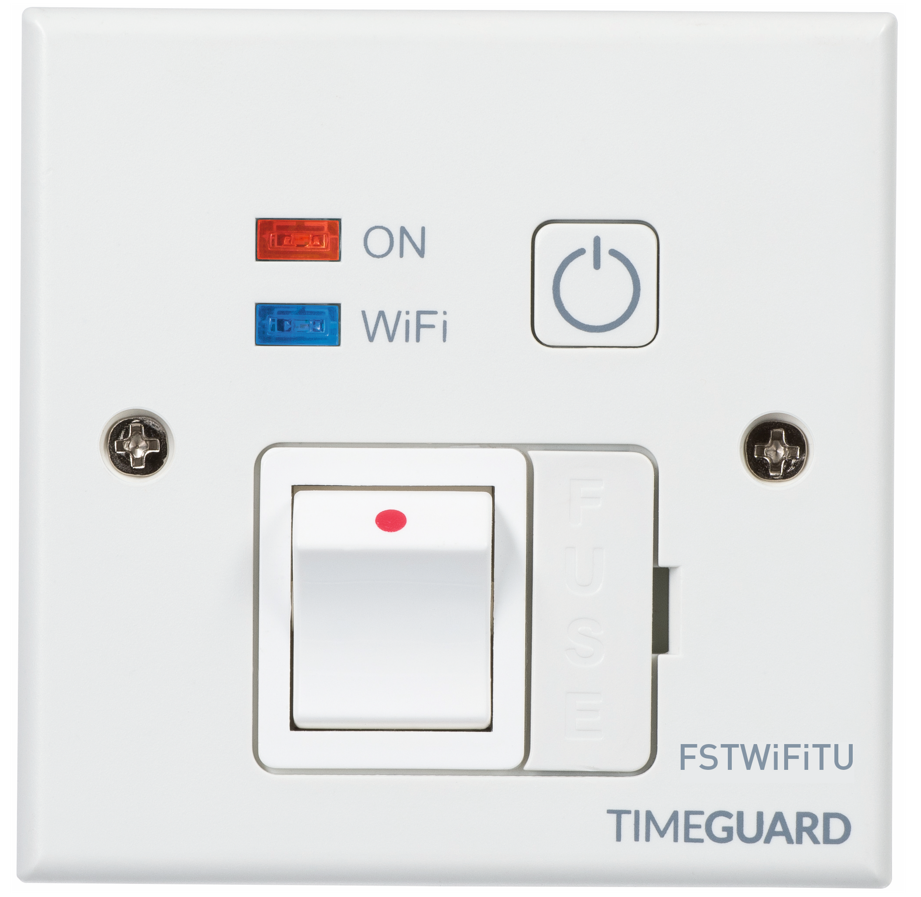
WiFi energy saving timers with built in fuse protection
Timeguard has introduced a WiFi controlled version of its popular energy saving fused spur timers. This smart device is fitted with a 13A replaceable fuse, so it is ideal to be wired in as direct replacements for the basic fused spurs that are already installed alongside the big energy guzzlers in the home. They continue to provide essential fuses protection as well as offering full range of time control options. The FSTWiFiTU is operated using the global TuyaSmart App, as used across the Timeguard WiFi range of smart home controls and half a million other devices from manufacturers all over the world. As you would expect, working with Alexa and Google comes as standard, and the app is free to users. As well as basic on/off programming, the Timeguard FSTWiFiTU offers count down and boost functions, all the touch of a button directly through the Tuya app.

Autism – Support from the EIC
Autism is a spectrum condition that affects people in different ways. Approximately 700,000 people in the UK are living with autism and it’s typically characterised by challenges with social skills, engagement in repetitive behaviours, or difficulties in speech and communication. It’s a widespread condition with around 1 in 57 children diagnosed with Autism Spectrum Disorder (ASD). The EIC is committed to supporting not only those who have been diagnosed with autism or any other mental health condition but anyone who is affected by an immediate family member. An example is Lilly who at 13 years old had seen her mental state deteriorate since her grandfather had passed away in March 2020. She had become increasingly withdrawn and wouldn’t leave the house, refusing to even go to school. She was very intimidated by her peers and refused to change her clothes and bathe, communicating thoughts of suicide. Her parents had removed all potential risks in the house, but they were living in a heightened state of anxiety. Lilly had an initial assessment with the Children’s Mental Health Service (CAMHS) in May 2020 where she was diagnosed with general anxiety and depression. However, the services said support could only be provided from May 2022. Lilly’s GP and other support services had six therapy sessions with her but discharged her from their care once they learned she was awaiting treatment through CAMHS. Terrified she was going to harm herself, Lilly’s mother obtained permission to work from home in order to monitor her, but it was impractical to provide this level of supervision 24/7. Although Lilly had not seemed significantly upset following her grandfather’s death at the time, it appeared to have acted as a trigger for the deterioration in her mental health. Over the summer of 2020, Lilly was in the process of receiving therapy from an NHS bereavement therapist who visited her in her home. At this point, her father John explained that for the last three years, he and his wife had been noticing traits of behaviour suggestive of autism in Lilly. She was highly anxious in crowds, usually wanting to run. She had strained interactions with her peers and her communication was generally awkward and erratic. At this point, John’s boss got in touch with the EIC to seek support for the family. As John is an employee of the electrical and energy sector, he was entitled to support for anyone living with autism in his immediate family. As a result, the EIC is currently funding a full assessment for Lilly to get an accurate medical diagnosis. The help Lilly’s family was able to access is due to the support of the EIC and the powerLottery. It means the family are getting the support they need to get a timely and accurate diagnosis for Lilly and move on to the next stage of treatment.  Without powerLottery, EIC would not be able to offer support to people like John and his family. That’s why we need you to become a powerLottery player to help EIC to continue supporting our industry members. powerLottery is the only lottery made for our industry by our industry. It gives players 40 chances to win cash prizes ranging from £50 to £1,000 every single month. A £10,000 draw bi-yearly gives you even more opportunity to win BIG. A new car, a holiday in the sun, a kitchen re-fit or a brand-new wardrobe… Think of all the different ways you could spend £10,000.

BGEN awarded UK industry-first with Rockwell Automation
BGEN has been awarded a UK industry-first by Rockwell Automation. BGEN is the first company to be approved to provide Rockwell Industrial Internet of Things (IIoT) platform integration in the UK. The approval gives BGEN certification to integrate Rockwell Automation’s award-winning FactoryTalk InnovationSuite, powered by PTC, including PTC ThingWorx. PTC ThingWorx simultaneously removes technical barriers to the IIoT implementation, while emphasising practical solutions that quickly return value. The platform can help companies to realise cost, efficiency and productivity improvements. BGEN secured the approved IIoT status following a rigorous capabilities check. The process included engineers achieving certification for PTC ThingWorx Fundamentals and PTC ThingWorx Professional, and successfully completing a project using the platform. This was alongside the company demonstrating a proven track record of supporting industrial organisations in their digitalisation journeys. “Approving BGEN as our first accredited IIoT system integrator in the UK was a natural step in progressing our long-standing relationship with the company,” says Jeff Stewart, Information Solutions Systems Integrator Program Manager EMEA, at Rockwell Automation. “They have a team of highly skilled engineers in place to support our industrial end-users in realising the full potential of our award-winning FactoryTalk Innovation Suite including the PTC ThingWorx Platform.” “This approval adds to our credentials in the automation and digitalisation space,” comments Robin Whitehead, Chief Executive at BGEN. “The fact that companies like Rockwell Automation put their trust in us to help optimise the benefits of their technology is testament to the level of investment we place in our people and service we provide to our customers.”

Over 5,000 NICEIC contactors turn up and tune in to Amendment 2 events
NICEIC has wrapped up its week-long series of events to support the introduction of Amendment 2 of BS 7671:2018. Completing a 31-stop UK tour and delivering two Amendment 2 special broadcasts of their hit technical webinar series, THE WIRE NICEIC reached an impressive 5,000 contractors. Timed to coincide with the release of Amendment 2 of BS 7671:2018 which was published on March 28th. These FREE and EXCLUSIVE CPD certified events were hosted by NICEIC technical experts and local assessors. Delivering a technical overview of the update the teams were on hand to answer questions and network with contractors. "We are extremely encouraged by the high turn-out seen at our Amendment 2 events," says John O’Neill NICEIC's Technical Director "We would like to thank the thousands of contractors who took the time to join us either in person or online. However you chose to receive the information, we were delighted to see so many of you invest time in your technical learning. “If we missed you this week, don't worry, a recording of THE WIRE episode will be available via our on-demand service shortly." Covering the fundamental changes brought in by the amendment, the sessions discussed the new requirement for Arc Fault Detection Devices (AFDDs), a new chapter on prosumer's low voltage electrical installations and much more.

Demand for tradespeople up by 50% in just two years
New research from Rated People reveals homeowner desire for home improvement went through the roof in 2021. Nearly half (49%) of UK residents improved their homes and demand for tradespeople increased by 32% in just one year. Almost two in three tradespeople (62%) say last year was ‘the busiest year they’ve ever had’. In fact, compared to the start of the pandemic in 2020, demand for home improvement has gone up by 50%. The findings are taken from the 2022 Rated People Home Improvement Trends Report, and the study shows that 77% of UK tradespeople experienced increased customer demand in 2021. Carpenters/joiners are the trade that’s reported to have experienced increased consumer demand the most, with almost nine in 10 (89%) saying demand went up in 2021. The top 10 trades that say they experienced increased homeowner demand in 2021: Carpenter/joiner - 89% (say they felt demand increase in 2021) Painter and decorator - 83% Tiler - 82% Handyperson - 81% Builder - 78% Roofer - 75% Plasterer/renderer - 74% Gardener/landscape gardener - 73% Electrician - 73% Plumber - 72% Opportunity in a challenging time The surge in demand since the start of the pandemic has brought about huge opportunities for tradespeople. But they’ve also been hit with a series of challenges – almost nine in 10 tradespeople (89%) say their costs increased in 2021, 84% experienced materials supply issues and just under half (44%) had workforce shortages. As a result, four in five tradespeople (83%) had to increase their prices and almost two thirds (62%) had to delay or cancel jobs. More than one in three tradespeople (43%) went on to say the challenges from last year led them to feel an increased level of stress, and a quarter (25%) say they felt exhausted. But, one in three UK tradespeople (34%) did also say that the opportunities resulting from increased demand meant they felt an increased sense of motivation, and a quarter (27%) said they had increased job satisfaction and an increased sense of achievement last year. Material and workforce shortages Unsurprisingly, COVID was a major cause of disruption in 2021, but the main reason for cancellations and delays was actually materials shortages, with 44% of tradespeople saying they had to delay or cancel work because of supply issues. Supply issues were felt across the industry. Plasterers/renderers were the most affected, but nearly all trades experienced shortages. Between 75% and 96% of the top 10 most affected trades found it difficult to get the materials they needed. The top 10 trades that were most affected by materials shortages in 2021: Plasterer/renderer - 96% (experienced materials shortages) Builder - 95% Gardener/landscape gardener - 87% Carpenter/joiner - 87% Painter and decorator - 85% Bathroom fitter - 85% Handyperson - 81% Electrician - 77% Plumber - 77% Roofer - 75% Workforce and contractor shortages were also experienced by many trade businesses in 2021, with the main causes being COVID isolation and a lack of skilled workers. The top reasons why UK trades suffered workforce shortages in 2021: Needing to isolate because of COVID - 29% Lack of skilled/experienced workers - 22% Staff/subcontractors not wanting to work because of COVID risks - 15% Loss of staff members due to Brexit - relocating out of UK - 15% Fewer people getting into the trades industry - 14% Increasing costs = increasing prices for homeowners This year, nine in 10 tradespeople (91%) expect their costs will increase, and 82% say they will need to put their prices up in 2022. 97% of builders, 91% of heating engineers and 89% of plasterers say they’re planning to increase their prices this year. And when looking at the top 10 trades most likely to charge higher prices, a minimum of 77% from each trade say they will need to put their prices up in 2022 to remain profitable. The top 10 trades increasing their prices in 2022: Builders - 97% (are upping their prices this year) Gas/heating engineers - 91% Plasterers/renderers - 89% Carpenters/joiners - 89% Handypeople - 88% Plumbers - 84% Roofers - 82% Gardeners - 81% Painters/decorators - 79% Electricians - 77% The most in-demand trades in 2022 This year, demand doesn’t appear to be slowing down any time soon, as 86% of tradespeople across the UK say they expect to be very busy in 2022. According to the study, all of the bathroom fitters and tilers surveyed said they are gearing up for another year of unprecedented demand, and across the top 10 trades set to be the busiest this year, a minimum of 82% expect to be very busy. The top 10 trades with the most homeowner demand in 2022: Bathroom fitter - 100% (expect to be very busy in 2022) Tiler - 100% Roofer - 89% Plumber - 86% Plasterer/renderer - 85% Electrician - 85% Carpenter/joiner - 85% Painter and decorator - 85% Builder - 84% Gas/heating engineer - 82%

Soil-powered lightbulbs offer ground-breaking way to brighten up your garden
Ground-breaking lightbulbs – which are powered purely by nutrients in the soil – will be lighting up gardens across the UK thanks to new ‘Garden Bulb’ lighting now on sale in the UK. Engineers in the research and development department at lighting specialists 4lite have come up with an innovative new technology that harnesses the energy in soil to power specially-designed lightbulbs, brightening up flowerbeds across the country. 4lite’s new ‘Garden Bulbs’ use organic soil matter to power a special bulb which harnesses electrons released in decomposing soil, creating an electric charge and instant lighting. [embed]https://www.youtube.com/watch?v=FLm-1DJQlXA[/embed] Rachel Morris, Marketing Manager for 4lite says: “Soil-powered bulbs are the latest tech to have in your garden, giving the perfect glow and helping you make the most of your outside space, flowerbeds, pots and patios. “Our engineers and design team have been working so hard on this bright idea, which has been years in the making. “Simply plant your soil-powered ‘Garden Bulbs’ right next to your spring bulbs and watch them instantly light up your garden.” The LED ‘Garden Bulbs’ have a lifespan of 15,000 hours and are rated as 7W – equivalent to 60W. *April Fool's!*

FETA and LEIA join four new MSPs on SELECT’s Wall of Support
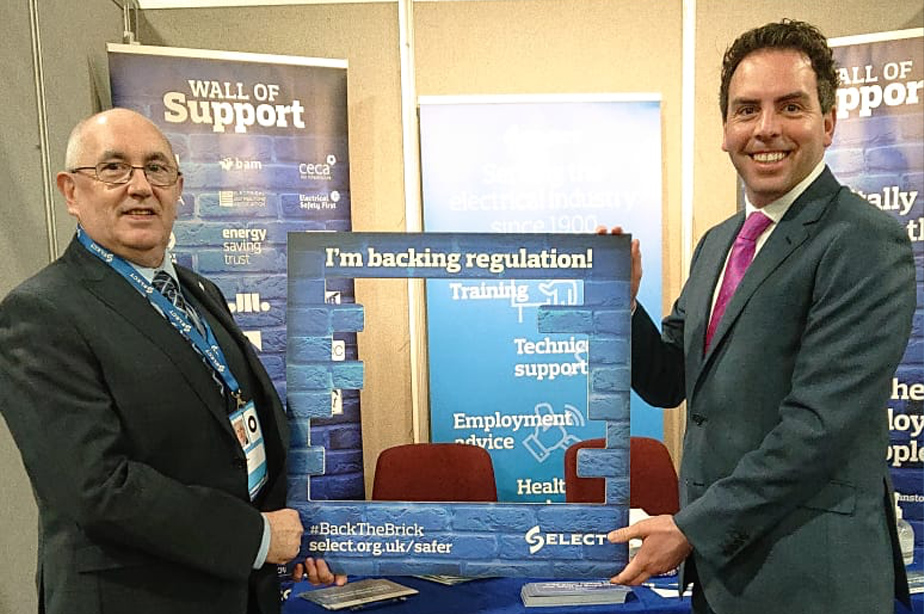
SELECT’s campaign for regulation of the electrical industry continues to attract more backing, with two major industry organisations and four MSPs adding their names to the trade association’s Wall of Support. The Lift and Escalator Industry Association (LEIA) and Federation of Environmental Trade Associations (FETA) have both signed up to the online resource, which shows the organisations and individuals supporting the crusade for regulation of the electrical industry. They have been joined by a quartet of Conservative MSPs who added a virtual ‘brick’ to the wall at their recent party conference at the P&J Live venue in Aberdeen. The new Conservative signatories include Maurice Golden and his fellow North East Scotland MSP Tess White, who is also Junior Whip and Shadow Minister for Just Transition, Employment and Fair Work. Others adding their names are two MSPs for West Scotland – Shadow Minister for Community Safety, Russell Findlay and Shadow Cabinet Secretary for Justice, Jamie Greene. The MSPs were recruited to the cause after SELECT’s Specifier & Client Relations Manager Yvonne Wilson spent two days speaking to politicians, party officials and delegates at the conference on 18 and 19 March. Helped by Eric Rae, Vice-Chair of SELECT’s Aberdeen & North East Scotland Branch, the exhibition also saw existing signatories Alexander Burnett and Brian Whittle drop by to say hello and reiterate their support for the long-running campaign. Yvonne says: “The conference was a big success and gave us the opportunity to speak to MSPs face-to-face again and explain the importance of regulation. It was great to be able to outline the case for protection of title in person and receive further backing in return.” The new additions mean the Wall of Support now boasts 49 MSPs and two MPs from across the political spectrum, in addition to a host of high-profile industry organisations and SELECT Member firms who have pledged their backing. One such new addition is FETA, whose Chief Executive Chris Yates comments: “As we see greater use of renewables such as solar and heat pumps, poor quality electrical work carries huge risks to people’s homes, their businesses and even their lives. “It is therefore vitally important that consumers are helped to make informed choices whenever they employ an electrician.” LEIA also became recent signatories, with Managing Director Nick Mellor saying: “We share SELECT’s objective of improving safety and raising standards in the construction industry. “We therefore support SELECT’s campaign to regulate electricians by introducing protection of title for the profession of electrician.” SELECT’s campaign, run in partnership with the Scottish Joint Industry Board, the Scottish Electrical Charitable Training Trust and Unite the Union, aims to make it an offence for someone to call themselves an electrician when they have no, or inadequate, qualifications. The Scottish Government has set up an Electricians Working Group to explore the issue and two high-profile consultations on regulation have also taken place, both of which have overwhelmingly supported statutory regulation.

Bureau Veritas urges action as government launches EV strategy
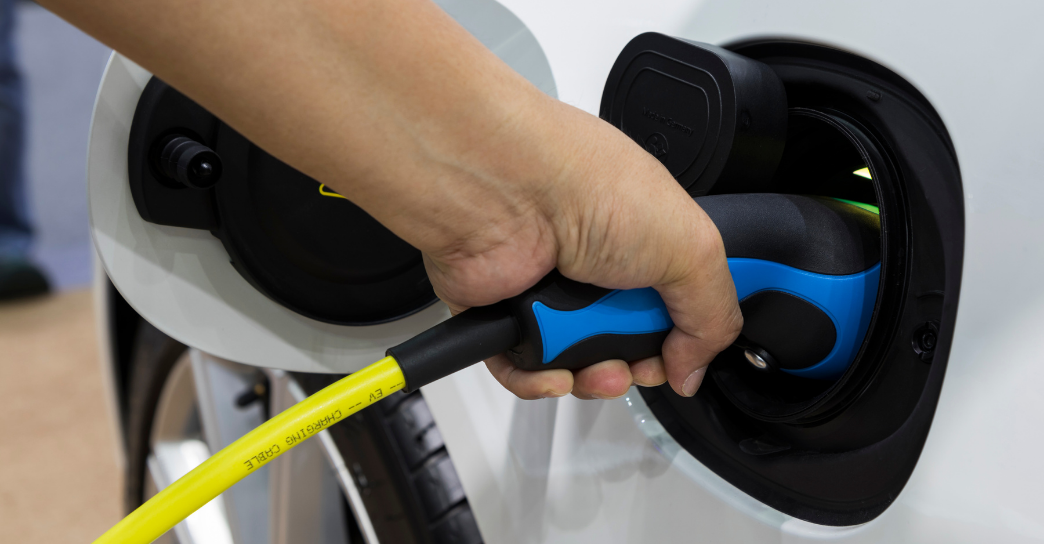
Following the UK Government’s recent launch of its new Electric Vehicle Infrastructure Strategy, Bureau Veritas, is calling on businesses and the public sector to take action immediately, by engaging with EV installers to get their sites or premises ready for a net zero future. The decarbonisation of the UK transport network is accelerating at a rapid pace, with over a quarter of all new cars sold in the UK in December 2021 being battery electric vehicles; the equivalent figure for 2019 was less than 2%. Cementing its commitment to expand and improve the UK’s EV infrastructure, the government has pledged £1.6b to its ‘Taking Charge: the electric vehicle infrastructure strategy’. £950m will be made available for the Rapid Charging Fund to support the rollout of at least 6,000 high powered charge points across motorways and major A-roads by 2035 and a further £500m has been committed to Local EV Infrastructure (LEVI) for local authorities to plan and deliver public charging infrastructure. In the short-term however, there remains a large amount of range anxiety and reliability issues in the charging network, limiting the full uptake of EVs. Businesses and local authorities must act now, to ensure EV infrastructure forms part of their short-term plans, according to Bureau Veritas. George White, Senior Consultant for Electric Vehicles at Bureau Veritas says: “The government’s new EV strategy certainly demonstrates its commitment to meeting net zero targets and includes a number of important plans and valuable funding streams to support this. With this pledge in place, it’s now time for companies and local authorities to play their part and incorporate EV chargepoints into their business continuity strategies – if they have not done so already – and take the next step of engaging with chargepoint installers to get the ball rolling. “For local authorities, the target of a minimum of 300,000 charge points available for public use in the next few years will aid in removing the stigma of range anxiety we are currently experiencing as a blockade to EV uptake, by focussing on EV infrastructure for those with no off-road parking. Meanwhile for businesses, the upcoming Workplace Chargepoint Scheme (WCS) is being amended to support businesses to have visitor and guest charging, ensuring firms remain competitive with newer buildings built with EV infrastructure in mind. “With electric vehicle charging still feeling like a relatively new phenomenon for many, we recommend partnering with an independent third-party EV specialist to establish your needs and requirements and to ensure ongoing testing and inspection of units to guarantee reliability.”

ECA welcomes new EV strategy, but warns of dangers from low standards
ECA has welcomed the government’s Electric Vehicle Infrastructure Strategy, published on Friday 25 March 2022. However, the body has warned that the government’s focus on ‘market-led’ strategy and lack of joined-up policy with local authorities could jeopardise the quality and safety of EV charge point installations and encourage a ‘race-to-the-bottom’ approach. In a freedom of information request to local authorities in England and Wales in late 2021, ECA found that almost two thirds had no real plans to install public EV charge points, and over half did not have any funding earmarked for EV infrastructure. Comments revealed a lack of ‘joined-up’ policy from central government hindered progress. One local authority representative says, “One of the barriers [to EVCP installation] is the uncoordinated approach – it’s not joined-up enough.” Andrew Eldred, ECA Director of Workforce and Public Affairs, says: “There is a lot to be positive about in this latest strategy, and ECA is pleased to see that the government is trying to address the ‘postcode lottery’ in EV charging across the UK. “But this strategy’s heavy onus on industry and local authorities to do the bulk of the groundwork to roll out EV infrastructure could hinder any kind of consistency in coverage and quality. “Safe, high-quality electrical work needs to be done by electrically competent people. We know for a fact that our industry is ready to rise to the challenge of net zero. But a purely ‘market-led’ policy can lead to a race to the bottom on cost, and a drop in quality follows. This will inevitably compromise the efficiency and safety of what gets installed.” The rate of EV sales in the UK is growing rapidly. 66% more EVs were sold in 2020 than 2019, totalling more than 175,000 vehicle registrations. According to EV charge point app ZapMap, there are currently just over 30,000 public charge points in the UK. The Society of Motor Manufacturers and Traders (SMMT) estimates 2.3 million charge points will be needed in the UK by 2030 to keep up with predicted demand.

Knightsbridge is up to the task with new kitchen lighting
Knightsbridge have introduced convenient all-in-one dimmable LED kits for lighting under kitchen cabinets. Ideal for providing accent or task lighting, the easy-to-install kits comprise three 2.5W downlights, a six-way connector and a dimmable remote driver. Flexible in its offering, these contemporary low-profile lights can be either surface or recess mounted. As well as coming in a handy kit with three lights, the stylish LED fittings (pre-wired with 2.5m of cable) can also be bought singly (without driver), allowing the installer or end user to easily expand the lighting array to up to six lights per driver. The lights also come in a choice of integral bezel finishes; brushed chrome and white – matching the most seen colours in modern kitchens. The lighting output includes warm white and cool white options, which again allows users to make a selection best suited to the overall aesthetic of their kitchen. Delivering a quick and convenient solution for lighting under cabinets in kitchens, the UNDKIT3 all-in-one dimmable LED kits bring easy task and accent lighting to these overlooked and often underlit spaces in people’s homes.