2 November 2026
Product of the Month: Amari Floodlight range by Aurora Lighting
 
12 November 2026
Schneider Electric transforms Southampton hospital estate
 
12 November 2026
GTEC Training opens new education facility in North Yorkshire
 
11 November 2026
Energy, AI and smart buildings: register now for EMEX 2026
 
11 November 2026
Solar and batteries could cut electricity costs by 40%, data finds
 

Latest News


Stopping the cycle of workplace stress with EIC
The Electrical Industries Charity can support you and your immediate family if you are a current employee, apprentice or retiree from the electrical and energy sector. Jenny works within the generation and renewables sector and had been an employee for more than several years. Working within a competitive environment Jenny found she was being considered for redundancy and in the first instance contacted the Electrical Industries Charity for CV support. The Electrical Industries Charity offer members of our industry specialist CV writing support and can even provide a mentor within our sector to run through interview questions and develop your skills. Jenny wished to revamp her CV but in her initial call with the charity welfare team she disclosed she had been struggling with her mental wellbeing. 1 in 3 of those who approach the Electrical Industries Charity for assistance need mental health support and in 2019/20 we issued 13,238 grants for counselling support to those in our sector. Jenny had tried to overcome her mental health issues herself but found she was unable to cope – a common thread within our industry. Upon further talks with the Electrical Industries Charity welfare team it became apparent Jenny was struggling with ongoing and unrelenting workplace stress accelerated by the thought of redundancy. As well as this Jenny had recently suffered a family bereavement and her stress levels began to spiral. Jenny struggled to cope with bereavement alongside work and found her mental wellbeing severely compromised. Jenny was assigned a charity welfare case worker and she was referred for a psychological assessment which was sourced and funded by the charity. Jenny was diagnosed with an anxiety disorder and was suffering with work related burnout. The charity sought a therapist for Jenny who through six sessions helped her to restore her sense of self and equipped Jenny with some coping strategies to help spot and manage stress as well as prevent it. Jenny and her therapist worked through her grief and since her sessions Jenny has been coping much better on the days where grief and stress may leave her feeling overloaded. Thanks to the Electrical Industries Charity support Jenny is in a much better headspace and has found that her workplace stress no longer effects or exacerbates personal matters and vice versa. Jenny is much happier and although she still does struggle with waves of grief and stress, she now has the tools needed to tackle both effectively. If you’re struggling with workplace stress here are some top tips that you can use to help yourself feel more zen: 1) Form positive relationships at work 2) Start exercising or exercise more 3) Eat well and snack well 4) Get enough sleep 5) Prioritise and organise 6) Kick bad habits – stay positive, resist perfectionism and focus on what you can control

Power metres now available on Conrad's sourcing platform
As part of an ongoing B2B marketing campaign, Conrad Electronic showcases testing and measuring equipment by offering deals across a product range that comprises a total of 25,000 items on its platform. Among other things, business customers can get their hands on utility meters that conform with the electricity usage breakdown requirements that recently became law. To make sure they comply with the regulations, business customers can opt for Siemens Sentron  7KM PAC2200 power  meters now available on the Conrad Sourcing Platform. By supplying this product on its sourcing platform, the B2B distributor mainly aims to cater for MRO engineers and facility managers who need to keep track of precisely how much energy is consumed on-site as opposed to the amount supplied to external parties. “Siemens power meters are an innovative solution that enables companies supplying other parties with electricity to accurately document the amount consumed by these parties in compliance with the usage breakdown requirements stipulated by federal law,” explains Susanne Storch, Senior Expert in Product Management at Conrad Electronic. “For instance, this applies to electricity used by occupants of rental properties, to cafeterias operated by external caterers, and to leased electrical appliances such as drink vending machines and IT hardware.” Businesses that do not generate their own energy can use electricity meters that come with an MID conformity certificate, such as the Sentron 7KM PAC2200 MID, to log active energy consumption (kWh). Like CLP-approved equipment, MID-compliant meters allow accumulated apportionment and annual reporting of electricity usage broken down by the type of user. The situation is different for companies using electricity they produce themselves on-site. If this is the case, businesses need to prove that energy generation and consumption happens simultaneously by providing active energy readings in kWh taken at 15-min intervals at a specified time. The Sentron PAC2200 CLP (Certified Load Profile) complies with these and other requirements which makes it an ideal choice for your electricity usage breakdowns. Both meter types enable continuous real, reactive and apparent power readings at voltages of up to 400 V between line conductors (L-L), and 230V (L-N), respectively. In doing so, they comply with federal PTB-A50.7 standards, and come with a 10 A / 65 A permanent current rating. Alternatively, the readings can be stored in a  certified 15-min load profile memory large enough to hold all tax-relevant data collected over a period of two years. A backlit LC display ensures good screen readability in low-light conditions. The products feature a LAN interface using Modbus transmission protocol, and are MID-certified. The faceplate has an IP40 rating. The rating of the back part is IP20. Installed meters constitute Class II appliances. The 6HP-wide meters are DIN-rail-mount devices suitable for stationary plant, electrical enclosures and fuse boards located inside dry buildings. Sized 71 mm x 108 mm x 97 mm (L x B x H), they work accurately in temperatures ranging from -25 to 55°C.  

Domus fans listed on BEAMA Green Homes Compliance Scheme
Domus Ventilation, part of the Polypipe group, is pleased to announce its energy efficient ventilation products have been listed on the BEAMA Green Homes Compliance Scheme. BEAMA is the UK trade association for manufacturers and providers of energy infrastructure technologies and systems. It has created the Green Homes Compliance Scheme to help installers identify products that will meet Building Regulations and deliver effective ventilation. Changes to Building Regulations Part F, Ventilation are due to be released very shortly. Airtightness testing will be mandatory for all new dwellings under the revised regulations and air flow requirements have been increased. To ensure compliance, the standards have been simplified in relation to a property’s air permeability to make them easier to understand and inspect. The Green Homes Compliance Scheme provides ventilation installers with a downloadable list of Building Regulations compliant fans, which will overcome any potential problems that could occur as a result of increasing the airtightness of a dwelling. The fans have all been confirmed as capable of removing air at a defined rate when installed – and not just under test conditions - overcoming any resistance to air-flow from ducts or grilles etc. Domus Ventilation fans listed under the Green Homes Compliance Scheme include the Sapphire range of intermittent axial, in-line and centrifugal bathroom and kitchen extract fans and Decentralised Mechanical Extract Ventilation (dMEV) units. They are available as both standard and energy efficient models, with extremely low Specific Fan Powers (SFP) to comply with Building Regulations at an extremely attractive price point - making them perfect for new builds as well as replacements for home owners looking to reduce their carbon footprint. They come in a contemporary and minimalist design, coupled with extremely quiet performance. The BEAMA Green Homes Compliance Scheme is seen as an important step forward by Paul Williams, Domus Ventilation Product Manager, who comments: “As a long standing BEAMA member, Domus Ventilation has been an active participant in shaping the new Building Regulations Part F. We have been pushing for clarification in the regulations to make them easier to understand and implement. Now that this has been achieved, it is vital that installers play their part by selecting ventilation products that will ensure compliance.  The Green Homes Compliance Scheme makes compliant product selection that much easier.”

ABB accelerates e-mobility innovation with new global R&D centre
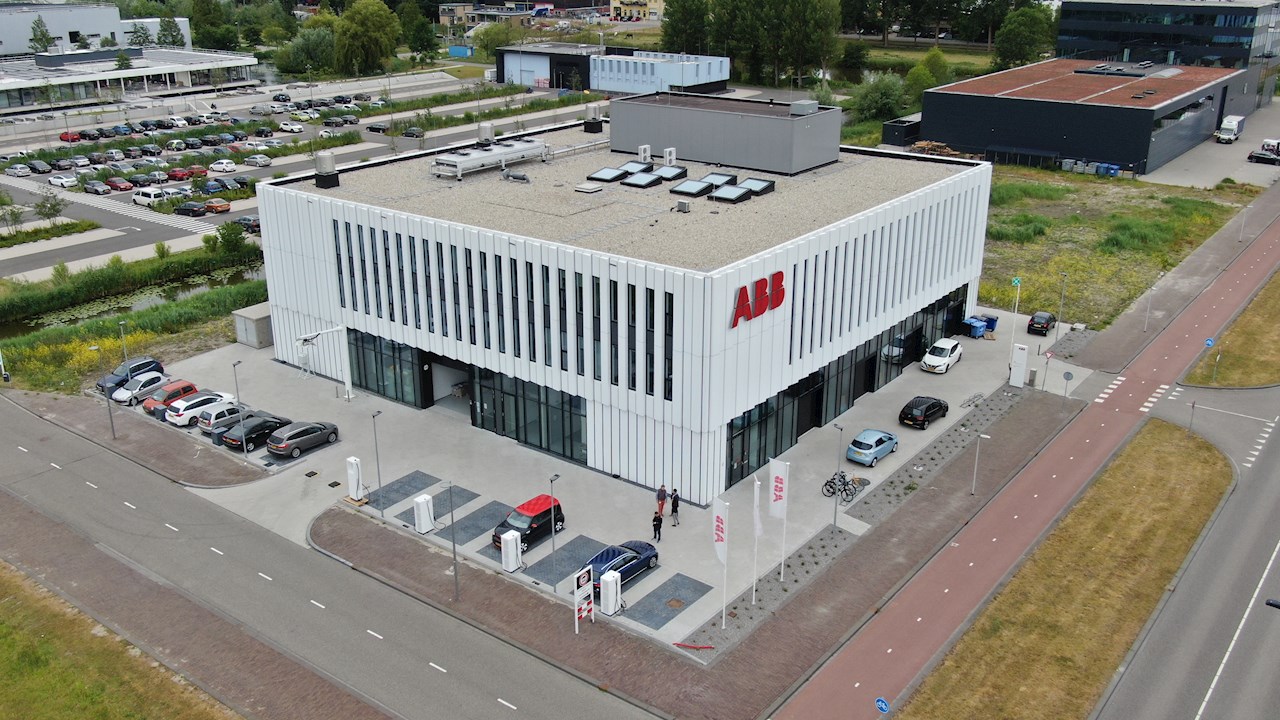
Designed to spur further innovations in e-mobility, the $10 million, 3,600 m2 facility is based on the Delft University of Technology campus, in the Netherlands and will drive ABB’s future portfolio development, as well as R&D projects for EVs. In 2020 the University was ranked among the top 15 engineering and technology universities in the world. Along with an investment of $30 million into a global Centre of Excellence and production site for EV charging infrastructure, due to open next year in Italy, the facility in Delft underlines ABB’s plans to grow investments in sustaining its technology leadership. Frank Muehlon, Head of ABB’s global business for E-mobility Infrastructure Solutions, comments: “Innovation is in our blood – ABB has led the way in EV charging and is proud to have played a key role in driving adoption rates of electric vehicles across the world. That is why we wanted to locate our E-mobility Innovation Lab in Delft, in the heart of the university campus, where we are surrounded by the brightest tech talents and start-ups in the Netherlands.” [embed]https://youtu.be/Lw9d4gZ2xGY[/embed] The complex, which will house up to 120 specialists, marks the return of ABB’s EV charging business to the home of its conception. Indeed, the students who founded Epyon (the EV charging start-up acquired by ABB in 2011), were former students from Delft University of Technology. “Within ABB Electrification, we invest approximately $400 million per annum into R&D to ensure we remain at the forefront of technological leadership and set the standard when it comes to sustainable mobility. As part of this investment, we are focused on pushing the boundaries of e-mobility, predominantly in the areas of charging, storage and digitalization. The new lab will allow us to strengthen our collaboration with EV manufacturers to drive further performance and progress across the sector,” Muehlon adds. Ensuring the seamless connection between vehicles, charging stations, charging networks, and the grid, together with the software systems that support them is a key focus for ABB. The E-mobility Innovation Lab has been fitted with the latest technology to ensure that ABB chargers are compatible with all types of vehicle. Simulators have been built exactly for this purpose, with 95% of all tests to be conducted with a digital copy of vehicles. To test how vehicles perform in very hot or cold weather, ABB has developed special environmental testing rooms, where solutions will be subjected to extreme conditions, including temperatures from -40 to +100 degrees Celsius and high humidity. The atrium is large enough for manufacturers to drive their cars, buses or trucks into the warm and controlled environment to conduct testing, which will help advance charging for the rapidly growing electric-heavy vehicle segment. As part of ABB’s commitment to support a low-carbon society, it was vital to not only create a building that can advance progress in sustainable mobility, but also to create a facility that will minimize its environmental impact. For heating and cooling, the ABB complex will be connected to the Delft University of Technology geothermal heating/cooling plant. The roof will house solar panels, with solar inverters to convert DC harvested from the sun into AC, which together with ABB’s advanced building management system for climate and light control and battery storage system, will allow testing energy to be fed back into the grid. In November this year, ABB announced that it will increase R&D and digital spend to about 5 percent of revenues per year led by the business. This approach creates superior value for customers and drives a higher quality of revenues for the company, focusing on high-growth segments including e-mobility. Across the group, ABB has around 7,000 employees in R&D with 60% of them focused on developing software and digital innovations. ABB entered the EV-charging market in 2010, and to date has sold more than 17,000 ABB DC fast chargers across 80 countries. Its commitment to driving progress in e-mobility is shown most clearly through the title partnership with the ABB FIA Formula E World Championship, which is about to enter its fourth season. From Season 9, in 2022-23, ABB will become official charging supplier to the championship.

What's in store for energy management? by David Hall, Schneider electric
Businesses and consumers alike have a growing appetite for cleaner, greener and fairer energy systems. The global shift towards being more climate conscious and efficient has accelerated the need to embrace sustainable technology, and the 2050 carbon neutral goals only adds to this by closely aligning business success with sustainability. [caption id="attachment_21414" align="aligncenter" width="300"] two worker watching the power tower and substation with sunset background[/caption] The last year has brought disruption across various industries and the energy sector is no different. But many companies are already looking ahead to build a greener future for the global energy industry. They have the ambition, the technologies and the skills to build a healthier, more resilient, net-zero-emissions economy, that drives sustainable economic prosperity. The government’s 10-point plan is a significant step towards committing to a greener future and will only encourage change to continue in 2021. [caption id="attachment_21413" align="aligncenter" width="300"] An electric car in charging on the street[/caption] In order to make the most of this thinking, digital transformation coupled with energy management will be key. Here are the five top technologies which will fuel the energy management revolution and prove essential to making net-zero business a closer reality in 2021: Increased investment in renewable power systems Investment in clean power systems constitutes the single biggest investment opportunity of the next decade. A massive wave of investments in renewable electricity generation, storage and power grids is essential to decarbonise existing supply and meet growing electricity demand from rapid electrification of buildings, transport and industry. The ETC forecasts a 4 to 5-fold multiplication of electricity demand globally by 2050. History has shown that making clean energy a priority in stimulus packages can be a key driver of job creation and encourage industry investment in 2021 and the following years to come. Fast-track EV adoption while pursuing clean air Encouraging more people to adopt electric vehicles is at the heart of the government’s efforts to tackle climate change and reduce air pollution. With the UK now having more EV charging points than petrol stations and a ban on combustion cars to be introduced in 2030, we should be determined to ensure EVs become the dominant purchase option during the next ten years. In the next year, utilities stakeholders need to decide how to invest in upgrading the electrical network to increase EV charging capacity. However, they must at the same time avoid creative upward pressure on the cost of electricity for consumers and businesses, which may weaken the appetite for electric vehicle charging. Getting the balance right will rely on harnessing un-realised network efficiencies and smart load balancing – which cannot be achieved without a ‘smarter’ grid. Switching to sustainable solutions like SF6-free Today there are over 30 million units of medium-voltage switchgear installed worldwide using sulfur hexafluoride (SF6). SF6 has been trusted and used extensively since the mid 1950s as a highly reliable insulator in electric equipment. However, SF6 is a greenhouse gas and contributes to the climate challenges we face today. Although SF6 leakage rates are low, pursuing SF6-free alternatives is a priority because overall energy consumption and the need for infrastructure continues to grow, with an anticipated 48% growth by 2040. As regulators look towards imposing more restriction to encourage environmentally friendly solutions, stakeholders in the energy supply chain should be taking this opportunity to get ahead of the game before the rules change. Support low-carbon activities and innovation The development of new technologies and business models is a major driver of economic growth. While supporting existing employers in the energy industry, stimulus packages should also support the creation and implementation of new solutions which are both sustainable and might offer the UK a competitive advantage in the global marketplace. Over the next few years, governments should look towards implementing new regulations in order to create demand at scale for new products. This could include solutions such as sustainable aviation fuels mandates, lifecycle emissions regulations on cars and buildings and hydrogen blending mandates for heating networks. The rise of affordable battery storage Batteries play a key role in enabling companies to embrace clean, low-cost, renewable energy at a higher level. Like the falling prices of solar equipment, the cost of lithium ion-based storage systems is expected to decrease dramatically over the next few years. This is a game changer as corporate buyers can maximise their energy investments, while contributing to the clean energy transition. As we move into 2021, by developing an efficiency and sustainable energy strategy, businesses can be sure that whatever the future brings, they will be ahead of the curve.

Nichia unveils LED with 'circadian' function for body clock management
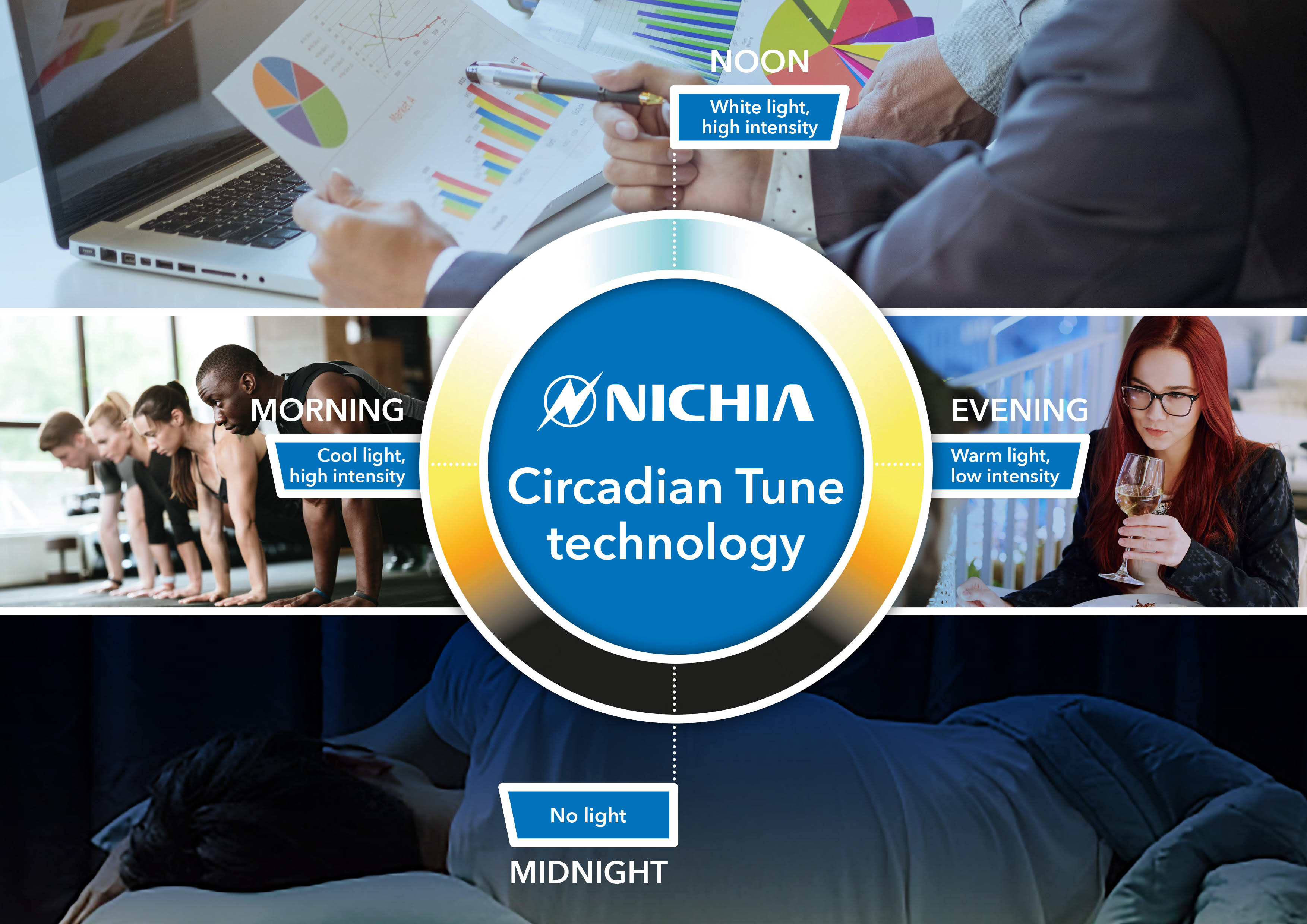
Nichia has announced a 'new and improved' Circadian Tunable LED offering. This new tunable LED pairing has been developed to enhance the regulation of the body clock by combining both the stimulation and calming doses, in addition to colour tuning. This Circadian Tune technology harnesses Nichia’s expertise in developing a unique Phosphor Converted Cyan, among other semiconductor processes and packaging techniques. The supplementary component is the inclusion of Nichia’s newly launched LEDs with TriGain technology, a potassium fluorosilicate (PFS) based phosphor technology licensed to Nichia through a strategic partnership with GE Current. Most existing human-centric lighting systems mainly work by changing CCT (correlated colour temperature). Some have started using individual “energizing” or “calming” LEDs, including NICHIA’s Vitasolis. However, Nichia’s new Circadian Tune LED products will raise the bar to also address efficacy, color quality and increased Melanopsin Stimulation, the light that explicitly targets melanopsin-containing neurons in the retina of the eye. These neurons, called Intrinsically Photosensitive Retinal Ganglion Cells (ipRGCs), are connected to a region of the brain responsible for regulation of the 24-hour circadian cycle along with associated reflexive neuronal and hormonal responses to the presence of light. Sensitive to a particular range of wavelengths, melanopsin photoreceptors reach peak light absorption at wavelengths around 490nm. By utilizing NICHIA’s Phosphor Converted InGaN Cyan, Nichia’s Circadian Tune LEDs are 'optimized' at the most sensitive wavelength of ipRGCs. This approach is said to provide a 'higher performance through its unique combination of lumens per watt (lpW), TM30 and Melanopic Ratio (MR) than other human-centric lighting solutions'. Nichia’s Phosphor Converted Cyan outperforms a pure InGaN die based cyan in many ways. As highlighted by Phosphor Engineer Sadakazu Wakui at the recently-held Phosphor Global Summit 2020, the Phosphor Converted Cyan delivers a higher lumens per watt (lpW) performance versus a traditional pure InGaN cyan. Additionally, the PC Cyan provides the same forward voltage (VF) as standard white LEDs, as well as the same z-height for optical matching. Couple this unique PC Cyan and Nichia’s Warm White LEDs with TriGain technology, the system can achieve a CRI of 90+, with high TM-30 values, while delivering a lpW performance equivalent to that of an 80 CRI LED. A balanced human circadian lighting system is achieved with simply no loss in efficacy. Using Nichia’s new Circadian Tune technology, the high MR and cooler CCT will reduce fatigue and provide greater alertness to help office workers remain in an awakened state of mind or help night workers complete their shifts effectively. At a low MR and warm CCT, the focus switches to relaxation, prompting a feeling of safety and initializing a transition to sleep. A sense of time is therefore introduced when both proper melanopsin stimulus and variable CCT is being applied. “New Circadian Tune LED products are truly innovative. Through an optimization of efficacy, color quality and Melanopsin Stimulation, we can better target ipRGCs. Additionally, the utilization of a traditional 80 CRI warm white for the relaxing portion limits the colour quality of the system. To overcome these limitations, Nichia has introduced this Phosphor Converted Cyan and Warm White TriGain pairing,” explains Satoshi Okada, General Lighting Business Planning Manager of Nichia Japan. “Nichia introduced Vitasolis in 2019, a range of LEDs geared to suppress fatigue and boost vitality. The Circadian Tune LED pairing builds on these innovations to offer a more dynamic and tunable solution to the global lighting industry.” LEDs with TriGain technology are available now in Nichia’s 757 series, the industry’s first and leading mid-power LED. The new unique Phosphor Converted Cyan will be available within the first half of 2021.

Half of the UK has a shortage of more than 50 electricians
Half of the UK has a shortfall of more than 50 electricians, according to new analysis into the shortage of tradespeople in the electrical industry. The study by electrical wholesaler ERF identified Middlesex as the area of the UK which has the biggest shortage of electricians, followed by Surrey and Hertfordshire. Having analysed data from a job website for all of the vacancies for electricians, the research found there are 574 job openings in Middlesex. In Surrey there are 566 and in Hertfordshire 555. In total, 56 out of the 112 areas of the UK listed on the job website had more than 50 vacancies for electricians with 15 places having over 100. On the other hand, with no job vacancies, the Scottish county of Wigtownshire is the area with the fewest openings for electricians. Caithness in Scotland, County Fermanagh, Northern Ireland, Moray, Scotland, Selkirkshire, Scotland and Sutherland, Scotland, all have just one job vacancy in their respective areas also. The areas in the UK with the biggest shortage of electricians Rank  Location  Number of 'electrician' job vacancies  1 Middlesex 574 2 Surrey 566 3 Hertfordshire 555 4 London 531 5 Buckinghamshire 195 6 Greater Manchester 181 7 Leicestershire 143 8 Berkshire 142 9 West Yorkshire 142 10 Derbyshire 115 11 Cheshire 112 12 Merseyside 111 While the alarming shortage of qualified electricians has been a well documented problem for a number of years now, with more people than ever considering a career change, the pandemic could provide businesses with the perfect opportunity to address this pressing issue. The research by ERF aims to encourage companies within the industry to invest in the electricians of tomorrow and to aid those within the trade currently out of work find a job. Although the majority of existing vacancies are for fully qualified electricians, there are also a number of apprentice and trainee roles available as well. Founder member of recruitment company District4, Ian McDiarmid, specialises in recruiting within the electrical industry and said employers are beginning to widen their talent pools. He comments: “Over the last year or so, businesses - especially those who have deals with the bigger contractors - have started to invest in additional training courses for new starters. The emphasis is definitely starting to shift from solely employing skilled electricians. Now, individuals who have the right work ethic and soft skills are being given the opportunity to be trained up which is a promising sign for the future. “Like all trades, electricians have been hit hard as a result of the pandemic but we are slowly starting to see the job market recover.”

A smart building, smart equipment and IoT perspective from J2 Innovations
How we use and interact with buildings is changing. Now the rate of change has been dramatically accelerated by the experience of the COVID-19 virus and its repercussions, both good and bad. Industries across the board have been affected and have had to adapt how they operate. In building controls, the drive is towards remote work and management, digital processes, and increased automation. Remote work and management Many people are becoming familiar with working remotely and managers are realising that they need, or might want, to expand remote working to more people within their organisation. To keep up with the needs of occupants, building operators need the capability to manage buildings remotely at a macro level and through applications at a micro or personal level. This is true for large buildings but applicable to smaller buildings and portfolios.  With technology like J2’s new FIN microBMS enabling plug ‘n’ play solutions for the small to mid-sized buildings market, it is becoming easier for multi-site organisations to efficiently manage buildings remotely. “The COVID crisis is accelerating building portfolio operators’ realisation that they need to be able to remotely manage their buildings more effectively, so the need for easier and more secure connectivity technologies will increase. The climate crisis is accelerating the transition to greener technologies, both in terms of renewable energy generation and a focus on reducing the carbon emissions from existing buildings by optimising the way they are controlled. In many buildings, the need to increase air change rates to reduce the risk of COVID transmission, has temporarily been prioritised over energy efficiency.  But once the immediate crisis has passed, the HVAC industry will deepen its commitment to developing more advanced ways of maintaining good indoor air quality, while simultaneously minimising energy use. Air ionisation and mechanical heat recovery solutions are therefore likely to grow in popularity.” says Chris Irwin, VP of Sales EMEA, J2 Innovations An interesting aspect of working more remotely can be seen in the prefabricated buildings market. Because modular or prefab construction is more efficient and cost effective than building on-site, building off-site and delivering completed pieces of a building has become a growing trend in the construction industry.  J2 Innovations is already seeing this trend extending to include controls, with more pre-installation during the off-site construction phase. Flexible spaces Building owners, particularly those operating in retail, will need to make their buildings more flexible and adaptable – victory and profits will go to the nimble. Despite the growing demand for on-line shopping, bricks and mortar spaces are still needed to service market needs that cannot be met on-line: cafés; gyms; hairdressers; entertainment and cultural venues; click and collect places, where customers can find services to rewrap returns, postal or delivery counters, instant clothing alterations, etc. These market demands cannot be delivered to your door and need safe and smart spaces. As retailers and hospitality companies adapt to these changes and consider omni-channel experiences, building owners need to rethink their offering. In-person shopping isn’t dead, it’s just different. “I expect an increase in demand for warehouses as many businesses will move from brick-and-mortar stores to the Internet where much of it will remain” says Michal Lom, Sales Manager Northern & CEE.  “There is likely to be a shift from open plan to fewer offices with a higher quality of indoor environment as one of the lasting effects of coronavirus. This will result in the re-modelling of the interior and the overall upgrade of technology in the building”. There will be an increase in localized, shared workspaces as many people will work in home office mode, but not everyone has the conditions for it at home. Also, people are sociable creatures and need contact with others, which shared offices can offer them. Digital Processes If it can be and hasn’t already been transformed, 2021 will see ever more processes becoming digital: IoT, blockchain, big data, cloud computing, artificial intelligence (AI), and machine learning are the future. We must consider what this means for our own businesses and how quickly we can adapt, adopt, and apply to keep ahead of the market and the competition. For building operations, space must adapt and so must the services a building provides for comfort, safety, health, and security. Automation play an increasingly important role; bringing in machine learning, data management and analytics, cloud, and edge computing, IoT and, probably we will find applications for blockchain and AI too. “I believe we will continue to see a concerted and continued push to integrate and leverage the vast amounts of valuable data derived from Operational Technologies (OT) (i.e. manufacturing floor, building systems) into the Information Technology (IT) side of the enterprise.  Most mature IT infrastructures already possess and maintain existing computing resources (servers, storage, networking, security) either deployed on premise or in the cloud. This infrastructure supports traditional mission critical IT enterprise applications.  Use of existing IT infrastructure assets and the associated enterprise applications layer (e.g. SAP ERP, IBM Maximo for asset management, analytics platforms) enables OT data to be more seamlessly consumed, resulting in streamlined business processes, reduced cost, increased productivity and optimization of existing and future enterprise assets.” says Steve Glymph, Senior Director, Strategic Partnerships, J2 Innovations Investment in Interoperability VP of Engineering, Hisham Ennarah sees a greater focus on solving interoperability issues between devices and protocols. This issue has, for many years now, been of growing significance for the industry, but in 2021 big investments and more progress can be expected to solve it.  “There are a bunch of initiatives to resolve the inter-connectivity problems we have in the building automation industry. I see investment from multiple organizations in this area of inter-connectivity between different protocols and frameworks. A good example of that is The Web of Things (WoT), an exciting initiative which is an open source standard being pioneered by Siemens.” Ennarah explains “What will have changed for good is the better understanding of the benefits of digitalisation across society and industries; including on-line payment, on-line work, on-line services; a lot of things can be handled remotely, and much more efficient way at lower cost. Many digital solutions already provide massive benefits without significant up-front cost – the COVID crisis dramatically increased the awareness for those solutions.” concludes Alex Rohweder, COO, J2 Innovations

The Smart Building Alliance to debut in Italy on the 10th of December
J2 Innovations’ Sales Director Southern Europe, Domenico Di Canosa, hopes the Italian chapter will promote and develop smart buildings. The Smart Building Alliance (SBA) launches in Italy on the 10th December 2020.   As a founding member, Di Canosa will be one to spearhead the Italian chapter of the successful French working group to promote and develop smart buildings.  The SBA was first established in France during 2012 and is an association of multi disciplinary members.  It has outpaced traditional silo-working approaches and currently brings together over 460 companies representing all the building trades and the stakeholders of the Smart City, and since January 2020, those of the Smart Home with a view to designing the Smart Building of today and tomorrow. Di Canosa comments; “After meeting with SBA president Emmanuel François, it became clear that there was a need to spread the work of the alliance beyond France, and as someone who has worked in the smart buildings industry for more than 20 years, I jumped at the chance to be involved.  I also had the opportunity of joining digital technology veterans, Cesare Massarenti and Ernesto Santini who were keen to create and expand the Smart Buildings Alliance Italia.” The ambition of the group is to enable its members – industrial manufacturers, service companies, engineering firms, architects, builders, promoters, developers, integrators, installers and innovative start-ups – to help develop the smart building sector and enhance the value of the building for all stakeholders: owners, users, and local authorities. Key plans for the alliance include laying the foundations for the R2S architecture certification that supports the ‘Smart Readiness Indicator’ (SRI); an optional scheme that is outlined by the European directives (EPBD) to help raise awareness, accelerate and increase the uptake of smart technologies and development of digital services in buildings. For SBA Italia, the alliance will be seeking to setup a commission to localize the R2S concept and appoint an Italian certification body to deliver the scheme’s framework.  Alliance members will have an opportunity to help shape the standard certification approach which will verify the interoperability, transparency of services and ease of use of the buildings for end users. When rolled out, the R2S will be a qualitative assessment of a building's ability to adapt to the needs of occupants, it’s efficiency, ease of maintenance and compatibility with energy networks. Di Canosa continues: “With the birth of SBA Italia, combined with the skills and contributions of future members, the R2S ‘framework’ can bring sustainability, efficiency, and improvements to all our buildings of the future.”

UK households produce the second most e-waste in Europe
Christmas is right around the corner and Brits across the UK have already begun shopping for their loved ones. One of the most popular Christmas ‘gifts’ will be electronic products, but as people receive their new smartphones, TVs and computers, ‘old’ models will undoubtedly contribute towards the growing problem that is e-waste (electronic waste). In 2019 alone, there was 53.6 million tonnes (Mt) of electronic waste globally according to statistics from the United Nations (UN). This is equivalent to the weight of 350 cruise ships the size of the Queen Mary two! Interested in electronic waste, Clearitwaste utilised e-waste data from the Global E-Waste Statistics Partnership and household composition data from the United Nations to calculate who produces the most e-waste on average per household each year. Which European Country Produces the Most E-Waste Per Household? Clearitwaste found that Norwegians are the biggest culprits in Europe when it comes to e-waste, as the average amount generated per household is 57kg annually. That is the same weight as six small business printers. The UK is in second position - British households are guilty of producing 55kg of e-waste per year. The e-waste per household in UK is the equivalent weight of twenty 22-inch computer monitors. Considering that there are 27.8 million households in the UK, the collective e-waste in the country could potentially be 1,529,000,000kg – the equivalent weight of 1,174,347 city cars*! Brits’ Views on E-Waste  Considering that e-waste often contains chemicals (e.g. lead, mercury etc.) which can be very harmful to the environment, Clearitwaste surveyed 1,622 Brits to discover their views on a range of issues concerning e-waste. The survey results were as follows: 16% of Brits don’t know what ‘e-waste’ is; 84% do From the 84%, only 31% truly understand the devastating problems associated with excessive e-waste 87% of Brits feel relevant governmental/environmental bodies need to better educate the public on what e-waste is and how it can adversely impact the environment Interestingly, just 36% of Brits confidently and correctly know how to dispose of their old/unwanted electronic items Clearitwaste consulted energy specialists SaveonEnergy for their top tips on how you can reduce e-waste this Christmas: Sell ‘old’ working electronics online Repurpose old electronics Make eco-conscious decisions when gifting