2 November 2026
Product of the Month: Amari Floodlight range by Aurora Lighting
 
12 November 2026
Schneider Electric transforms Southampton hospital estate
 
12 November 2026
GTEC Training opens new education facility in North Yorkshire
 
11 November 2026
Energy, AI and smart buildings: register now for EMEX 2026
 
11 November 2026
Solar and batteries could cut electricity costs by 40%, data finds
 

Latest News


ERF Electrical switches on the cloud with Infor CloudSuite distribution
Infor has announced that ERF Electrical has deployed Infor CloudSuite Distribution. The multi-tenant cloud application was chosen to keep ERF on the current version by receiving updated capabilities that will help improve customer service as part of a digital strategy to build comprehensive and integrated; enterprise resource planning, customer relationship management and online trading platform. ERF followed Infor’s implementation methodologies, and Infor consultancy led the project via remote workshops. This not only reduced the cost of implementation but also allowed ERF to capitalise on short bursts of knowledge transfer that could be quickly acted upon, with all consultancy recorded to ensure best practices. The project was delivered on time and under budget. ERF used a phased approach, with functionality and workflow consistent with the previous application, augmented with customer order entry layouts that closely mirrored existing screens. As ERF users become more familiar with Infor CloudSuite Distribution, ERF will introduce new functionality and use extensibility and new workflows to further enhance the user experience and service provided to customers. “We have always planned to take to the cloud so we could focus on business process and systems functionality rather than be bogged down with the administrative tasks of running on-premise system environments,” says Vicki Partridge, Head of ICT for ERF Electrical. “By removing the need for cumbersome upgrades that traditionally comes with on-premise installations, we will ensure we can focus on the customer. Our main objective from day one was to trade as normal with no impact to our customer experience, or awareness that we had even changed our ERP.  We achieved this with no negative impact on trading numbers.” “Cloud technology is now seen as a platform for continued agility as businesses look to keep evolving processes,” comments Phil Lewis, Infor vice president of solution consulting in EMEA.  “This demands not only continual upgrades but also quick, easy integration across various applications and a user interface that ensures adoption is just as quick. As an Inforum 2020 customer award winner, ERF Electrical has already been recognised by Infor for this project precisely because it delivers on all these fronts.”  

Together Housing and Kensa contracting acclaimed for programme
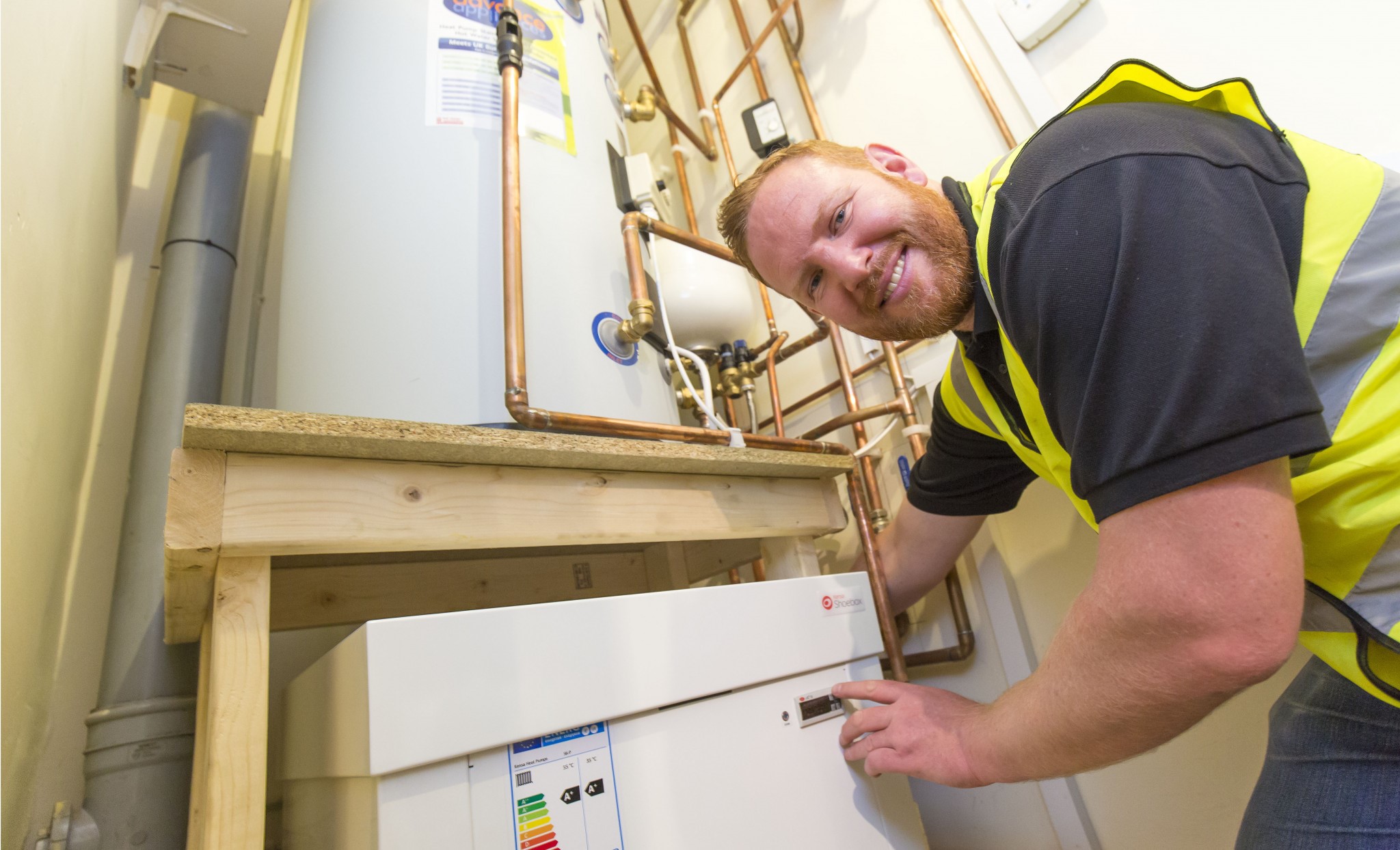
A collaboration between Together Housing and Kensa Contracting, resulting in sustainable ground source heat pumps being retrofitted into over 770 homes in the North of England, has won the ‘Heat Pump City of the Year’ category at the international European Heat Pump Awards (EHPA). The government recently set out aspirations for 600,000 electrically-powered heat pumps per year to be installed into homes by 2028, as part of a 10-point plan for a ‘green industrial revolution’. This recent award win demonstrates that the UK is already leading the way on the European stage in reducing carbon emissions to meet its 2050 net-zero target, and is committed to tackling climate change ahead of the COP26 summit, which is being hosted in Glasgow in November 2021. The Heat Pump City of the Year (HPCY) award commends local regions which have put in place large scale exemplary energy-efficient heat pump projects. Together Housing and Kensa Contracting’s continuing programme of retrofit ground source heat pump installations, which has increased comfort levels and lowered heating costs for hundreds of residents across multiple sites in Yorkshire and Lancashire, fought off competition from projects in 110 cities across 27 countries around the world to take the title. Cutting carbon emissions and confronting fuel poverty Following a successful pilot scheme in 2018, Kensa Contracting and Together Housing have been on a mission to tackle fuel poverty and reduce the carbon footprint of the social landlord’s existing housing stock. By replacing a mixture of old gas boilers and inefficient electric storage heaters with Kensa’s highly efficient and low carbon ground source heat pumps over the last three years, more than 700 households have seen savings of up to 45% on their heating and hot water bills. A tenant feeds back: “The new heating system is amazing; before it was so difficult to heat up more than one room in my home, but now I don’t have to worry about that.” Using the current SAP methodology, the lifetime carbon savings have been calculated as 44,858tCO2. As the grid further decarbonises with the increased levels of renewable capacity, the carbon impact of heating will be further reduced. The scheme was procured using the ProcurePlus framework, the first domestic ground source heat pump replacement program procured via a framework in this way. Together Housing has made a significant commitment to renewable heat they are leading the way in rolling out large scale deployment of renewable heat technology. Patrick Berry, Managing Director of Together Energy Services, comments: “We are delighted to receive this award from the European Heat Pump Association. This has been Together Housing’s first major commitment to heat pump technology and it will make a great difference to our tenants’ carbon impact. The project paves the way for a much wider application of heat pumps as we move away from fossil fuels in our properties.” David Broom, Commercial Director of Kensa Contracting, states: “Kensa Contracting has pioneered the use of ground source heat pumps in social housing, developing the capability to deliver increasingly ambitious market-leading projects; our work with Together Housing is the largest of its kind delivered to date. This scheme has been a true partnership of client and contractor working to achieve a shared goal of decarbonisation, reducing fuel poverty and providing affordable comfortable homes, through the adoption of British-manufactured renewable technology.” Shared ground loop array infrastructure provides a blueprint After the incumbent heating systems have been decommissioned in each individual property, they are replaced by a quiet and highly efficient Kensa Shoebox ground source heat pump. The Shoebox heat pumps are then linked to arrays of shared ground loop boreholes drilled under the green spaces and car parks adjacent to the tower blocks. The system design is very efficient, as the energy collected from the underlying rock is distributed at an ambient temperature to the individual heat pumps, which then upgrade this to a higher temperature at the point of use and only when required. This is an alternative system architecture to traditional district heating, where heat is generated in a central plant and then continually circulated through the system, which leads to significant heat losses and potential overheating in risers and communal areas. The use of distributed heat pumps also removes the need for a plant room, complex metering and billing arrangements, and restrictive energy supplier contracts, mimicking traditional gas network infrastructure. Ground source heat pump technology is vastly underused within the UK, despite the system efficiencies being some of the best of any other heating technology available, offering the lowest carbon output and running costs. Shared ground loop array schemes are eligible for government funding, and Kensa believes that this accessible and innovative system architecture is the key to increasing the national deployment of the technology.

Laying the ground for rail electrification
Network Rail recently laid out its preliminary plans to decarbonise the rail network, which involved finding alternatives to diesel trains and electrifying more than 7,000 miles of track by 2050. The addition of more electric trains to tracks, alongside greater electrification, will add a new need for robust electrical infrastructure to support the network in a clean and safe way. Here, Steve Hughes, managing director of railway power quality specialist REO UK, explains what electrical components are needed to maximise electrical safety and performance in rail. In its Traction decarbonisation network strategy report, which currently is an interim business case, Network Rail sets out its plans to meet the UK Government’s goal of net zero greenhouse gas (GHG) emissions by 2050. One of the core messages of the report is that Network Rail intends to get most, if not all, diesel trains off tracks in the coming decades. The report states that “diesel-only trains should only be bought where there are clear strategic and economic reasons for doing so.” Even in these cases, operators should only choose trains where there is the potential to replace the diesel engine with a zero-carbon alternative in the future. The Rail Industry Decarbonisation Taskforce has identified several traction technologies that it considers in the running to replace diesel trains, most notably, hydrogen, electric and battery. Each technology has its pros and cons, but the consensus is that hydrogen and battery-powered trains will be better suited to quieter routes that span short distances. Although more expensive in terms of infrastructure investment, electric trains are better suited for long-distance journeys and high-traffic routes. With each technology, significant infrastructure investment is required. Currently, 15,400 single-track kilometres (STKs) of the railway network is unelectrified and Network Rail has calculated that at least 11,700 STKs of this will be used for electric trains. In addition, there is 2,300 STKs of rail where no clear decision on technology has been made, with Network Rail erring towards electrification for 1,340 STKs of it. As of April 2019, only 12,026 STKs of UK rail was electrified, accounting for approximately 38 per cent of the overall network. The work planned between now and 2050 will more than double the amount of electric rail in the country in addition to increasing the number of electric trains traversing those tracks. As with all cases where electricity demand significantly increases, it’s vital that the infrastructure is in place to safely and effectively manage the strain. Because the majority of electric rail is used for freight trains and high-speed passenger trains running at up to 125 miles per hour, it’s vital that the voltage supply is stable to ensure safety. Voltage fluctuations or short circuits can potentially pose risk of harm to passengers and station-side businesses, making it important that any potential issues like electromagnetic interference (EMI) are managed properly. While the infrastructure is being planned for rail electrification, power quality must be adequately considered both in the electric trains themselves and the supporting electrical infrastructure. On the electric trains themselves, high quality electrical chokes need to be used to mitigate harmonic current and voltage issues at source. For example, REO UK provides a range of electrical chokes for rail, including mains and EMC chokes, that are specially engineered to attenuate harmful electrical frequencies and reduce power quality issues in rail. Similarly, harmonic filters can be used in the supporting electrical infrastructures to avoid harmful harmonic currents from impacting on the associated network. With these components in place alongside on-board power quality components, electrical and network engineers can ensure a smoother journey to electrification for rail. As plans for the wider electrification of UK rail are currently being laid out, now is the time for electrical engineers to look into ways to ensure the infrastructure can minimise risks.

Stabicad brings together Revit Electrical and Mechanical workflows
Trimble reveals a number of important new additions to its Stabicad portfolio of software for mechanical, electrical and plumbing design. The new Stabicad Electrical UK offers electrical features localized to UK standards. The new version lets users access the design power and content management of Stabicad, the calculation and circuit management of ProDesign, the high-quality standardised BIM content of MEPcontent and the open collaboration of Trimble Connect within a single subscription. Using Stabicad, electrical and mechanical project teams can seamlessly work together in streamlined M&E workflows, using the common design platform Revit. This means electrical designers no longer have to deal with broken workflows and rework, clashes and last minute manual cable rerouting and containment resizing. Stabicad will solve the problem of having to work with several software tools from various vendors simultaneously that are not cross-compatible. Compliant with CIBSE ventilation calculation methods In a move to further assure customers of the accuracy and efficacy of Stabicad’s powerful calculation engines, Stabicad’s ventilation calculation has now been shown to be compliant with CIBSE methods, a first in the UK. Trimble sees it as its responsibility to provide users of its portfolio with the confidence that its rapid calculations are fully compliant. Stabicad Electrical UK in more detail With the new Stabicad Electrical UK, users can improve their design efficiency with new tools, extensive embedded, fully parametric and manufacturer specific content, and open BIM content management with project outputs to a number of widely used classification systems such as IFC, ETIM or Omniclass. Throughout the design and installation process, the software uses fully integrated and proven BS 7671 compliant calculations and the managed and up-to-date UK component databases of ProDesign. Design integrity and agility is ensured throughout the project lifecycle with index-linked results of all changes affecting routed circuits at the click of a button, plus accurate automatic cable routing and sizing with defined containment permissions and spare capacity calculations. The software enables the identification, management and resolving of mechanical, electrical and structural clashes even with collaborators who do not have Stabicad or Trimble Connect subscriptions. Calculated information can be shared with minimal effort via auto-populating, putting on-circuit annotations on live designs.

Shift to hybrid models needs investment- says leading UK manufacturer
One of the UK’s leading lighting manufacturers is calling on commercial building managers to future-proof their lighting systems in response to a major shift towards more flexible working models. Tamlite Lighting says that with a growing number of employees adopting a hybrid working style, office buildings will need to prepare for reduced occupancy levels and changes in density ratios. This is backed by independent survey carried out by the British Council for Offices (BCO). It found that Britain is set to move to a ‘mixed’ working style, as time in the office is balanced with time at home.1 As a result, Tamlite says it is more important than ever for building managers to ensure they have greater control and flexibility of their lighting systems. The key to achieving this will be investment in the integration of the latest lighting control systems. In addition, these systems can help align building performance with any net-zero ambitions companies may have through reduced energy consumption. This is particularly timely following the publication of guidance from the UK Green Buildings Council (UKGBC) on delivering net zero carbon buildings, with a Government consultation on energy performance disclosure for commercial buildings expected by the end of this year (2020). Colin Lawson, Head of Market Intelligence at Tamlite, comments: “The commercial property sector may be undergoing a period of change. However, the death of the office should not be exaggerated. Whilst employees’ working habits are changing, there is still a strong desire to spend time in the office. “The real-estate sector is faced with a double-pronged challenge. There is now a top-down commitment by many organisations to reduce carbon emissions, plus it is more important than ever to create working environments that are fit for purpose now, and in the future. Lighting has a key role to play in achieving both these ambitions. “As the need for lighting systems to perform both effectively and cost-effectively has become more acute, so has the demand for solutions that offer a greater degree of control, flexibility and connectivity. Incorporating controls and sensors in an office environment means the right levels of illumination can easily be provided when and where it’s needed. It also allows building managers to make informed decisions on how the building is being used and make corresponding amendments to lighting schedules and settings. “With an ever-growing focus on circular economy, enhanced occupant wellbeing and greater control of energy consumption, the needs of end-users in these key areas can all be achieved simply through the power of simpler, smarter lighting.”

Orderwise joins EDA as momentum of the sector becoming digital grows
OrderWise, has joined the Electrical Distributors’ Association (EDA) as an Affiliated Solution Provider as it aims to be part of a drive to make the sector more digital. Since 2017 the EDA has been the electrotechnical sector’s digital champion: through ETIM, the global standard for product data, and more recently EDATA, the ‘by the industry for the industry’ data pool. Software solution providers are important strategic allies in the drive to digital, resulting in the introduction in early 2020 of the new Affiliated Solution Provider category of membership. OrderWise is one of a growing number of businesses calling for the electrotechnical sector to upgrade its infrastructure and adapt to a digital model to support their bricks and mortar branches. As market share continues to be taken by larger online marketplaces, online ordering, click and collect services, next day-delivery and omnichannel experiences will be key to the wholesalers’ ability to increase revenue. Jon Roberts, Senior Sales Manager at OrderWise, with a software portfolio that includes ERP, Ecommerce and Warehouse Automation, explains the opportunity: “Electrotechnical businesses can benefit from our tried and tested approaches gained from working with other B2B sectors. One of this sector’s biggest challenges is the need to adapt to digital channels, and this has only been accelerated this year by the impact of Covid-19 as customers want and need to access products online now more than ever. “OrderWise already works with a large number of businesses in this sector so we understand the issues, challenges and requirements of the electrotechnical supply chain. Larger market places are taking significant share from traditional wholesalers, so without acting and adapting to digital channels, they could be putting themselves at a disadvantage. As a new Affiliated Solution Provider of the EDA, we will be able to work closely with EDA businesses to help drive the digitalisation of the sector so it can remain competitive.” Richard Appleton, General Manager at EDA Data Services, says:  “The COVID-19 pandemic has highlighted just how important it is for wholesalers to be able to serve their contractor customers through a variety of different sales channels and enable them to purchase online but, historically, there are several barriers to overcome. There’s the time-consuming and resource-heavy exercise of obtaining high-quality product data as well as selecting the appropriate software partner for the business. The EDATA data pool can provide a central source of manufacturer product data which wholesalers can access through subscription, and we look forward to working with OrderWise to integrate this service into their software.”

ECN Interactive Week – book your slot today!
ECN is introducing the first ever ECN Interactive week - a week-long initiative designed as a digital promotional platform for companies to showcase themselves and their products. With learning opportunities and interaction severely disrupted this year, the industry has had to adapt to ensure necessary information and training opportunities do not dry up. ECN Interactive Week provides a vital opportunity to interact with key suppliers, leading to increased profits. ECN Interactive Week will provide a platform for companies with downtime to use their hours effectively and experience what the exhibitors have to offer. Even throughout the pandemic, the electrical industry has continued to innovate, introduce new products, support packages and training schemes. These initiatives still need an outlet, and this is the reason that ECN Interactive Week has been created. The initiative will consist of webinar style presentations delivered by ECN Interactive Week exhibitors to live audiences - bringing them fully up to speed on everything the market needs to know in 2020 and beyond. Exhibitors can promote whatever they choose during their session and will receive a video copy of their presentation to keep and use for their own marketing purposes. ECN Interactive Week commences on 22 March and will continue for the entire week, with the electrical community able to pick and choose which sessions they want to attend, for free. There is no limit to how many sessions they can take part in. To book your slot to present your products and services to a live audience, please contact Kelly Byne today at kelly@allthingsmedialtd.com.

SELECT offers help to members with subscription rates for 2021
SELECT, the campaigning body for the electrotechnical sector in Scotland, has chosen not to increase subscription rates for 2021, in a further move to help Members cope with the financial challenges caused by COVID-19. Subscription rates for the next 12 months will stay the same as for 2020 for all Member businesses, and follows the three-month subscription refund issued by SELECT earlier this year. John McGhee, Director of Resources and Association Secretary, says: “As a not-for-profit organisation, we are here to put our Members’ needs first, so once again, that’s exactly what we are doing. “It was decided by Central Board and agreed at the AGM in September that there would be no increases to the subscription rates in 2021, and we are happy to roll this out to help Member firms of all sizes across Scotland. “In addition, this year’s turnover declaration forms have been sent out and we encourage Members to advise us of any change or expected change in their turnover due to the COVID pandemic as we want to ensure that Members pay the correct amount of subscription.” The move follows the decision earlier this year to issue a 30% discount on 2020 subscription fees, with a total of £329,405 refunded. Members who had already paid their subscription in full received the money back, with those paying by direct debit having only seven of the 10 instalments collected. John adds: “Measures like this are unprecedented, but we continue to live in unprecedented times and we believe it’s right to offer as much financial assistance as possible to our Members. “Keeping subscription fees the same for one year is another small step to helping contractors everywhere, and SELECT will continue to ensure that it does as much as possible to support its Members in a host of different ways.” The new move is among a number of measures that SELECT has introduced to help Members through the pandemic, including online training, advice webinars and a dedicated COVID-19 hub. SELECT, Scotland’s largest construction trade association, is also playing a leading role in the Construction Industry Coronavirus (CICV) Forum. SELECT Managing Director Alan Wilson comments: “This financial assistance is the latest in a host of measures we have taken to ensure our Members are fully supported. This support will continue long after the pandemic has subsided, as we continue to put the needs of our Members first.”  

Concord by Sylvania joins the Made in Britain community
Concord by Sylvania has joined the Made in Britain organisation. The highly respected architectural lighting brand has over 50 years of history and is based in Newhaven, East Sussex. Made in Britain brings together the British manufacturing community, united by the registered collective mark, which has protected status and can only be used by members. “We are delighted to become members of Made in Britain,” comments David Neale, Marketing Manager at Concord by Sylvania. “Concord is renowned for its strong design ethos, high technical performance and beautiful aesthetic form, the cornerstones of British manufacturing. Our R&D and Production facility in Newhaven has been in operation for many years and we are proud to be based in the South of England.” The Made in Britain collective mark celebrates and promotes the British manufacturing sector and helps consumers, buyers and specifiers identify products that are made in Britain. Each company that applies goes through a rigorous process before they are accepted as a member. Concord focuses on delivering lighting solutions to meet the needs of architects and lighting designers. Its innovative portfolio is one of the most comprehensive on the market, encompassing track and spot, downlights, ambient lighting, recessed and linear solutions for a variety of application segments. Concord provides segment specific lighting application advice; and the entire product range is underpinned by in-house technical expertise, from optical system design through to photometric measurement and testing.

Megger has acquired electrical certification company, Vespula
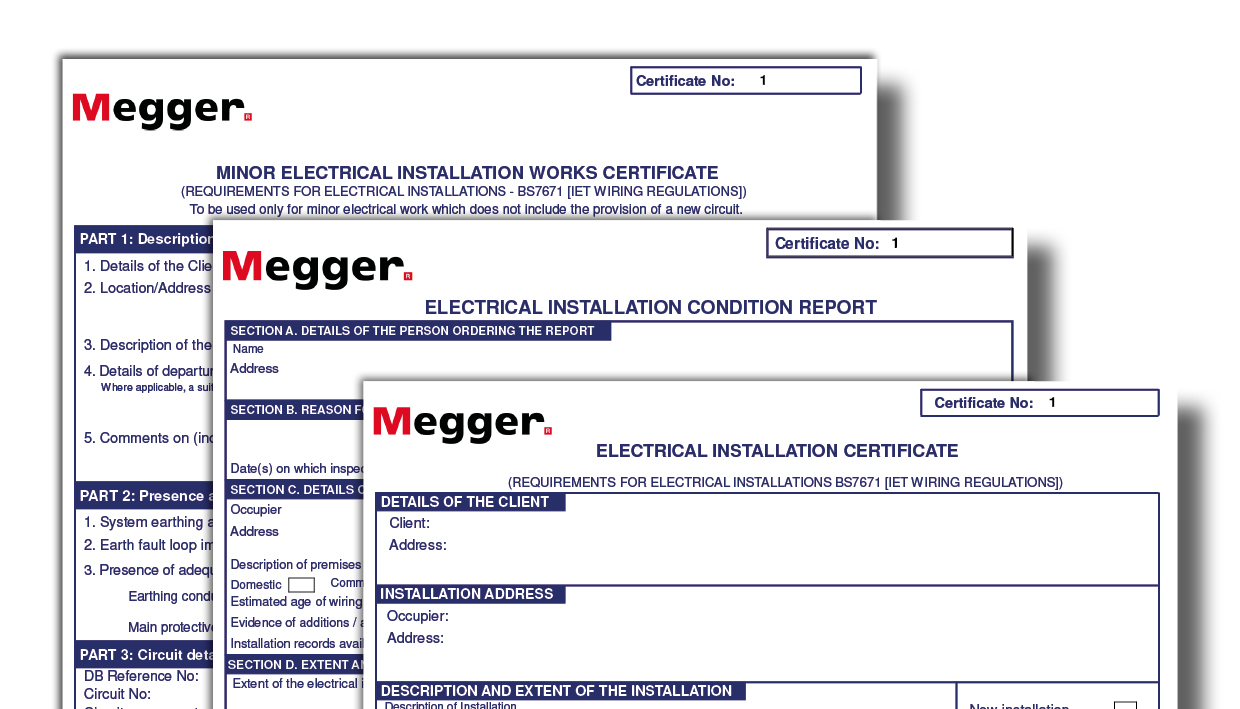
Megger are pleased to announce that the company has acquired the electrical certification company, Vespula, based in the UK. The Vespula software offers electrical contractors a simple to use, cloud-based platform for completion and storage of their electrical installation certificates. The software has been developed to operate seamlessly across multiple operating systems, including Windows, Mac, Android and iOS - both on and offline – allowing certificate completion either on site, using a mobile device, or from the office. The Vespula software extends Megger’s solution to the electrical contract and maintenance industry, where the move to digital certification has been growing. It complements Megger’s portfolio of industry leading electrical test and measurement equipment, whilst ensuring compatibility with our range of Bluetooth enabled multifunction testers that currently offer storage and downloading. Simon Wood, Business Development Manager for Megger’s European electrical market comments, “Megger are always striving to better serve our customers, and we are really excited to be able to offer this as a simple solution to certificate creation.”