2 November 2026
Product of the Month: Amari Floodlight range by Aurora Lighting
 
12 November 2026
Schneider Electric transforms Southampton hospital estate
 
12 November 2026
GTEC Training opens new education facility in North Yorkshire
 
11 November 2026
Energy, AI and smart buildings: register now for EMEX 2026
 
11 November 2026
Solar and batteries could cut electricity costs by 40%, data finds
 

Latest News


Bright new appointment for Floodlighting and Electrical
One of the UK’s leading floodlighting and electrical installation and maintenance organisations has appointed a new Director to help support its exciting growth plans. Following a company restructure earlier in the year, South Wales-based Floodlighting and Electrical has appointed Gareth Roberts, former Commercial Director at Warwickshire County Cricket Club, to shape and lead its ambitious business strategy. With his experience in overseeing significant growth in his previous role, Mr Roberts will focus on progressing the commercial, personnel and operations sides of the business. Roberts says: “This is a rare opportunity to be joining a company of Floodlighting and Electrical’s calibre. It is a very exciting time for the business and I’m looking forward to working with the team, building on the current strong foundations and moving the business forward to the next phase of its development. “The business is already renowned for the quality of its work and customer service and I am looking forward to creating further partnerships with some of the UK’s biggest sporting brands and stadia.” Liam Bevan, Board Member at Floodlighting and Electrical comments: “We are thrilled to have someone of Gareth’s stature joining the team. This is a key time for the business, and he will be pivotal in ensuring that in this difficult climate, we continue to support our existing customers as well as build new relationships and business partnerships. “Although it has been a trying year for many businesses, we believe that it is more important than ever to keep investing in our team and we’re sure that Gareth will share this ethos and work hard to help us drive the business forward.” Established in 1979, Floodlighting and Electrical has installed and maintained lighting solutions for organisations UK-wide. A current team of 11, some of the staff have been with the company since the beginning. Floodlighting and Electrical works closely with major sports stadia and multi-use games areas, as well as sports clubs, universities, schools, leisure centres and councils.

Ingenious invests in electric vehicle charging firm
Ingenious has announced that its Infrastructure Ventures EIS Service has invested £750,000 in electric vehicle charging company, Elmtronics. The funding forms part of a £1.5m investment alongside the North East Venture Fund (NEVF), which is supported by the European Regional Development Fund and managed by Mercia. The investment will be used to step up the roll-out of Elmtronics’ charging points across the UK. The investment follows the announcement that the UK government is to ban the sale of new petrol and diesel vehicles from 2030 and will allow Elmtronics to step up its work in underserved UK regions. Elmtronics has developed its own software - Hubsta - which is installed on the charging points and measures customers’ electricity use, allowing them to manage their account and pay for charging services. The funding will not only enable it to further enhance the software but will also support the creation of 19 new jobs around the country in the next three months, almost doubling the size of its workforce. Elmtronics was established in 2016 by former electricians Dan Martin and Anthony Piggott. Based in Consett and with offices in Bristol, Manchester and London, the firm supplies and installs public charging stations as well as those for homes and businesses. Its clients include Nike, the NHS, National Grid, FedEx, Taylor Wimpey and a number of city councils. Neil Forster, Chief Executive Officer at Ingenious, comments: “We have been following the progress of Elmtronics for some time and are delighted to back a company that aligns strongly with our investment strategy as it is well placed in an underserved market.” Dan Martin, Chief Executive Officer, Elmtronics, says: “The latest Government announcement is another big step forward on the ‘road to net zero’. However, despite the growing popularity of EVs with consumers and fleet users, a lack of charging points continues to deter many from making the switch to electric vehicle use. This funding will allow us to step up our activity to help build the all-important infrastructure. We hope to make Elmtronics a key player in the roll-out.” The transaction represents the eighth investment round from the Infrastructure Ventures EIS Service in the last two years, following the backing of Igloo Vision, the Shropshire-based immersive software and technology company that can take any digital content and put it into a shared immersive space; Shoreline, the intelligent field operations management software start-up; TeraView, pioneer and leader in terahertz technology and solutions; 3D Repo, the cloud-based digital platform design pioneers; Winnow, the technology company behind Winnow Vision, the artificial intelligence tool helping chefs cut food waste in half; Over-C, an analytics company focused on operational performance in the workforce management market and Reactive Technologies, a technology platform facilitating the transition to a low carbon future.

Preparing your cabling for Power over Ethernet 
Power over Ethernet (PoE) refers to the phenomenon of running power and data transmission through the same cable, eliminating the need for separate wiring for each purpose. In doing so, this reduces installation costs and improves flexibility by removing redundant cabling. There is no denying the window of opportunity PoE technology has created, however the need for power and data through a singular cable has caused additional infrastructure considerations. Utilising existing cable structures reduces installation time and money, however, in order to do this the cable needs to be fit to accommodate the additional current being transmitted. This article will discuss the innovation surrounding PoE, as well as the considerations that should be made to ensure the right data cable is used for your specific PoE needs. The uses  There are many industries that have successfully adopted the use of PoE, for example surveillance cameras, air conditioning systems, telephones and supermarket checkouts. PoE has improved efficiency and created opportunity, however, without the correct structured cabling infrastructure in place it can experience multiple issues such as overheating or connection issues affecting the integrity of the data for the end user. The adoption of PoE within supermarkets has made it easier for them to install multiple self-service checkouts in one location. Enabling high volumes of data and power to be transmitted to and from the device over a singular ethernet cable. Progression of standards  2002 The first PoE standards were introduced outlining the types of devices and applications compatible with power sourcing equipment (PSE) for category three cables and higher 2018 The IEEE 802.3bt was introduce to support devices which required higher power supply such as laptops, televisions and video conferencing, enabling power delivery over all four pairs When considering which data cables are fit for your operations, there are some key cabling recommendations for PoE applications. If a data cable is exposed to heat, the attenuation of the cable rises and can affect signal performance. For this reason, ISO and TIA standards define an operating temperature of no higher than 20°c. When power flows through your cables, the copper conductors will start to generate heat and in turn cause the data cable’s operating temperature to rise. This is a common occurrence when the cables are bundled together, which is often how they are installed, but prevents heat from escaping and causing build up. As PoE standards allow for higher power transmission, as resistance increases a rise in temperature can also been seen for the cable and its surrounding areas. As such this consideration has now become more of a conscious design feature required for data cables destined for implementation in complex infrastructures. The use of higher category cables, in itself, supports higher operating temperatures, as the cables are able to support higher levels of current flow, which minimises the risk of resistance and overheating. For this reason, many current infrastructures commonly utilise CAT 6A cable or higher. Industrial integrity and performance  There has been an increased use of PoE cables within industrial environments. Factories and warehouses are also increasingly using smart technologies to streamline their business processes, facilitated by the implementation of integrated devices for optimised data transfer. The use of PoE within these devices reduces the number of cables and removes restrictions in terms of installation, location and more. However, these cables can be more significantly prone to damage. As a direct consequence of the environments within which they are placed, cables can often fall, drop or risk being crushed. This in turn could compromise their ability to transfer data or transmit power. Damaged cables can cause machine outages which could have a huge financial implication on the organisation. PoE cabling is used in a wide range of devices, and within industrial business environments for example: Air-conditioning systems are automated, driven by IoT technologies, using PoE which allows greater flexibility at installation and remote-control enabling monitoring that reaches all areas of the building. Smart lighting systems, powered by PoE, which deliver multiple applications via one cabling system such as motion sensor technologies are proving to be far more efficient. Central control units, which link air-conditioning technology and other smart applications such as temperature control gauges, typically found within data centres are crucial to preventing the risk of overheating and associated failures. PoE technology allows for both power and temperature data to be transmitted over one cabling structure. In process automation sensor technologies typically found in warehouse conveyer belt systems and similar applications which is often seen to be a new invention, PoE has enabled for both data and power to feed to and from the device for a seamlessly consistent, repeatable processes. Preparing for next generation - high power PoE In order to meet the demand for future PoE requirements, high quality cable and connectivity is essential to maintaining continued performance and reliability. Cabling testing should be carried out to indicate performance parameters such as: Temperature control – to avoid overheating and data transfer failing Transmission testing – to ensure the cable meets the industry standards for signal performance Performance futureproofing – to ensure the network is built to accommodate growth advancements, such as higher power requirements or further increases in the number of cables within a bundle Today’s networks must be fast and reliable, with the flexibility to handle ever-increasing data demands. PoE technology can help expand your network possibilities enabling business flexibility by improving processes and staying competitive. PoE, however, is only effective when installed correctly and to the highest standard. Third party testing and certification ensures data cables meet industry performance standards. Transmission cables holding the BASEC mark will have undergone rigorous laboratory product approvals to prove cable quality, allowing you to meet the need for higher data demand and power supply via one PoE cabling product.

ISO 9001: 2015 accreditation for Ovia
The Ovia team has been successful in gaining the International Quality Standard ISO 9001:2015 certification. Certification to ISO 9001:2015 provides assurance that Ovia has evolved its management system to meet the growing needs of its customers and other key stakeholders. Awarded by certification body NQA, ISO 9001:2015 is the internationally recognised standard for Quality Management Systems (QMS) and the most widely used QMS standard in the world, with over 1.1 million certificates issued to organisations in 178 countries. ISO 9001 provides a framework and set of principles that ensure a common-sense approach to the management of an organisation to consistently satisfy customers and other stakeholders. In simple terms, it provides the basis for effective processes and effective people to deliver an effective product or service time after time. Mike Collins, sales director with Ovia comments: “This achievement has been very much a team effort, with the involvement of people from across the organisation and support from the senior leadership team.  It was a thorough and challenging process to go through, but essential in being able to show our customers that our standards and processes are up to date." 

Schneider launches tool to evaluate the cost of servicing power systems
Schneider Electric has launched a new TradeOff Tool, the Edge UPS Fleet Management Comparison Calculator. Using the TradeOff Tool, IT solutions providers, managed service providers, VARs and end users can model the cost implications of uninterruptible power supply (UPS) monitoring and maintenance across distributed sites and make data driven decisions regarding cost, site criticality and servicing resources. The latest addition to Schneider Electric’s library of free digital TradeOff Tools, the Edge UPS Fleet Management Comparison Calculator helps users simplify and clarify the costs associated with monitoring and maintaining a UPS fleet. The model considers the size (VA rating), quantity, age and distribution of the fleet, as well as cost factors such as the expense of service technicians travelling to remote sites. Furthermore, it provides a financial analysis of the potential operational expenses (OpEx) incurred by using internal staff to service distributed sites, or whether engaging with an external partner or vendor can be more cost effective. “With greater dependency on digital infrastructure and IT at the edge, ensuring critical power across distributed sites has become a key challenge for today’s IT professionals,” says Marc Garner, VP, Secure Power Division, Schneider Electric UK&I. “UPS systems must be properly maintained, repaired or replaced when nearing end of life, and deploying sufficient technical staff to perform these tasks reliably and at minimum cost often requires the support of Schneider Electric or external service partners. This tool provides customers the capabilities to know when they should leverage additional resources, while optimising budgets to safeguard against outages.” Calculating the cost of downtime Schneider Electric TradeOff Tools are web-based, mobile-friendly applications that allow channel partners and end users to experiment with different scenarios, using data and science to estimate outcomes during data centre concept and design work. To facilitate cost comparisons, the Edge UPS Fleet Management Comparison Calculator allows the user to input a number of variables to gain an estimate for the amount of downtime that would be avoided by using a partner, or managed service, for monitoring and maintenance. It assigns a cost per hour which will vary according to the size of the UPSs. The larger the UPS, for example, the more expensive the outage. The user can also adjust the cost per hour variable if they have a record of the costs specific to their business. Having calculated the total cost of downtime, whether by self-servicing or through utilising proactive monitoring, preventative maintenance or a service level agreement (SLA), the comparison is automatically displayed. Research detailed in Schneider Electric white paper, ‘A Quantitative Comparison of UPS Monitoring and Servicing Approaches Across Edge Environments’, found that although internal personnel can manage a fleet of new equipment cost effectively, the savings gained by using partner or service provider resources increase substantially as equipment ages. With a fleet of 100 distributed UPS working with an external service partner can offer savings of up to 59 percent under a typical managed SLA. Digital services for the edge According to the Uptime Institute global annual data centre survey, 75% of respondents cited that downtime could have been preventable with better management, processes or configuration. For an organisation with the responsibility of operating multiple IT environments, the cost of having trained technical personnel on-site can be significant and often unrealistic. Using the tool, partners and end-users can calculate the cost of ensuring power continuity and resiliency for distributed, mission-critical IT applications, whether through partners or internal teams. By utilising software systems such as Schneider Electric’s open, vendor-agnostic remote management platform, EcoStruxure IT, customers can gain greater insights into the health and status of their UPS and dispatch service teams to minimise downtime. With its recent Public API and Monitoring and Dispatch Services, EcoStruxure also delivers proactive alerts into the status of edge computing environments, enabling IT Solutions Providers, MSPs and VARs to mitigate the fallout from power outages, and transition to digital servicing models.

Select welcomes second consultation on electrical industry regulation
Scotland’s largest construction trade association, Select, has welcomed a second consultation on regulation of the electrical industry which has been launched by the Scottish Government. The consultation, lodged by Jamie Hepburn, the Minister for Business, Fair Work and Skills, is seeking views on “whether regulatory measures are required to give greater protection to the public and reduce the level of poor electrical workmanship by a persistent rogue trader element”. Select Managing Director Alan Wilson says: “This is another great opportunity for the industry to take part and shape the future. “It’s heartening to see that the Scottish Government believes that regulation of the sector is so important that it merits this further consultation. “It’s an excellent chance for Scotland to lead the way and demonstrate that we are committed to safer and brighter future for the industry.” The latest move follows a consultation by Conservative MSP Jamie Halcro Johnston, which was issued in August and closed on 10 November. Johnston hopes his consultation will lead to a Member’s Bill ensuring that only properly qualified and experienced professionals can call themselves an electrician. Select and the Scottish Joint Industry Board (SJIB) were among those who responded to the consultation, which received more than 140 submissions. In her response, Fiona Harper, The Secretary of the SJIB, comments: “Electricians frequently voice their concerns and frustration that individuals who have not met the established national and industry standards and are not qualified electricians are able to use the title of electrician. “In what is such a highly-skilled and safety-critical occupation, this situation should be rectified and the title of electrician should be protected.” In the Select submission, Wilson states: “Our research suggests net benefits to Scotland from proper regulation of electricians of around £58million, including the benefits of higher electrical standards, such as fewer injuries and deaths, better functioning installations, less need for call backs or for poor/unsafe work to be repaired, leading to improved customer satisfaction.” Select has been leading a long-running campaign with other leading industry bodies to make sure that those who work in the industry do so in a safe and competent manner. The groundswell of support on its Wall of Support has seen more than 100 prominent parliamentarians, industry figures and representatives of trade associations and professional services bodies pledging their commitment.

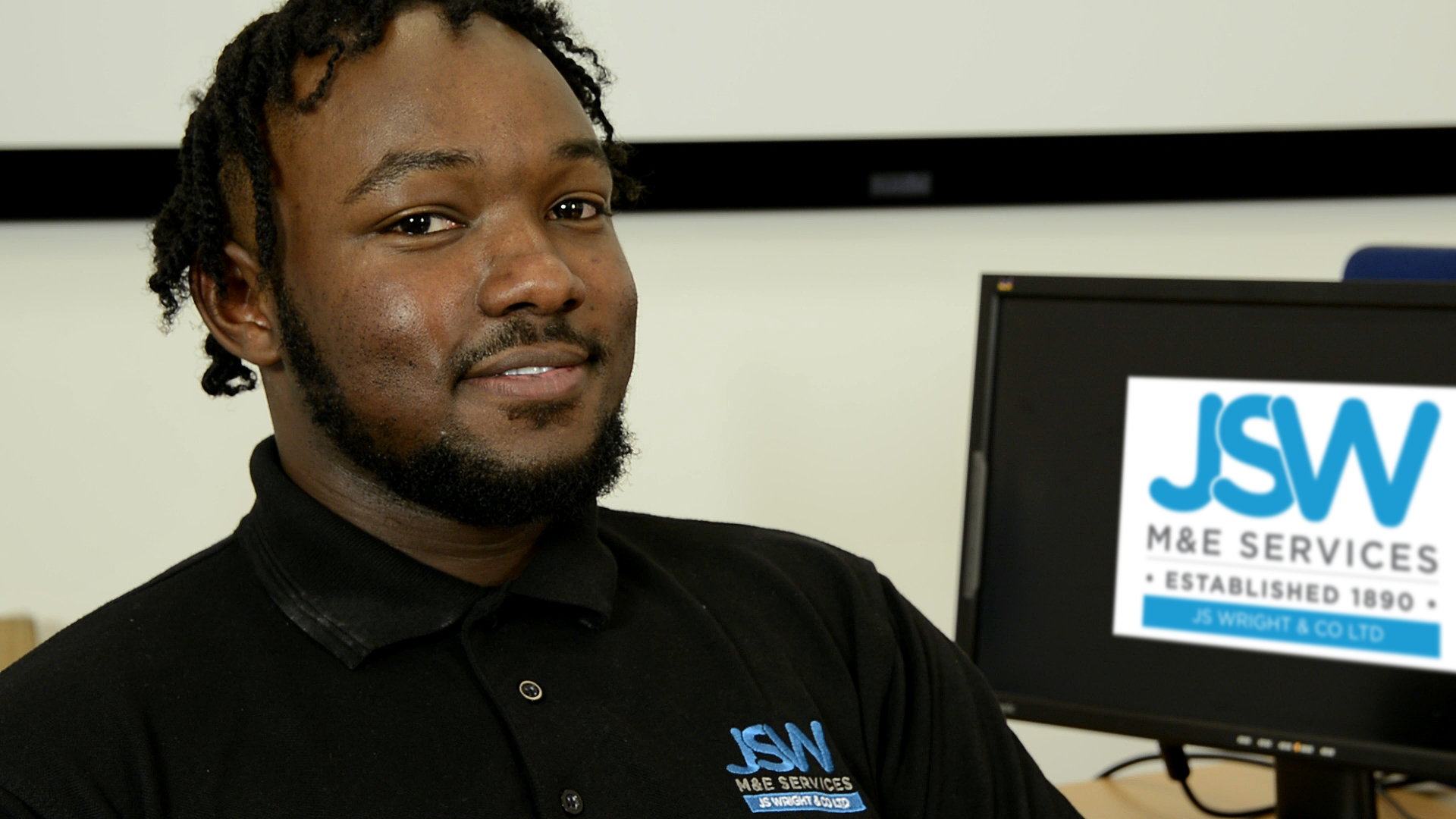
JS Wright wins top award for talent and diversity at BAME
Mechanical and electrical services specialist J S Wright has won a top national award for championing equality, diversity, and inclusion in the workplace. The company beat off competition from scores of other nominations to be named as Construction Services Employer of the Year at the finals of the 2020 BAME Apprenticeship Awards. The awards ceremony, presented on YouTube and Facebook, celebrated the work and achievement of black, Asian and minority ethnic apprentices and the support provided by employers. J S Wright was also celebrated as a finalist in the Small Medium Employer of the Year category at the Awards, while one of its Plumbing and Heating apprentices Shaun Donaldson was applauded for reaching the shortlist for the Construction Services Apprentice of the Year Award. The awards were hosted by TV and radio presenter Remel London and actor and comedian Tez Ilyas, and the winner of the Construction Services Employer of the Year Award was announced by Surju Kanani of Kaplan Financial. Addressing viewers live, Remel London says that J S Wright “prides itself on the training of its staff, giving them the opportunity to develop their career with the help of their development programmes and the support of senior staff, who have been with the organisation since they were apprentices”. Paul Millington, J S Wright Associate Director and Leader of the J S Wright Academy, comments: “This is brilliant and a tribute to the success of our training programmes and the quality of our apprentices. “Special congratulations to Shaun Donaldson, an outstanding apprentice who represents our values of quality, responsibility, collaboration and integrity. This has enabled him to become a role model.” Phil Leech, Managing Director of J S Wright, exclaims: “As a company, we have always been fully committed to nurturing an inclusive workforce in which everyone is given the opportunity to progress.” The prestigious event was run by Pearson, the world’s learning company, and its partner Thinkfest, and the judging panel included head judge Olga Bottomley, CEO of Straight4ward Solutions; Errol Ince, Vice Principal for STEM at London South East Colleges; former National Union of Students President Shakira Martin; and NOCN Managing Director Graham Hasting-Evans. Olga Bottomley says the year had been “fantastic” and the quality of the apprentices has been “phenomenal”. “It has been a pleasure to be a part of such an amazing cause that really highlights diversity in apprenticeships,” she adds. J S Wright’s mechanical and electrical apprentices are all members of its Academy, which helps develop their communication skills. The company’s trainees also follow an Experience programme, involving being mentored in its values, processes and procedures by senior colleagues. J S Wright’s apprentices benefit from work-based college courses through training provider JTL, which was shortlisted for the Training Provider of the Year title at the Awards. The company supported finalist Shaun Donaldson, who is about to embark on his final Level 3 NVQ Plumbing course with the provider while also working on a multi-million pound project to fit out hundreds of new apartments at The Timber Yard development in Birmingham.

Electricity project findings encourages power shift in consumer behaviour
Following the completion of a £5.5 million, three-year project, the OpenLV project team is presenting its findings to community stakeholders via a webinar on 26 November. This project was carried out to explore the benefits of making local electricity data available to businesses, universities and community groups – and how this might benefit the transition to Net Zero carbon emissions. Join the team at 2pm on Thursday 26 November for an overview of the project and its findings. The session will be delivered via a live presentations, videos and pre-recorded interviews that will take you through the project, and there will be a panel to answer any questions. OpenLV was led by project partners Western Power Distribution (WPD) and EA Technology and funded by Ofgem’s Network Innovation Competition. It was designed to explore the appetite for groups outside the electricity industry to access the data from the Low Voltage (LV) Network, and for WPD to understand how the groups could then use and learn from the data. The project saw the installation of LV-CAP technology in 80 substations. Areas where there are high levels of adoption of low-carbon technology, have found access to the data useful – and this will help drive the Net Zero carbon emissions ambition. Tamar Energy Community (TEC) is a Devon-based, established and volunteer-led community energy group, which provides over 300kW of renewable energy generation to its local area. TEC combined the OpenLV data with local generation data from its privately-owned assets and carbon intensity. The group then used the data to educate pupils about carbon emissions. It also allowed TEC to engage with the community, discuss energy issues and influence behaviour. Alison Sleightholm, WPD’s Resources and External Affairs Director, explains: “The solutions that OpenLV developed provided communities with a tool, allowing them to engage with local residents. It has helped them to communicate previously abstract concepts, in ways that become meaningful when applied at a local level.” Roger Hey, DSO Systems and Project Manager at WPD, adds: “OpenLV has built on learning from previous innovation projects and its success positions WPD at the forefront of energy data. By using network data and apps in conjunction with community engagement, we will be able to avoid traditional LV infrastructure, and instead support electrification of energy for heating and transportation. This is a key enabler for the green recovery.” EA Technology project managed the initiative and, developed the LV-CAP technology that enabled OpenLV. David Russell, OpenLV Project Manager at EA Technology, explains: “As our reliance on electricity continues, it is imperative that we change how and where we generate our electricity, but how much we use. Projects like Open LV will help improve how it is managed in the future.”

Ellis engineers national sales role for Norman Shabir
Leading cable cleat manufacturer, Ellis Patents has appointed Noman Shabir as its new national sales manager. Shabir, who is based in Scarborough, has a degree in Electrical & Electronics Engineering (BEng), a Master’s degree in Project Management (PgDip), and joins from Dale Power Solutions, where he’d worked as a sales applications engineer since 2014. Commenting on his appointment, Shabir states: “Living and working in the area you can’t help but know about Ellis Patents. They have a reputation that is the envy of many; not only as innovative and talented engineers, but also for a sales and marketing strategy that ensures its products are at the forefront of specifiers’ minds wherever in the world cable cleats are being specified. To be given the opportunity to join the team and make my mark on the business is a challenge I’m relishing.” Shabir’s new role will focus on UK sales, which account for close to half of Ellis Patents’ £6.5-million annual turnover. He will work closely with longstanding UK distributors, ETS Cable Components and MacLean Electrical; as well as directly with key specifiers; with the aim of further building on the decades of success enjoyed by Ellis Patents. Kelly Brown, Ellis Patents’ head of sales, says: “In recent years we’ve been called in to solve installation and maintenance issues, and develop bespoke products for the likes of Network Rail, Balfour Beatty and Siemens; as well as having our standard products specified at an ever-growing rate across all our key market sectors in the UK.” “Shabir’s challenge is to add to this level of success, while also seeking to capitalise on both new and growth market sectors.” Ellis Patents is based in Rillington, North Yorkshire, from where it designs, develops and manufactures all of its products in-house utilising materials predominately sourced in the UK. At present its cable cleats are actively specified in over 40 different export markets.

Plastics firm to support healthcare sector after power boost
Manufacturers in Littlehampton are able to increase the supply of medical waste bins after a power boost from UK Power Networks. The firm that distributes electricity across London, the South-East and East of England has installed power to a new building for Inpress Plastics, a company helping to produce medical waste bins for the healthcare sector. In order to provide the connection, UK Power Networks upgraded the nearby substation. This required replacing existing equipment and installing 100 metres of new cabling, underneath roads. Matthew Walbank, senior designer at UK Power Networks, says: “Within a few weeks of the customer applying we were able to provide a quotation and start to deliver the project, which helped the customer with their deadline to start production. A job of this magnitude normally take a few months  to deliver but our team worked hard to speed up all the arrangements including the necessary permissions needed from third parties,  so the works to be completed in a very quick and efficient manner.” Henry Powell, commercial director at Inpress Plastics comments: “Mathew and his team worked tirelessly during lockdown to get this project delivered. After, the new factory was opened in very difficult circumstances in no small part due to their work. The Sharpaks range is the only UK made range of medical waste bins and we are pleased to support the UK health sector during the pandemic and for years to come.” UK Power Networks keeps the power flowing for more than eight million homes, schools, hospitals and businesses across London, the South East and East of England. The company invests more than £600 million annually in maintaining and improving electricity networks.