2 November 2026
Product of the Month: Amari Floodlight range by Aurora Lighting
 
12 November 2026
Schneider Electric transforms Southampton hospital estate
 
12 November 2026
GTEC Training opens new education facility in North Yorkshire
 
11 November 2026
Energy, AI and smart buildings: register now for EMEX 2026
 
11 November 2026
Solar and batteries could cut electricity costs by 40%, data finds
 

Latest News


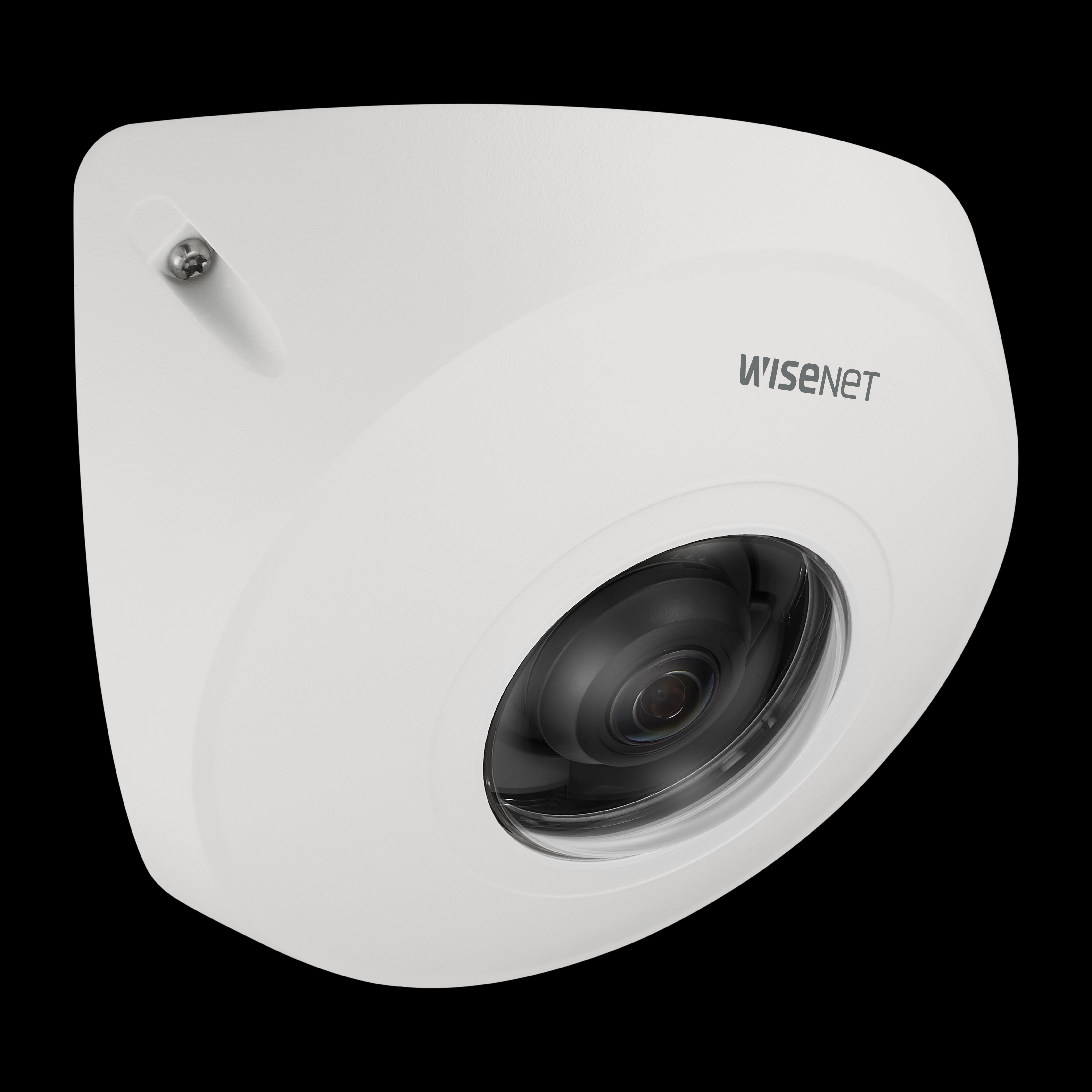
The new Wisenet 5MP anti-ligature corner mount camera
The new Wisenet TNV-8010C 5-megapixel corner mount camera has been built to make it impossible for a ligature to be tied around it, as well as very difficult for someone to rip it off a wall. Although primarily intended to assist police, prison and mental health institutions in preventing inmates and patients from self-harming within secure room environments, the vandal-resistant and water-proof TNV-8010C also offers a robust solution for other demanding applications, such as the monitoring of activity at ATMs and within lifts. With a wide field of view and tilt range, the TNV-8010C features Hallway View which enables the camera to capture 5-megapixel images in a 3:4 aspect ratio and 2-megapixel in a 9:16 aspect ratio, thus enabling users to more effectively monitor tall and narrow spaces, such as corridors. As a true day/night camera which is able to capture clear, sharp colour images when the ambient light level is low, the TNV-8010C is equipped with Wide Dynamic Range technology that performs at up to 120dB to accurately produce images in scenes that simultaneously contain very bright and very dark areas. Key Features vandal resistant. Optional aesthetically pleasing brushed stainless steel cover. Bi-directional audio support. Built-in alarm input/output (I/O). A suite of built-in Intelligent Video Analytics (IVA) includes defocus detection, directional detection, motion detection, enter/exit, virtual line and audio detection, as well as tampering detection which will generate an alert if someone attacks the camera. Bandwidth efficiency is improved by up to 75% compared to current H.264 technology when WiseStream II is combined with H.265 compression. Up to 128GB of video or data can be stored onboard the camera should there be disruption to the network. Video of any incidents, which potentially might have been lost, can therefore be retrieved when the network connection has been restored. Power over Ethernet which negates installing a power supply and separate cabling for the camera. 3 magnet points, which lock the camera’s module into its cover, makes installation quick and easy. “As is the case with our previous 3-megapixel TNV-7010RC corner mount camera which has built-in IR illumination, thought has gone into the design of the TNV-8010C,” says Uri Guterman, Head of Product & Marketing for Hanwha Techwin Europe. “In addition to preventing a ligature being tied around it, the TNV-7010RC’s is considerably smaller than its predecessor. It will fit neatly into a corner of a room and offer a attractive option to installing a dome camera in the same location.”

Western Power Distribution ramps up programme with power flow data access
Western Power Distribution (WPD) has today launched the next wave of its digitalisation programme with the release of its new Real-Time Power Flow Data Access, providing customers and stakeholders with access to live data on energy production and use across the Midlands, South Wales and South West. The new data access tool will allow customers, academics and innovators to view live information on electricity demand, import and generation across the WPD network. The solution will also display historic data, supporting in-depth comparisons and research by third parties. Users will be able to dive into the data, accessing generation split by key types such as solar and wind, providing a deep understanding of the make-up of energy on the network in real-time. WPD’s ambition is that the real-time data resource should provide three key benefits to network stakeholders: Better connections and planning - Customers, local councils and low carbon energy developers will have greater information to make informed decisions, helping to plan where to most efficiently connect new EV charging stations, solar or wind farm generation, or where capacity is available for a new housing development. Supporting cutting edge research - The real-time data will also assist academics and researchers to better understand the operation of the UK electricity network. In combination with other datasets, WPD’s real-time data will help researchers monitor the UK energy network’s response to live events, such as storms and surges in demand, enabling them to more accurately forecast the UK’s future energy and infrastructure needs. Democratising innovation - Echoing the success of TfL’s open data policy supporting innovative services like Citymapper; by opening up its network data, WPD aims to foster a new generation of smart, low carbon energy innovators. These data-led innovators could develop technologies that automatically help customers to minimise their fuel bills or plan a new grid connection. By allowing greater access to its network data, WPD is empowering a wider group of energy innovators to develop the next big idea.

Pioneering collaboration aims to 'shake up' the UK construction sector
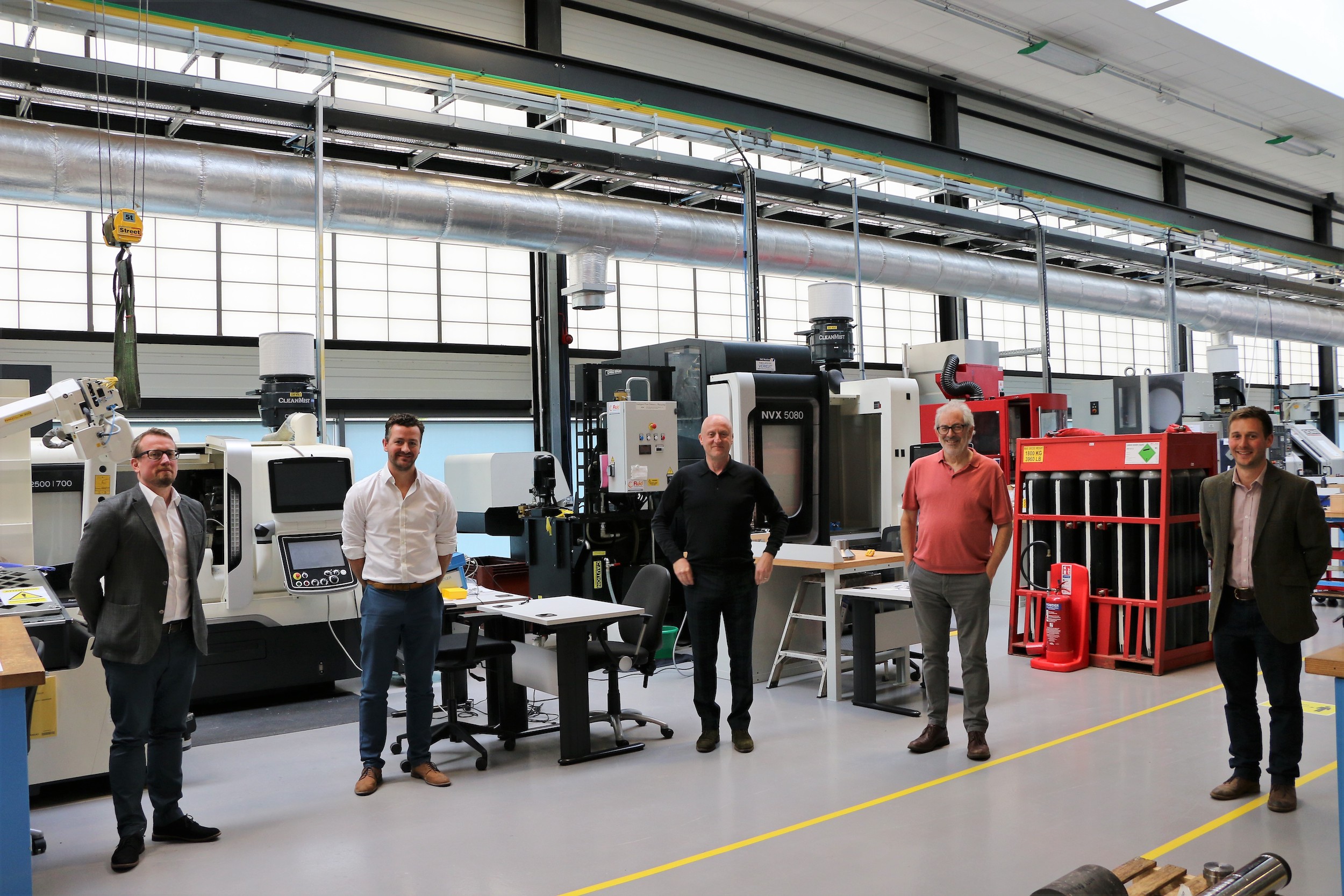
National framework provider Pagabo has forged a collaboration with the Advanced Manufacturing Research Centre (AMRC) at the university of Sheffield, challenging methods in the construction sector, pioneering ideas embracing new technology. The AMRC offers a suite of advanced manufacturing technology capabilities for a range of sectors, offering open access to the latest industrial equipment, leading expertise and an environment of collaboration between industry, academia and government. Its research develops methods that are of use to the manufacturing industry. The organisation transforms industrial and economic performance by making changes in productivity, increasing competitiveness, developing new products and processes and training talent. Steve Foxley, CEO of the University of Sheffield AMRC, says: “We see construction as an exciting industry to benefit from our learnings. “We want to work with Pagabo to create a catalyst for change. They have a unique role within the industry and has influence across a wide portion of the industry “We will be learning from the automotive and aerospace industries and seeing where we can adapt methods that would work in the construction sector." Just a few weeks into the relationship, research into harnessing technology to streamline health and safety methods on sites is under way. Gerard Toplass, executive chairman of Pagabo, comments: “Everyone agrees that construction is a sector that has been left behind in terms of new ways of working. “We want to totally shake up the sector – and create change.” Pagabo created The Future of Construction (TFOC) initiative to drive industry-wide collaboration. “This collaboration between Pagabo and the AMRC will bring the sector together, unify objectives and drive forward real change. “We intend to build on the government’s agenda for its ‘build, build, build’ initiative. We want to foster a new way that future-proofs the construction sector, secures jobs and builds sustainably.” Joining them in the venture will be C4DI, the incubator company that promotes growth in tech businesses, specialist data company Yondr and industry leader Lord Bob Kerslake, states; “Research and development are low in construction, there is little collaboration. Combined, we want to make a difference within the next ten years.” Professor Rab Scott, head of digital at the University of Sheffield AMRC, adds that in weeks, the collaboration had already created change, saying: “We started working with Pagabo on health and safety and looking at ways of using digital technologies to streamline processes. “The diversity of the team is one of the great things that makes me get up in the morning. We are proud of what we are doing and what we are going to do. It is about meaningful relationships, and this is just the start.”

JS Wright lands £20m contract for Nine Elms Parkside
Mechanical and electrical building services specialist J S Wright has secured a £20million contract to support one of the UK’s biggest regeneration projects for Nine Elms, Parkside. The company is to fit out the mechanical services for all 894 apartments – the largest number in the company’s 130-year history - in two buildings (Blocks B and D) at Nine Elms Parkside in Battersea on the south side of the River Thames in London. The build-to-rent development is being built by Telford Homes as main contractor for global rental housing developer Greystar as part of the Nine Elms regeneration project - a new neighbourhood stretching from Battersea to Vauxhall that will eventually contain 20,000 homes as well as cultural, retail and business facilities. J S Wright will fit out the one, two and three-bedroom apartments at Nine Elms Parkside with underfloor heating systems, along with fan coil units for comfort cooling. The company will also equip the kitchens and bathrooms with hot and cold-water services, soil and wastewater disposal systems, sanitary ware and mechanical extract ventilation systems, as well as install above ground drainage services and fire sprinklers for both buildings. All the works will receive two years of planned maintenance cover carried out by Wright Maintenance, J S Wright’s facilities management company. J S Wright has just begun work on site with completion due in the third quarter of 2022. Phil Leech, Managing Director of J S Wright, said: “We are delighted to have been awarded our first contract with Telford Homes to fit out what amounts to the largest number of apartments in our history at one of the UK’s biggest regeneration projects.”

Western Power Distribution calls on innovators to submit projects for NIC funding
Western Power Distribution (WPD), the distribution network operator for the Midlands, the South West and South Wales, is encouraging innovators to turn their ideas into reality by working with them in its 2021 Network Innovation Competition (NIC) call for ideas. As part of the annual NIC scheme, which is run by the regulatory body Ofgem, electricity network companies are invited to compete for funding for the development and demonstration of new technologies, operating and commercial arrangements. The call for ideas is open to companies, individuals, groups and projects that can support WPD with future NIC schemes. Funding will be awarded to the best projects focusing on areas such as data usage in energy transition, electrification of heat, decarbonisation and the electrification of transport. Successful applicants get the opportunity to work with WPD’s engineers to develop their idea into a multi-million pound project. NIC projects run for three to four years, allowing enough time to design, develop, test and trial solutions. The WPD is looking for projects to address the following: How can we best use data to operate our networks more efficiently, and create value for stakeholders? How will the electrification of heat impact our networks, how can we leverage customer flexibility? How can we help authorities to act on the implications of local decarbonisation ambitions? How can we facilitate network capacity to support electric vehicle charging in bad network areas? Yiango Mavrocostanti, Team Manager at WPD, comments: “We've seen exciting innovations emerge from NIC projects and are looking forward to seeing what is put forward. As we modernise the network and look to utilise new technologies, it will become important to work with a range of partners outside of the traditional sector, harnessing different innovation. This is a fantastic opportunity to demonstrate innovative work and apply it to the modernisation of the network. “If you have an idea that will help us towards net zero, please apply.” Previous projects include DC Share which was launched earlier this year. The project aims to deliver EV charging in town centres without the need to upscale electricity infrastructure. Facilitating the charging of 110,000 vehicles projected to be in use across the South West by 2023. Applications must meet Ofgem’s criteria and demonstrate their potential impact on the planning or operation of the network. Projects must: demonstrate the potential to save money for customers and generate learning that can be transferred around the UK.

JTL to offer electrical and plumbing traineeships
JTL has partnered with London South East Colleges (LSEC) to provide a programme of traineeships in Electrical and Plumbing. The traineeship programme gives young people aged 16-24 an opportunity to develop skills and confidence in order to take their first steps into their chosen career. The six-week programme gives trainees an insight into the industry, as well as aiding them with the skills and experience they need to succeed in the workplace. As part of the programme, JTL will support learners to secure a four-week industry work placement, which will provide learners on the job experience. The programme is designed to support young people with basic maths and English knowledge, if required, as well as to enhance their employability skills, including CV writing, interview techniques, timekeeping and teamwork. Learners will also acquire a CSCS card plus Electrotechnical Certification Scheme (ECS Card). Rob Storer, JTL’s London Regional Business Manager, says: “We are thrilled to be forming a new partnership with London South East Colleges to deliver Electrical and Plumbing traineeships. This development builds upon the existing strong links we have with LSEC regarding our partnership work with apprenticeships. Traineeships give young people an insight into the industry through hands on work experience, as well as providing them with the employability skills and health and safety knowledge which will help them progress onto an apprenticeship." He continues: “Combining the strengths of both organisations and sharing resources to deliver high quality traineeship programmes will be a real benefit to young people who have not yet started on an apprenticeship programme and want to take the first steps into their professional career. This is an exciting partnership which will have a positive impact on the sector and young people’s lives.”

UKCA update for cable stockists and distributors
Be prepared for the upcoming changes and ensure the cables you source remain compliant for supply into the United Kingdom. Following the announcement made on 1 September by the UK Government, in respect to UKCA marking, there will now be additional considerations for all importers and distributors in the UK cable market. As of 1 January 2021, UKCA marking will become a requirement. The UKCA marking is a new UK specific product marking, which will need to be used on all construction products and goods being placed on the market in Great Britain, across England, Wales and Scotland. It covers most goods which previously required the CE marking. Cables are currently classified under the Construction Products Regulation (CPR) in respect to reaction to fire properties - the UKCA scheme will be a mirror of the current CPR testing and auditing AVCP system. There will be a transition period of one year, up to 31 December 2021, whereby CE marking for construction products will be allowable, however, as of 1 January 2022, it will be a compulsory requirement for cables used in UK construction to be UKCA marked. Essentially, this means that there will be a one-year period within which stockists will be required to deplete stocks of CE marked product and introduce equivalent stocks of UKCA marked cables. Considering this, it is in the interest of all UK cable stockists to be in discussion with their suppliers to ensure that they are prepared for compliance to UKCA. Stockist should urge their cable manufacturing partners to make the necessary arrangements to meet the transfer testing deadline of 31 December 2020, where their cables can currently be validation tested to transfer cable approvals from their current notified body to BASEC. Where cable transfer testing is conducting in 2021 for UKCA compliance a full testing regime will be required. BASEC UK is due to automatically become a UKCA approved body and will be able to carry out work in relation to AVCP System 1+ and System 3. BASEC Conformity Limited (BCL) has also been established as an EU notified body via NB 2851, meaning BASEC will continue to support CE marking for AVCP System 1+ for the European markets.

BCIA Awards 2021 now open for entry- enter online today!
The BCIA is delighted to announce the launch of the 2021 BCIA Awards which will take place on Thursday 6th May 2021 at the Hilton Birmingham Metropole. The biggest and best Awards in the controls and BEMS industry, the BCIA Awards recognise innovation, product development, project delivery and great training in the building controls sector. For 2021 the BCIA has introduced a brand new online entry system which allows you to start, edit, view and download your entry before submitting it for the 2021 BCIA Awards. The closing date for entries is Friday 22nd January 2021. There are nine different categories to enter: Building Controls and BEMS Installer of the Year: Awarded in recognition of the building controls and/or Building Energy Management System (BEMS) installer which demonstrates professionalism, commitment and understanding of the needs of clients. Engineer of the Year: This award is open to individuals working for controls installers, manufacturers, consulting engineers or FM companies who best demonstrate engineering excellence in controls and BEMS. Young Engineer of the Year: Awarded to the individual aged 35 years or under who best demonstrates the achievements gained through successful participation in the BCIA Technical Training Programme and other building controls educational programmes. Energy Management Award: Awarded to a manufacturer, installer or team in recognition of a project which demonstrates how building controls and/or BEMS have been applied to increase energy efficiency in a building or building complex. Best Service & Maintenance Provider: Awarded to the company which best demonstrates outstanding levels of customer care in the provision of long-term service and maintenance contracts for Building Energy Management Systems (BEMS) and building controls. Technical Innovation of the Year – Products: Awarded to the most innovative building controls/BEMS product development introduced in the last 12 months. Entries must detail what aspects of the product are innovative. Technical Innovation of the Year – Projects: Awarded to the project installer/team which demonstrates innovative thinking on the installation or service/maintenance of building controls or BEMS. The project must have been delivered in the last 12 months. Contribution to Training Award: Awarded to the individual, company or organisation that has contributed to training on the installation, design and/or use of building controls and BEMS. This can include training for controls professionals, clients, end-users or apprentices. Smart Buildings Award: Awarded to a manufacturer, installer or team in recognition of a project which demonstrates how smart technology has been used to enhance the user experience in a building or building complex. Terry Sharp, President of the BCIA, says: “The 2020 Awards were a little different as they had to take place online. That said, the way all of the entrants got into the spirit of it on the night virtually this year demonstrates the high esteem in which the Awards are held by the industry. The excitement of being in the running for a prize, never mind winning one, is enough to create an amazing buzz for the occasion.” Terry concludes: “The entries just seem to get better each year and I am really hopeful that we can all be together again in May to celebrate the finest our industry has to offer.”

An emerging market for CO2 gas sensors to assess COVID-19 transmission risk
COVID-19 has been the unpredictable black swan of 2020, and the second wave in Europe indicates that we might need to live with the pandemic for a long time. Although the development of a vaccine has had a landmark breakthrough, any vaccine will not be widespread quickly and there is still the opportunity for the virus to mutate and become seasonal. While widespread mass testing has been a central focus for governments for months, societies are now facing another question: how can the risk be assessed?, and how can the transmission of SARS-CoV-2 be prevented in the community?. Although the transmission routes for the SARS-CoV-2 are still debatable, there is increasing scientific evidence suggesting that long-range aerosol-based transmission might play an important role. How to assess and control the aerosol concentration are becoming the most critical measures for infection control. Due to the close link of the indoor CO2 concentration and aerosol density, using CO2 gas sensors to monitor the indoor environment can be an efficient method to control the COVID-19 outbreak. The German government is among the first to invest in this technology, installing CO2 gas sensors in schools. These sensors indicate when the air in the room is unhealthy. The Federation of European Heating, Ventilation and Air Conditioning Associations (REHVA) has also published guidance for schools to install a CO2 monitoring system with traffic light indication. While electrochemical gas sensors and metal oxide semiconductor gas sensors are cheaper and smaller, NDIR gas sensors are more reliable and sensitive for CO2 monitoring. The IDTechEx report 'Environmental Gas Sensors 2020-2030”, benchmarks the performance, cost and manufacturing maturity for various gas sensing technologies. Infineon launched new CO2 environmental sensors based on photoacoustic technology. This new product is believed to perform at a similar level as NDIR gas sensors at a lower cost. Director at Infineon, Hicham Riffi, told IDTechEx that they have received a considerable demand for implementing traffic light CO2 sensors in schools and offices. Photoacoustic-based CO2 gas sensors are also provided by Sensirion. They are also aware of the increasing demand for such CO2 gas sensors for HVAC systems and indoor air quality applications.   This new trend will boost the potential market for CO2 gas sensors. IDTechEx predicts that over 50K gas sensors will be installed in Germany alone in 2021 and the demand for CO2 gas sensors globally will exceed 1 million units if other European countries and the new US government decide to follow the same path.

Dutch soccer club wants to tackle covid-19 by installing signify's UV-C disinfection lighting
Signify, recently launched a portfolio of luminaires and devices with UV-C disinfection lighting for the professional market. With Boston University, the company validated the effectiveness of UV-C light sources in inactivating SARS-CoV-2, the virus causing COVID-19. Dutch top Tier soccer club PSV has requested Signify to install UV-C disinfection lighting in indoor spaces, including the dressing rooms in the Philips Stadium and some spaces at its training facility De Herdgang. In total, Signify will install 15 Philips UV-C disinfection upper air luminaires. 3 of those in the dressing room of its own team and three in the dressing room of the visiting team. Another five will be installed in the dressing room at PSV Campus De Herdgang and four in the medical section at its training facility. “Safeguarding player health is important to us and essential for matches to continue. That is why we want to protect them, and visiting players,” says Frans Janssen, Commercial Director at PSV. “The Philips UV-C disinfection upper air lighting enables us to provide our players with protection.” UV-C breaks down the DNA or RNA of micro-organisms, including viruses, rendering them harmless. Signify’s UV-C lamps emit a peak of radiation at 254nm, which is the peak wavelength for germ deactivation, ideal for disinfecting air, surfaces and objects. The UV-C disinfection upper air luminaires continuously disinfect the air that flows through thanks to air circulation. This ensures that the disinfected air flows back and mixes with the normal air. Philips UV-C disinfection upper air luminaires are equipped with shielding and optics to prevent exposure to radiation, so players change without concern. “We’re experiencing a demand for disinfection methods. UV-C lighting helps to disinfect air, surfaces, objects and spaces effectively,” concludes Hellen van der Plas, Market Leader of Signify’s operations in the Benelux. “We’re proud that we’re now able to help PSV, a prominent top Tier club in the Netherlands.” The installation of the UV-C disinfecting lighting will take place in November. UV-C light should always be used by professionals in accordance with safety requirements to avoid humans and animals from being exposed to it, since it can damage their skin and eyes. Signify has been at the forefront of UV technology for 35 years and has a proven record of developing innovative solutions. Signify’s UV-C lighting is designed, installed, and used according to the product-specific safety instructions, and manufactured in controlled industrial processes.