2 November 2026
Product of the Month: Amari Floodlight range by Aurora Lighting
 
12 November 2026
Schneider Electric transforms Southampton hospital estate
 
12 November 2026
GTEC Training opens new education facility in North Yorkshire
 
11 November 2026
Energy, AI and smart buildings: register now for EMEX 2026
 
11 November 2026
Solar and batteries could cut electricity costs by 40%, data finds
 

Latest News


REL awarded M&E package for £20m school refurbishment
Willmott Dixon has appointed REL Building Services to deliver an M&E package as part of a £20m project to refurbish and expand a secondary school in Romford, Essex. The contract will require building services to be sensitively designed and installed within a Grade II listed building at Royal Liberty School. The project will also see REL provide M&E solutions for new facilities, including a food technology room, extra science laboratory, additional classroom space, a larger canteen, and a separate external sports hall. REL’s managing director, Toby Buckley, says: “This refurbishment draws on our skills and experience in both the education and heritage sectors. It requires a carefully modelled M&E solution featuring the latest energy-saving technology and a skilled installation to ensure modern services don’t alter the property's original fabric or features.” The contract follows the success of Romford’s flagship Sapphire Ice Rink and Swimming Pool, which opened in 2018. The development, which featured an ice rink on top of a suite of leisure facilities, was also constructed by Willmott Dixon with REL responsible for all electrical services. Steve Kitchen, director at Willmott Dixon adds: “We’re exceptionally proud of Sapphire Ice and Leisure, which has been a popular addition to Romford and was recently named the UK’s Civic Building of the Year. “We’re keen to make a similar impact at Royal Liberty House School and having worked with REL on a number of projects, know the team has the M&E expertise required to help us achieve this aim.”

Minister and CICV Forum urge construction industry to follow safety guidance
Housing Minister Kevin Stewart joined the Construction Industry Coronavirus (CICV) Forum in reminding the sector’s workers to stay COVID smart in their social lives and when travelling to and from jobs. Stewart insists it was “essential” for construction workers to keep following guidance to prevent the spread of the virus. He paid tribute to contractors and sector staff for their patience, insisting he appreciates the “great sacrifices” that have been made. The Minister for Local Government, Housing and Planning comments: “I’d like to thank construction workers for following our instructions over the past eight months to help keep themselves and others safe – but the job is far from over and, it’s vital that everyone keeps abiding by the guidance. “Under the current Scottish Government rules, construction projects are being allowed to continue, so it is essential that workers keep acting responsibly at all times, both on and off-site. “I know it has been challenging for all of us and we have all had to make great sacrifices, but with winter approaching we are in a crucial stage of our fight against the pandemic, so wherever we are and whatever we’re doing we must all continue to play our part.” Stewart pointed contractors to animations produced by the CICV Forum, which offer guidance on what to do while travelling to work and the importance of physical distancing outside work, with both campaigns underpinning advice from the Scottish government. He adds: “The animations produced by the CICV Forum offer a concise overview of the measure that we should all currently be taking. “I would urge all construction workers in Scotland to watch this guidance and familiarise themselves with exactly what’s needed to keep themselves and those around them safe from the threat of COVID-19. “In the coming weeks and months, our focus must be on collaboration and the construction industry has an important role to play as we move forward with Scotland’s recovery.” The Forum’s travel animation reminds workers to travel alone if possible, open windows, turn off air conditioning and clean all surfaces. If sharing, workers must wear a face covering, with the same people on all journeys. It urges workers using public transport to avoid rush hour, observe physical distancing, carry hand sanitiser and use contactless payments. The collective’s campaign on how to behave away from work urges contractors to “stay COVID-19 smart” by observing physical distancing when socialising.

More than £50million available for Flexibility in biggest-ever tender
UK Power Networks has signalled its commitment to the Flexibility market by unveiling a funding package of £50million covering more than 130 sites in its largest-ever open tender. The electricity network operator is seeking a total of 250MW of flexible capacity and is offering its first ever extra high voltage sites for tender – opening the market to a host of new entrants. The latest tender round offers contracts up to 2028, covering system needs that will arise during the next electricity network price control period. Pre-qualification for the tender round closes on December 8, with the competition open from January 11-20, 2021. This follows the success of the company’s April 2020 tender, when it signed contracts for the worlds first ever low voltage flexibility service. Flexibility is a fast-growing market, enabling low carbon distributed energy resources, to provide additional capacity to help manage the network at peak times. By managing the output of these ‘distributed energy resources’, instead of building new substations, UK Power Networks is reducing costs for consumers. Flexibility proposals were assessed to ensure they are benefitting consumers by offering lower costs in comparison to building new assets. The latest opportunities cover all of UK Power Networks’ three licence areas in London, the South East and East of England. Contracts range from traditional contracts offering the certainty of a set fee for a set service to more flexible contracts that allow providers to make a decision about participating in the market closer to real-time. Sotiris Georgiopoulos, head of smart grid development at UK Power Networks, comments: “We are forging ahead with a flexibility market that is open, transparent and accessible. We are now opening more sites backed by more funding than ever before, and for the first ever time in the UK at every level from low voltage to extra high voltage. “A huge part of our success so far has been because we co-designed the market with the very people participating in it, which has led to a host of innovations such as contracts ranging from six months to seven years in length, and minimum volumes of just 10kW to participate.

12 things our homes need for net zero strategies to be achievable
Beama has launched its ‘Future Ready Homes’ paper, setting out 12 practical actions needing to be at the centre of government strategies for carbon neutral homes. “Obviously the UK has to get significant infrastructure in place and insulate homes on a large scale,” comments Colin Timmins, Director of Member Services at Beama. “But there are a number of technologies and approaches that are equally necessary but easily forgotten. The actions we are setting out will mean that homes and consumers are ready to take full advantage of the future net zero infrastructure, but these actions need to begin now.” The paper looks at how we can make homes ready for low carbon heating, electrification and grid flexibility. The focus is on things that are practical to deliver, that utilise existing technology, and that in most instances provide immediate benefits to occupants. Future Ready Homes has been produced through discussions with manufacturers and suppliers of enabling technologies for the decarbonisation future, who recognise that the importance of such technologies is often neglected. Beama hopes that this paper can help policy makers and others to consider actions that may not be immediately obvious but that are nonetheless vitally important to meet the UK’s 2050 net zero target.

Walworth Road bus garage goes electric
More than 30 environmentally-friendly buses are operating from a Camberwell bus garage, thanks to a new electricity connection. UK Power Networks has completed work at the Walworth site for Abellio London to enable new electric buses to charge overnight, with the project representing a major contribution towards reducing pollution. The delivery team installed a new 1000kVA transformer to provide additional power at the garage. This will deliver supplies for 34 electric buses – 24 buses for the C10 route and 10 buses for the P5 route. By adopting this new approach, costs have been reduced for the bus garage, which is able to draw its maximum power requirement between 11pm and 6am when local electricity demand is very low. This is the latest installation by UK Power Networks to ensure the buses help to meet the UK’s low net zero target and improve London’s air quality. The first was Waterloo bus garage in London in August 2016, which was the first in the UK and saved 900 tonnes of CO2 in its first year. It has since been followed by bus garages at Shepherd’s Bush, Willesden, West Ham and Northumberland Park. Stephen Bradley, head of major connections for UK Power Networks, says: “By enabling more buses to run on electricity instead of diesel, we bring another breath of fresh air for Londoners and we are pleased to be playing our part as the city looks forward to a greener future.” UK Power Networks is leading the development of a smart, flexible grid to support electric vehicles, improve air quality and reduce the capital’s carbon footprint. It advises firms and individuals how to best connect EV charge points, and plan electric vehicle fleets, and also runs electric vans in its own operation fleet.

Scolmore launches online training
With the second national lockdown in place, Scolmore wants to reassure our wholesale customers and contractors that the company is fully operational and working within the current guidelines to continue to supply its full range of products to the professional electrical market. The company’s ability to always hold vast stock levels means that it is able to fulfil orders from across the group, with its extensive range of wiring accessories, lighting and lighting control products, security and fire protection products, and cable accessory products all currently available. For many industries and individuals, the first lockdown created a new way of working, interacting and learning. Scolmore has been working hard behind the scenes to enhance the support offered and now, with technical expert Darren Staniforth on board, will be offering a range of online training resources to help contractors get the most out of its products and solutions and understand some of the key industry issues. A mixture of live videos streamed over Scolmore's social media platforms, and training sessions hosted over zoom will commence on Tuesday, 10th November. Notifications for all live sessions and links for the zoom training will be regularly posted in the run up to each event, and they will be taking place outside of working hours to ensure everyone has the opportunity to take part. The very first live video session will be with Darren Staniforth and will be broadcast across social media at 19.30 on Tuesday, 10th November and will cover the topic of Insulation Resistance Testing of USB outlets.  This will be followed by a live session with Darren on the subject of antimicrobial wiring accessories helping in the fight against the coronavirus. This will take place on Friday, 13th November at 10.00am. The Zoom training sessions will also commence this week with the following programmes scheduled: Wednesday, 11th November 12.00 to 13.00 – an introduction to BS5266 Emergency Lighting with David Robbins Friday, 13th November 12.00 to 13.00 – an introduction to BS5839 and Fire Systems with Scolmore’s group technical trainer Gavin Reid.

Schneider Electric; Data Centre Sustainability, improving resilience and Reducing Costs
Schneider Electric, announced a new White Paper, “How Microgrids for Data Centres Increase Resilience, Optimise Costs, and Improve Sustainability,”. It provides a guide on how technological developments in analytics, sensors and systems management can help data centre operators harness local energy sources to improve the resilience of their facilities. Additional benefits include the ability to implement cost-savings, reduce demands on power supply and boost sustainability efforts, which are a concern for data centre end-users, operators and governments. “With data centre technologies evolving and becoming more available, operators can utilise microgrids to improve resilience, energy efficiency and drive sustainable operations,” says Marc Garner, VP, Secure Power Division, Schneider Electric UK&I. “With this technology, providers can integrate on-site renewables, and generate revenue by storing electricity and selling it back to the grid.” A microgrid provides power to consumers, comprising of a entity such as a data centre, or a cluster of facilities. The energy resources may include: diesel generators, used as backup power sources to the mains utility; combined cooling, heat and power systems where gas engines or turbines generate electricity; and storage systems. The white paper details how a microgrid based on a three-layer architecture can be used to improve operational resilience. The first layer, comprising smart sensors based on Internet of Things technology, provides monitoring and control capability to distributed energy assets. The second layer comprises a microgrid controller and associated software to allow local Edge control to take place in real time. At the top layer, applications, analytics and services, typically hosted in the cloud, help decision makers to optimise how and when to produce, consume and store energy. This helps to manage a multi-layered approach to system resilience, ensuring that there is sufficient battery and generation capacity in place to withstand any outages from the mains. Microgrids can help optimise energy costs and maximise the use of sustainable energy. Generation of solar or wind energy can be integrated into the energy using control systems now available at cost-effective prices. Combined with analytic software that can predict weather conditions likely to be conducive to renewable energy generation, operators can reduce demand on mains power or even sell energy back, thereby reducing costs and boosting the viability of environmentally friendly energy production. A report by Schneider Electric reveals the importance of sustainability and efficiency for multi-tenant data centre operators. Driven by customer demands, the report finds 80% of colocation service providers have major sustainability programs in place to improve the way they operate their data centres. Moreover, 57% of respondents believe that sustainability will be highly important competitive differentiators in the future, and 97% say that some or all of their customers are looking for commitments to sustainable practices.

Flipping the switch
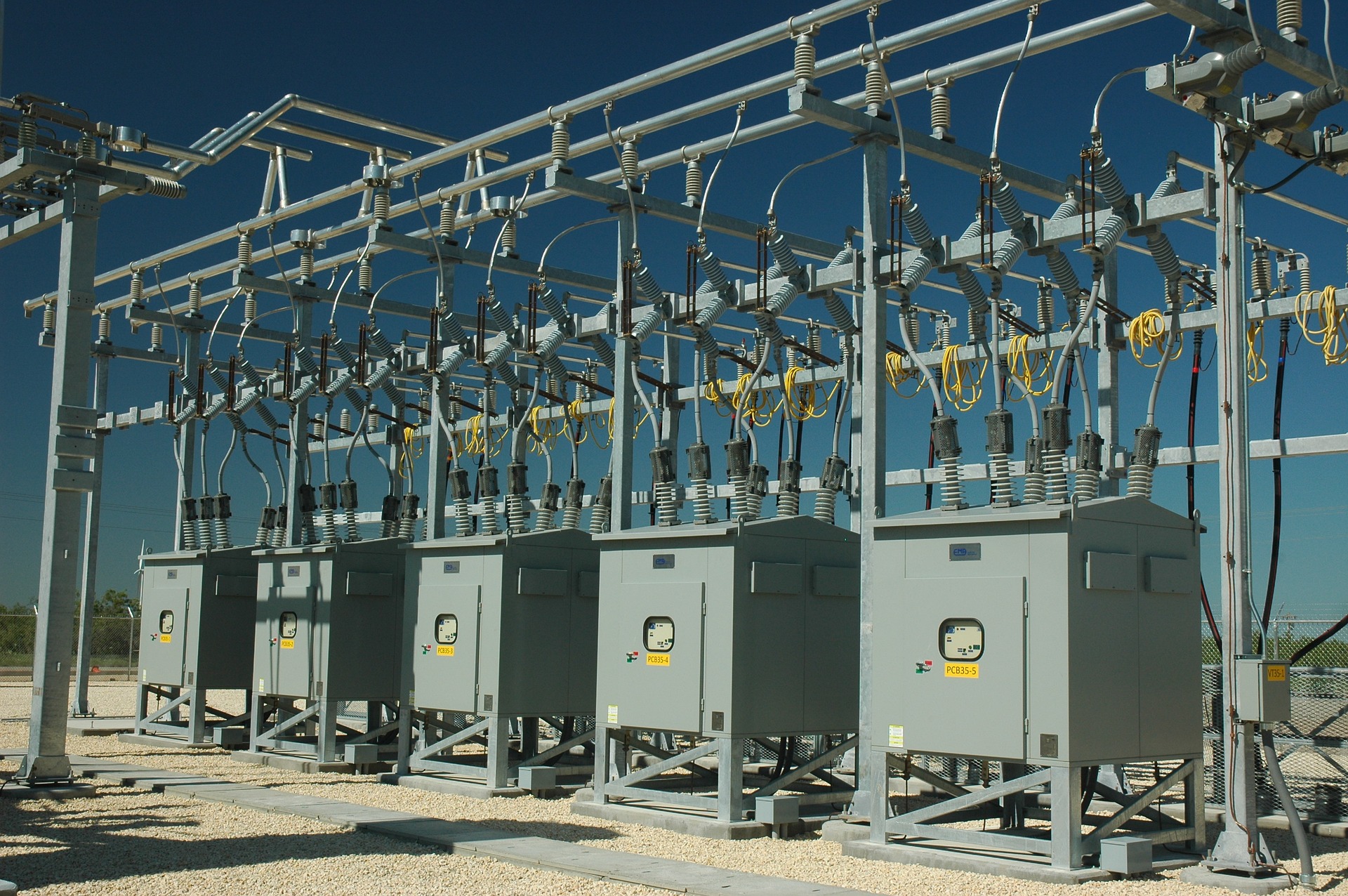
The Natref petrol refinery, has been at the cutting edge of refining technology ever since its inception. Because the local market for heavy fuel oil is limited, Natref is designed to get the most out of crude oil. Optimising its use of the bottoms upgrading refining process, Natref can produce 70% more white product than refineries which rely on heavy fuel oil. Automatic circuit breakers are used to protect circuits from damage in the event of a system overload. They do this by interrupting current flow if a fault is detected. Unlike a fuse, circuit breakers are reset to resume normal operation. However, they have a finite operating life and can only be reset a certain number of times. Monitoring circuit breakers at substations is a problem for engineers since they traditionally had no way of knowing if one went off and had automatically reset. Existing on-site alarms showed the current state of the circuit breakers so, if reset, they would present as normal. Engineers were unaware of underlying issues at the substations because all circuit breakers were showing as normal, and incidents went undetected. Being unable to detect and record faults in the system led to increased maintenance costs. To overcome problems, the plant managers at Natref engaged Omniflex to provide a way of monitoring breaker activity. Omniflex implemented alarm annunciators monitoring circuit breaker operations, logging recorded events to 1 millisecond. The data is recorded on a built-in SD card to produce an electronic data repository for auditing purposes, improving fault finding performance. From each monitored switch, the signal is split so it goes to the annunciator and the sequence of events record in parallel. The contact from the circuit breaker is monitored, open or close, and the annunciator traps the momentary alarm caused by the circuit breaker tripping and maps it to the alarm status. This enables engineers to see if there has been an incident, even if the circuit breaker has automatically reset. Each substation has a GPS time synchronisation module, updating and synchronising time across the system, allowing comparisons to be made across the plant on a unified time-base. By adopting this technology, plant managers can reduce maintenance, implement a predictive programme, replacing circuit breakers and minimising downtime. By tracking all circuit breaker trips, problem areas in the system can be identified by looking at repeated circuit breaker.

CICV with Construction Scotland Innovation Centre launch 'Be Covid Smart' digital toolkit
In its latest initiative to help Scotland’s building sector, the Construction Industry Coronavirus Forum has used technology, creating a digital learning toolkit to promote best practice. Working with Construction Scotland Innovation Centre, linking business', university experts and public sector providers, the Forum launched the Be Covid Smart learning programme. Using a series of digital scenarios, this training programme aims to raise awareness of COVID-19 safety by: educating encouraging empowering Recognising that the safe return of workers to site is a challenge, Be Covid Smart provides a fun, quiz-based toolkit that can be accessed via mobile, or laptop, hosted on the CSIC website. Iain McCaskey, Head of Devolved Nations at the Building Engineering Services Association and Head of the CICV Forum Skills Group, who is leading the programme, says: “The Forum identified the need for a safe return to work, also for reassurance for apprentices, their families and employers. “This learning solution will not only raise awareness of safety, but identify the user’s knowledge of the steps to protect themselves and others. “Be Covid Smart will be available to everyone within Scottish construction. However, initial targets will be small site operators and companies employing apprentices, as this is where support is needed.” The toolkit will start supporting domestic work and apprentices and their colleges, exploring the health and safety aspects of working within a college workshop, around the building and how to get to and from work or college. Lisa Deane, Lead Future Skills Manager at CSIC, states: “We're launching the platform with place of learning and domestic work modules, followed closely by On-Site modules. “We’ve worked with the Glasgow School of Art to bring a fun way to learn COVID-19 safety practices, which will give the workforce, businesses and customers confidence in the industries high safety standards. “This is a new approach within the construction industry, which can be updated as circumstances change and which could support markets outside of Scotland interested in the ways we’re dealing with a return to work.” The project was funded by CSIC’s i-Con Challenge Fund, to support the construction industry. It's just one in a string of forum initiatives, including travel advice, underpinning operating guidance and a series of commercial and employment webinars to give advice on redundancy, payments and conflict avoidance. Made up of more than 70 trade associations, the Forum has maintained a supply of information and advice to the sector, as well as carrying out surveys, producing animations and posters, hosting webinars and making appeals to Government.    

BT hits 100% renewable electricity and helps the UK with tech campaign
At a Digital Impact briefing, BT announced its network, offices and shops are powered with 100% renewable electricity. Furthermore, that its top tips on tech campaign helped 5.7 million people to stay connected during Covid-19. Whilst challenges remain, collaboration with the RE100 initiative is helping to make improvements. BT’s transition supports development of local renewable markets, with 16% of its electricity supplied through corporate Power Purchase Agreements and green tariffs. Making the switch will help BT reduce its carbon emissions by 54,000 tonnes. Cyril Pourrat, Chief Procurement Officer at BT, says: "With consuming 1% of the UK’s electricity, green recovery is important to BT, securing renewable electricity contracts.” Sam Kimmins, Head of RE100, states: “We congratulate BT. They’re pioneers in setting a 100% goal and making impressive progress. Sharing their successes and challenges, BT is helping unlock clean energy worldwide.” In April, BT teamed up with the nation’s talent to teach digital skills including WhatsApp, home schooling, business and physical/mental wellbeing. The campaign saw Marcus Rashford and David Walliams, amongst others in lessons during ad’s. 64% of adults saw one, 68% saw an average of four ads. 5.7 million did something new as a result. Andy Wales, Chief Digital Impact and Sustainability Officer at BT comments: “Connectivity is like never before; working from home, entertaining your kids or staying in touch. It’s amazing that people have been embracing technology.” To drive emissions down, Openreach is replacing a third of its 27,000 engine vehicles to electric. In June, BT and Openreach joined forces launching the UK electric fleets coalition. 27 companies have been communicating benefits of switching to electric, calling for policies targeting 100% electric car sales by 2030 and speeding up the rollout of charge-points. BT has led climate action for 28 years, being the first company to link its goals to the level of reductions in emissions, limiting harmful impacts on the climate. They pledge to become a zero carbon emissions business by 2045 and set targets with the ambitious aim of the Paris Agreement - to limit global warming to 1.5°C. Last year, they helped customers save 13m tonnes of carbon – achieving its 3:1 target early. Every tonne emitted by BT – three tonnes of customer emissions were saved. BT’s commitment will help the Government meet its target of zero emissions by 2050.