2 November 2026
Product of the Month: Amari Floodlight range by Aurora Lighting
 
26 November 2026
Thorn scores second Highland football lighting installation
 
26 November 2026
Segen pens exclusive distribution contract with M-Rack
 
25 November 2026
Scolmore helps rejuvenate Tamworth Cancer Support Centre
 
25 November 2026
Leicester apprentice crowned 2026 SkillELECTRIC champion
 

Latest News


Knightsbridge announces most innovative LED panel to date
Knightsbridge explains why its new LED panel is the most versatile, innovative LED solution to date. Knightsbridge, one of the UK’s leading lighting and wiring manufacturers, has announced its most innovative LED panel to date – a product that promises to provide a solution for countless new and retrofit projects across the UK. Available in four sizes (6W, 12W, 18W and 24W), this product has been designed to suit multiple applications. Here are three reasons why it is so versatile: Adjustable fixing bracket The adjustable bracket on the rear of the panel, which features fixing clips mounted on a rail-type mechanism, allows recess mounting into existing apertures with a cut-out radius anywhere between 55mm to 250mm (depending on the product size chosen). The same bracket enables the panel to be surface mounted on the ceiling or wall. Flexible CCT options The panel can be adjusted to three colour settings (warm white, cool white and daylight), with the chosen CCT locked in place via a simple switch on the rear of the product. This can also be set to ‘switch’ mode, enabling the product to be CCT adjustable via a wall switch giving additional control to the end user. This ensures the product is adaptable for multiple commercial, retail, and domestic environments where end-user control may or may not be required. Easy-fit design options Finally, in terms of design options, Knightsbridge is selling optional polished chrome and brushed chrome bezels that can easily be fitted onto the product thanks to an easy-fit magnetic construction. The ultra-low projection (15mm) makes this product the perfect fit for new build and renovation projects, regardless of the mounting option chosen. For more details, visit mlaccessories.co.uk or watch the video below. https://vimeo.com/366517221

European report highlights importance of electricians
The head of Scotland’s largest trade association has highlighted a major European report on the importance of electricians to an increasingly digital-dependent society which strongly reinforces the sector’s campaign for Recognition of Electricians as a profession. The first ever Europe-wide sector report - published by AIE, the European Association of Electrical Contractors - emphasises the vital, safety-critical contribution which electricians make to day-to-day life across the continent, as well as being key players in major advances in infrastructure, the digital economy and climate change goals. And it points out that the 300,000 electrical companies in the EU and EFTA have a combined annual turnover of €214 billion (£184bn) and employ 1.8 million highly-skilled and technically proficient people, or one in every 134 professionals. Alan Wilson, Managing Director of Select, the campaigning body for the electrotechnical sector in Scotland, which contributed to the report, says, “This snapshot of the electrical sector across Europe confirms that the work of electricians is more complex and more highly valued than that of other construction professionals. “The intricacies of modern electrical installation underpin everything from the internet to cars, hospitals, homes and businesses and the ubiquity of electricity and its applications must soon be recognised with professional status. “This is why Select and other organisations – backed by many influential individuals and MSPs – have been campaigning so vigorously for Protection of Title for electricians in Scotland, a campaign which is being considered in Parliament even now.” Select’s campaign for Recognition is supported by the Scottish Electrical Charitable Training Trust (SECTT), the Scottish Joint Industry Board (SJIB) and Unite the Union, among others. The report reveals that electrical companies account for 15% of the overall construction sector turnover in Europe and that growth is being driven by decentralised and green technologies. It backs arguments by Select that skills in the sector are evolving rapidly to keep ahead of technology and that the sector is quickly becoming white rather than blue collar, a transformation which should be recognised at government level in the interests of consumer safety. Digitalisation is having an increasing impact and is changing installations and work processes away from traditional skill sets, meaning that more diverse digital skills are urgently needed. Select says that, at present, the profession has more than 3,000 people in training as part of its investment in the future. Wilson adds, “We are all becoming increasingly reliant on an electric future, with emerging technologies which entail previously undreamt-of levels of complexity. The electricians needed to make it all work are delivering a vital contribution to society. “At Select, we will continue to contribute our expertise and insights to organisations such as the AIE, as well as helping prepare our members deal with new areas such as renewables, home technology, smart meters and electric vehicles. “The importance of the electrical sector has never been greater and, with our European counterparts, it plans to rise to the challenges and opportunities ahead.”

PrefectIrus added to Energy Technology List
Prefect Controls has announce that its PrefectIrus system has been listed on the Energy Technology List (ETL), which entitles buyers to claim an Enhanced Capital Allowance (ECA). The ECA scheme means that a business can invest in energy-saving plant or machinery that might otherwise be too expensive. The Energy Technology List is one of the world’s largest databases of top performing energy-efficient products. The first-year allowances let businesses set 100% of the cost of the assets against taxable profits in a single tax year. This means the company can write off the cost of the new plant or machinery against the business’s taxable profits in the financial year the purchase was made. This is equivalent to approximately five-and-a-half times the benefit of standard tax relief in the year of purchase. An ECA is claimed through a business’s income or corporation tax return in the same way as any other capital allowance. Businesses buying products listed on ETL can also make significant energy savings. PrefectIrus is a Building Management System specifically designed for multi-occupancy properties such as student accommodation or hotels – and controls rooms individually. PrefectIrus ensures energy is only used when heating is required, if rooms are empty or windows are open the system automatically reverts to lower settings, only increasing temperatures when inhabitants return. Occupants have control over the comfort of their environment, but ultimately, energy managers have control over energy use via the web-based portal. Along with temperature, PrefectIrus also controls and monitors humidity, light, CO2 and decibel levels as well as hot water – even alerting management if leaks are detected. Another feature is the ability to automatically buy energy when tariffs are low, avoiding costly peak times use. By embedding the ETL into procurement processes, organisations ensure they are buying the best energy-efficient products. Doing this will reduce the time it takes to find good quality products, and can deliver resource, energy and financial savings.

Lighting efficiency pivotal to environmental policy, says Ecolighting
Steve Gardner, Managing Director of EcolightingUK, discusses how reduced energy consumption has to be the starting point for any realistic energy efficiency policy. Despite great strides taken in recent years to run businesses in a more environmentally-friendly way, companies are still failing to cut their energy consumption, and it’s costing their shareholders and the planet dearly. Organisations across all industry sectors believe they are playing their part by adding solar panels to their buildings, putting up wind turbines in car parks and planting flowers on roundabouts, but a plan to reduce energy consumption has to be the starting point for any realistic energy efficiency policy. Nothing burns more energy within a building than lighting. In fact, it is estimated that in a warehouse or distribution centre, lighting accounts for around 70% of the annual energy spend. But by replacing old and inefficient sodium light fittings with ultra-efficient, modern LED luminaires, these costs and the CO2 emissions that go with them can be cut dramatically. EcolightingUK has improved the lighting at hundreds of sites in its 48-year history, and regularly sees yearly lighting bills drop by around £5,000 (83%) in 12 months. This also results in annual CO2 emissions being slashed from around 29,000 kg to 4,900 kg. Introducing energy efficient lighting will reduce any company’s CO2 emissions and save an organisation a significant amount of money on energy, so companies wanting to get serious about their environmental credibility and operating costs simply have to review their lighting policy. In April 2018, a new legal standard for minimum energy efficiency was brought in for rented commercial buildings. Previously, commercial buildings had an energy efficiency rating of A – G, with F and G as the worst performing. The new law introduced a minimum standard of E, which means that buildings cannot be rented out unless they meet that standard. Industrial buildings are exempt from the new standard, and Ecolighting is calling for that to change. There is currently no accepted means of measuring an industrial building’s energy efficiency. As a result, occupiers have no way of telling if the building is efficient, inefficient or somewhere in between. So a system that gives industrial properties an energy efficiency rating would be hugely beneficial to both existing occupiers and those looking to rent or lease a new unit. Installing a low-energy LED bulb may seem like a trivial contribution to cutting the carbon emissions that are overheating the planet, but if millions choose LED lighting, this will lead to a small but significant dent in the UK's energy demand. Lighting accounts for nearly 6% of global CO2 emissions, so a global switch to energy efficient light emitting diode (LED) technology could save over 1,400 million tonnes of CO2 and avoid the construction of 1,250 power stations.

Select Awards ceremony recognises worthy winners
In a year in which the Scottish electrical industry took another historic step towards being recognised as a profession, Select, the country’s largest trade association, paid tribute to the sector’s leading talent, drive and enterprise at a ceremony held on October 11. Behind the glitz and glamour of the campaigning body’s annual awards ceremony at the Radisson Blu hotel in Glasgow was burgeoning support from all quarters for moves in Holyrood towards Protection of Title. The ceremony also coincided with the cinematic showing of The Current War, a Hollywood film which highlighted the way that electrical power transformed the world and took societies everywhere out of literal darkness. In a world which is increasingly dependent on electrotechnology, Select singled out some of the individuals and companies which have stood out from the crowd and delivered particularly outstanding services. Electrical professionals from companies large and small, and from every part of the country, gathered in Glasgow to submit themselves to the critical judgement of their peers – and emerge as winners. This year also saw a new award category – the Health and Safety Initiative award – which replaced the Best Electrical Safety Project award. Alan Wilson, Managing Director of Select, comments, "There has never been a more exciting time to be part of the electrotechnical industry; a sector which underpins everything we do in our day-to-day lives. “Scotland's electrical trade has earned and maintained a reputation for quality, craftsmanship and excellence, and Select has been instrumental in raising awareness of quality, safety and the highest possible standards. "The 2019 awards are all about recognising top performers, and once again we have been astounded by the response from companies throughout Scotland. Every one of them is a worthy winner." As an example of the growth the sector has experienced, the Best Large Contractor award went to Ayrshire-based Booth Welsh, which has transformed itself from a local company in Irvine into a globally operating concern with hundreds of employees. Wilson notes, "Scotland is very lucky have major players like Booth Welsh – which have gone out into the world and come back with hard-won export orders – in its industrial and commercial portfolio.” Other award winners were as follows: - Apprentice of the Year, won by Marc McQuade, who works with Weir & McQuiston. - Wholesaler Apprentice of the Year, a recently-introduced category, won by Rian Keegan, who works with CEF in Glasgow. - Best Small Contractor, won by Aberdeenshire electrical company, RH Electrical. - Best Medium-Sized Contractor, won by Interlink Lighting and Electrical, of Glasgow. - Best New Product, won by South Wales company Super Rod, for its Ferret WiFi Cable Pulling Tool. - Best Delivery of Customer Service, won by Electrical Solutions Network of Ayrshire. - Best Use of Training, won by JFM Electrical, of Bellshill, Lanarkshire. - Best Visual Promotion, won by for the second time by Ideal Electrical Solutions, of Edinburgh. - Health and Safety Initiative, replacing the Best Electrical Safety Project, and won by EDI-Aberdeen. The Lifetime Achievement Award, sponsored by Schneider Electric, was made to Bernard McAulay (pictured above), Unite the Union’s national officer for construction, allied trades and technicians, who is also a member of the Scottish Joint Industry Board (SJIB). Wilson says, "Bernard McAulay’s focus over the course of many years of high-level union activity and negotiation has always been on the workers he represented and he has never sought the spotlight for himself. “Like many of the people he represents, he has always been a hard worker. He is not only tenacious and determined, but is well known throughout the industry as being very capable of driving a hard bargain on behalf of his members. We are delighted to be able to pay tribute to him.” The evening was hosted by popular radio and television personality, Shereen Nanjiani, and was attended by more than 350 guests from a wide spectrum of companies, ranging from major electrical enterprises to local firms, illustrating the diversity and strength of Scotland's electrical sector.

LCL Awards helps plug the EV demand
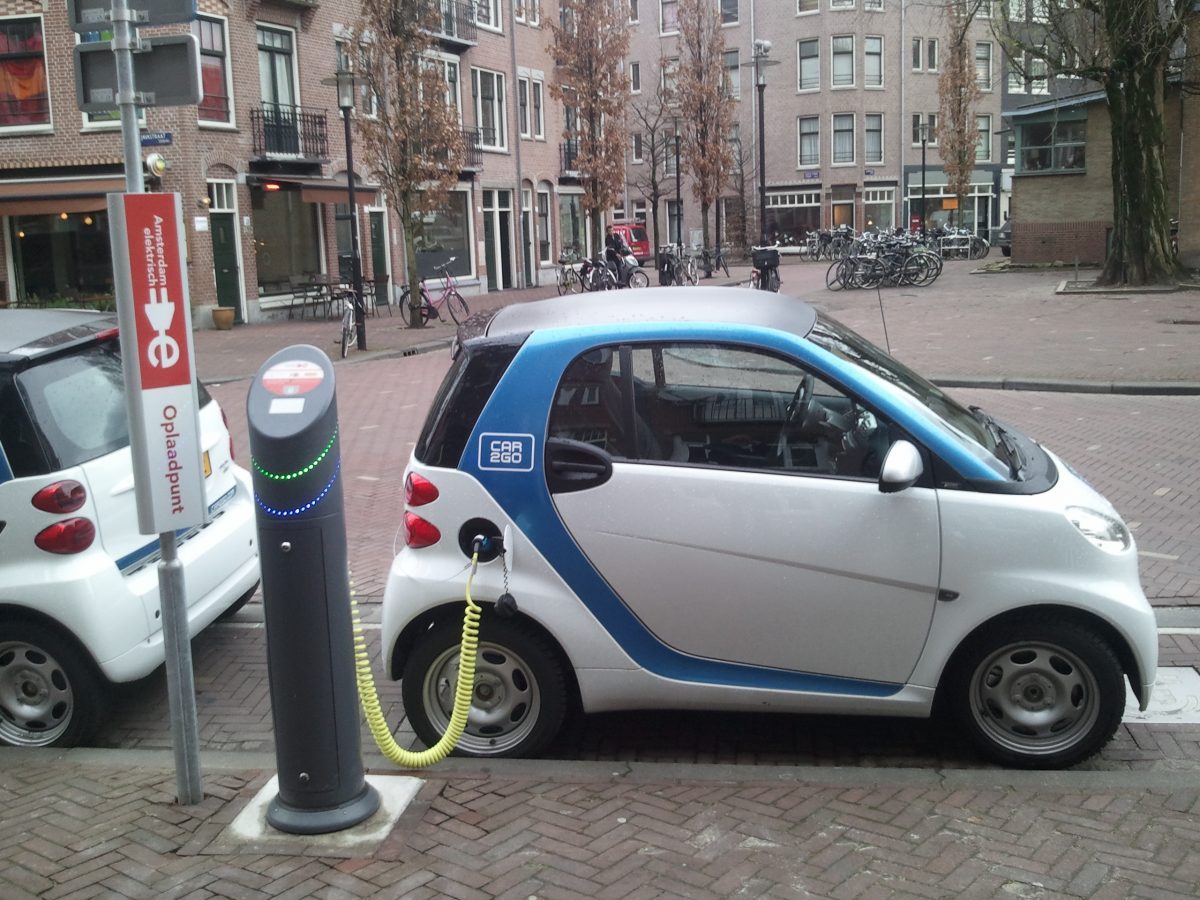
In response to a growing demand for electric vehicles, LCL Awards has developed a new EV charging qualification titled 'Level 3 Award in the Installation and Commissioning of Electric Vehicle Charging Equipment in Domestic, Commercial and Industrial locations'. The course has been introduced to help electricians take advantage of a marketplace that has grown significantly over recent years. The government is aiming for at least 50% of new car sales to be ultra-low emission by the year 2030, with £400 million invested to accelerate the roll-out of charging infrastructure, creating many more jobs for suitably trained installers. Other factors driving demand include the Government's recently published consultation document that proposes a change to building regulations that would see EV charging points mandatory on all new domestic and non-domestic buildings, and all existing non-residential buildings. There's clearly an urgent need for electrical engineers with the skills to fit a the EV charging network. The Level 3 Award in the Installation and Commissioning of Electric Vehicle Charging Equipment in Domestic, Commercial and Industrial Locations is aimed at practising electricians, electrical technicians and engineers with experience in electrical installations and associated testing. The qualification covers the installation of dedicated charging equipment for electric and plug-in hybrid road vehicles (PHEV), and extended range electric vehicles (E-REV). Both AC and DC charging equipment is included, complying with BS EN 61851 and "The Code of Practice for Electric Vehicle Charging Equipment Installations". LCL Awards' new EV charging qualification is available from its approved centres throughout the UK.

London furniture shop in the spotlight
When furniture shop, Davidson, wanted to change its LED lighting system at its showroom in Chelsea Harbour, London, it opted for Yori Evo fittings from Reggiani. Davidson is a family-run company that designs, manufactures and installs bespoke, high-end furniture. It works with interior designers, architects, project managers and private clients to provide elegant, unique pieces worldwide. The original lighting system incorporated wide-beam spotlights that created unwanted glare on the furniture on display and didn’t show the exquisite pieces to their best potential. Lighting Design International (LDI), based in Hammersmith, was approached with a brief to find the right specification of spotlight to eliminate the glare issues and literally show the space in a new and better light. LDI chose Reggiani’s Yori Evo Box system for its colour rendering index (CRI), a good range of beam angles, and the assortment of accessories to choose from to achieve the perfect illumination via honeycomb louvres and softening lenses. Working closely with Reggiani, LDI devised a system using a mixture of narrow and medium-beam matt black spotlights that would ‘pinspot’ and highlight each piece of furniture and decorative artefacts on display to make them stand out and provide real impact throughout the showroom. Using a three-circuit track clip-in system in two and three metre lengths, the medium-beam spots were interspersed between narrow spots over the furniture, specifically arranged to highlight each individual display area within the showroom. Spotlights equipped with a softening lens were used on the wall art, with some spotlights fitted with honeycomb louvres for other areas in the showroom to diffuse any glare.

EDA publishes state-of-the-sector research findings
Research released by the Electrical Distributors’ Association (EDA) shows that in-person support offered by wholesaler trade counter teams is still a highly valued resource for electrician and contractor customers, despite the proliferation of ecommerce channels. This is just one of the findings in the EDA’s Sector Survey 2019, the Association’s latest piece of substantial research. Manufacturers, wholesalers and contractors were asked to share their views on six themes: biggest business challenges; product quality and new competitors; quality, price and validation; ecommerce attitudes; challenges of digitalisation; and information channels. Ecommerce channels dominated the results, presenting the biggest concern for wholesalers, with contractors and manufacturers more troubled by issues surrounding product availability, quality and price. A significant disconnect occurs between wholesalers and contractors on the subject of price: 88% of wholesalers said their customers asked for the lowest price even if the brand was unfamiliar, with 80% of contractors declaring the opposite. Margaret Fitzsimons, CEO at the EDA, comments, “The survey results, analysis and commentary will spark discussion and dialogue along the three-step supply chain, as businesses wrestle with the challenges and opportunities presented by ecommerce and the buying habits of millennial contractors and electricians. “Wholesalers have an opportunity to leverage their trusted-intermediary status, providing vital support to their customers as part of a multi-channel presence that also delivers the high levels of service and efficiency that we are all so used to as consumers. “There is also trepidation about the quality and reliability of products available on the market, particularly the unfamiliar names, with all three audiences scoring high levels of concern. “The results provide interesting topics on which the industry can work together, and we look forward to collaborating with trade associations above and below us in the electrotechnical supply chain.” The EDA Sector Survey 2019, which includes comments from the EDA’s President, Chris Gibson, and the CEOs of ECA, BEAMA, the LIA, and the British Cables Association, is available to download from www.eda.org.uk and is also published in the EDA’s Yearbook, which is available from mid-October.

Ellis clamps help to secure Bahrain's infrastructure
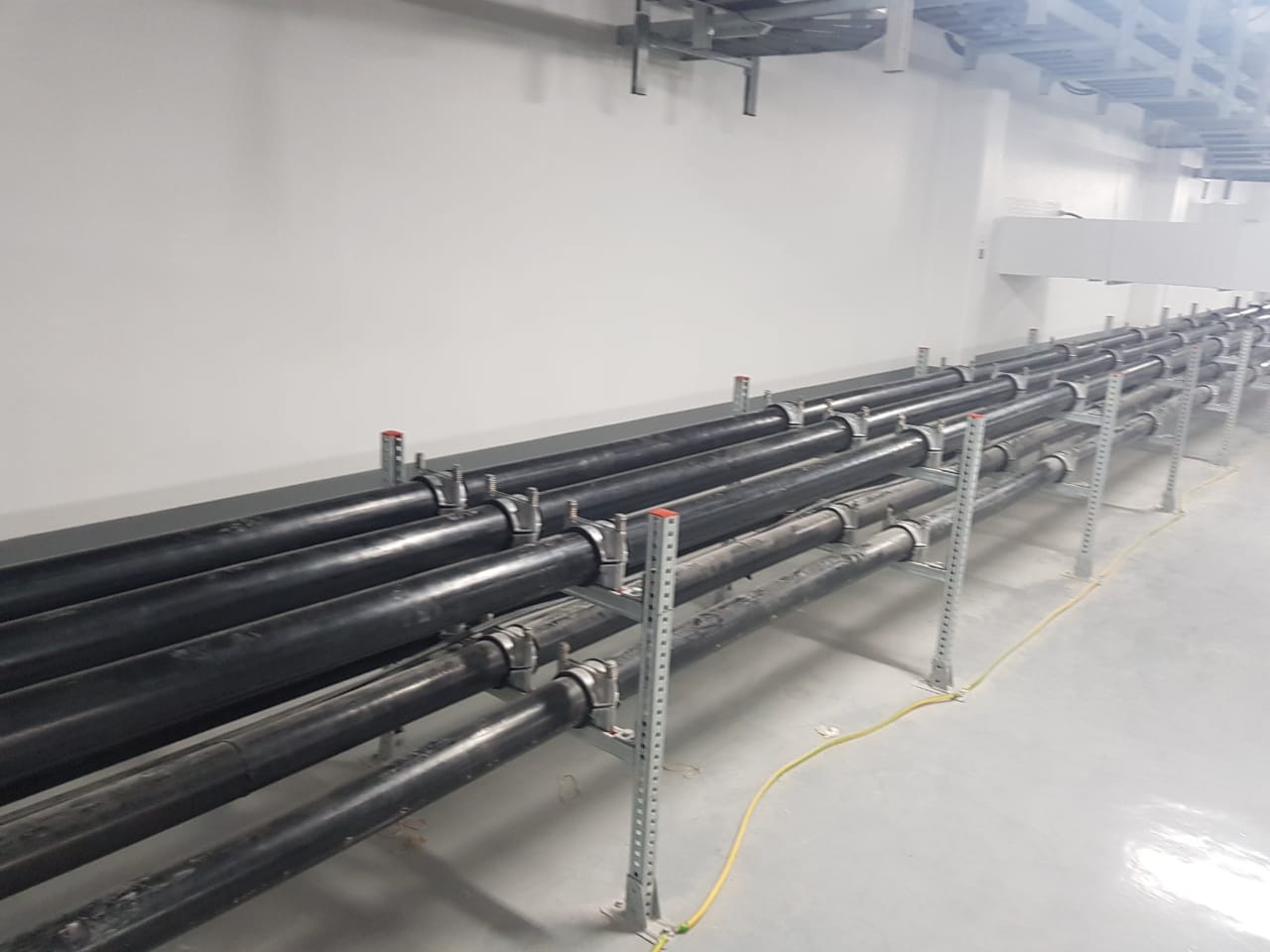
Cable clamps designed and manufactured by Ellis in North Yorkshire have been used to secure electrical cables in Bahrain that are being laid as part of a $4 billion (£3.2bn) project to enhance the Middle Eastern kingdom’s water and electricity networks. Aimed at enabling Bahrain to comfortably accommodate its growing population and support its economic progress, the project involves an upgrade of the main backbone transmission network to 400kV, with three main transmission substations being built in Hidd, Umm Al Hassam and Riffa. Ellis’ 2A Aluminium cable clamps and special compression springs were specified through Bahrain-based distributor, Amad Baeed Electrical WLL, by Korean cable specialist, LS Cable and System. Tony Conroy, Ellis’ Sales Director, comments “The scale of our export operation really does differentiate us from the majority of our competitors, and this project shows exactly why – a UK designed and manufactured product, sold to a Korean contractor and installed in Bahrain. “At present, we have distributors in 39 countries and actively export to more than 40, meaning that we can confidently state that whenever a major project comes to being specified, our name will always be in the frame.” Ellis’ 2A Aluminium cable clamps are manufactured from LM6 aluminium and are available in sizes ranging from 38mm to 168mm. Primarily used in transmission and distribution projects in unpolluted environments, they can also be supplied with an epoxy coating for use in harsher environments, and Neoprene liners for additional cable protection. Amongst the key benefits of Bahrain’s 400kV upgrade is that it will raise the capability and reliability of the kingdom’s power network, and importantly reduce the issues of the high short-circuit levels in various parts of the network to a safe level. When short-circuit faults do still occur, Ellis’ cable clamps will ensure the affected cables remain in place and that any supply downtime is kept to a minimum. The Riffa substation where Ellis’ cleats are currently being installed is due to be in operation in late 2020 or early 2021.

Bureau Veritas issues direct current warning on RCDs
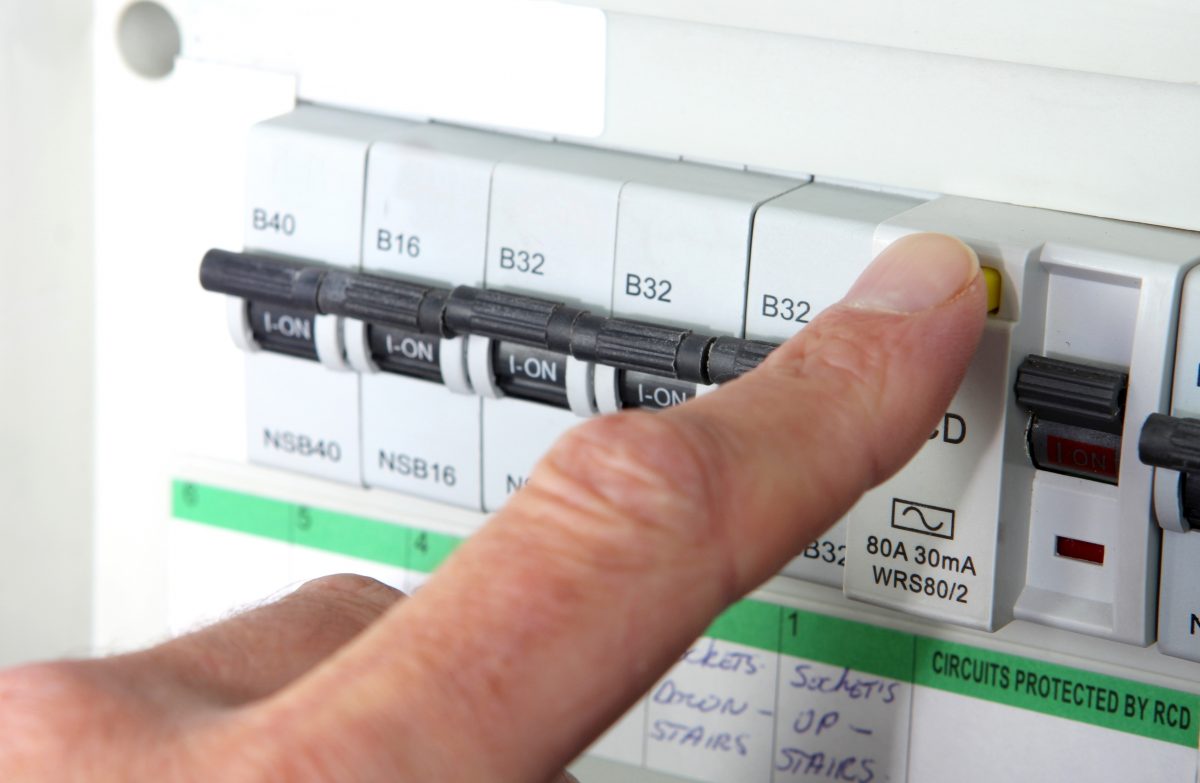
With the 18th Edition of the IET Wiring Regulations including updated guidance on the use of various types of residual current devices (RCDs), Bureau Veritas is warning that a rising number of AC type RCDs are being adversely affected by direct currents (DC) from electronic devices and renewable energy sources. It comes amid the growing use of RCDs over the years, with AC type RCDs often promoted as the first choice, particularly since 2001 where the 17th Edition (amendment one) directly stated that AC type RCDs should be used for sockets that might supply outdoor equipment. However, according to electrical safety expert, Bureau Veritas, as more and more homes, commercial and industrial sites are now using electronic equipment and installing renewables such as solar PV, many of these RCDs may well be not fit for purpose – putting an increasing number of people at risk. Michael Kenyon, Technical Manager at Bureau Veritas, explains, “Modern electrical installations are now, more than ever, incorporating technologies and products that manipulate the current wave forms. These devices such as Solar PV and electric vehicle chargers could be leaking (direct current) back into the electrical system and saturating the iron core of the AC type RCDs which are not designed to handle it. “This is a particular problem when dealing with poor quality electronic equipment or substandard installations, as DC leakage current can be created by faulty equipment such as solar PV, EV chargers, variable speed drives, and even faulty mobile phone chargers or USB sockets. Inevitably, we’re seeing RCDs being increasingly affected by DC – putting many people at risk.” As an independent electrical specialist, Bureau Veritas suggests the industry, instead, looks at using A or B type RCDs that are specifically designed to offer protection against alternating and pulsating direct – as stated in the recent rewrite of 531.3 of BS7671. Kenyon continues, “The rewrite of 531.3 has certainly led to an increased awareness of the different type of RCDs on the market. But in terms of promoting best practice, at the moment, it just doesn’t go far enough in recommending the use of A type RCDs. In fact, regulation (531.3.3) still states that for general purposes, type AC RCDs should be used coupled with disincentive that type A RCDs are still much less readily available. “From our experience, we’d recommend A type RCDs for general use, although going forward this will need to be supported by regulation, the industry and even manufacturers, as nine out of 10 devices found online were still AC type and the A type devices remain significantly more expensive. “Specifying the correct RCDs can be a technical and complicated area, and currently there’s a knowledge gap within the electrical industry about the risks of using AC type RCDs in modern installations. That’s why it’s important, now more than ever, to ensure every electrical installation is safe and fit for use – and the best way to do this is through regular testing and inspection.” Bureau Veritas offers a range of testing and certification services to support customers in managing compliance around electrical safety in general for new and existing installations or for specific areas, such as electric vehicle charging points.