2 November 2026
Product of the Month: Amari Floodlight range by Aurora Lighting
 
26 November 2026
Thorn scores second Highland football lighting installation
 
26 November 2026
Segen pens exclusive distribution contract with M-Rack
 
25 November 2026
Scolmore helps rejuvenate Tamworth Cancer Support Centre
 
25 November 2026
Leicester apprentice crowned 2026 SkillELECTRIC champion
 

Latest News


Lighting up the rails
Tridonic is helping Future Designs to meet Crossrail's exacting specification requirements for an LED future. The company explains how the project unfolded. If an entire infrastructure project is to be buried underground, then lighting is of paramount importance. This is certainly the case with London's Crossrail line (also known as the Elizabeth Line), which will significantly reduce journey times across London for millions when it opens in 2019. "The decision to go LED on Crossrail was based on industry evidence that the benefits of reduced energy consumption and maintenance requirements would deliver a reduction in whole-life costs for the project," said Paul Kerrigan, Crossrail MEP engineer (lead electrical). The brief was for the lighting to emphasise the spatial envelope, rather than draw attention to the luminaires themselves. All in the design The company tasked with meeting the design and performance requirements was Future Designs, and it called upon Tridonic's technical expertise to help create a suitable bespoke lighting solution. The decision to use LEDs exclusively will significantly reduce energy consumption and maintenance costs, which will ultimately lead to a reduction in the whole-life cost of the project. Future Design's concept uses the light grey, matt-textured, glass-reinforced concrete lining of the station and escalator tunnels to reflect light onto the passenger areas, to create a sense of spaciousness within the underground environment. The company created the following luminaires specifically for the Crossrail project: An uplighter for indirect illumination The Ikon uplighter luminaire has been created to sit on top of wayfinding totems. This powerful luminaire is designed to illuminate the area via the ceiling, which then reflects the light back down to the floor. To provide this level of light, Future Designs utilised Tridonic's proven driver, LCAI 150W 350mA-1050mA Eco Industry drivers, along with the LLE 24 x 280mm 2000lm 830 EXC modules, operating at a current of 950mA. The space between each of the totems bearing the uplighters is between seven to 11 metres, and therefore, these luminaires needed to produce 58,000 lumens / 850 watts (as a comparison, typical office lights are 5,000 lumens / 32 watts). Weighing in at 80kg per unit, and measuring just 685mm x 185mm across the lit face, the high wattage of Ikon generates an enormous amount of heat from such a small area which needs to be dissipated, and the most critical area of the design was calculating the precise dimensions and area of the bespoke heatsink to ensure that heat was drawn away from the LED system, regulating the device’s temperature. Critically, as heat rises, the heat sink design had to draw the heat down, away from the LEDs of the unit, which sits on top of the totem. Testing and prototyping for this specific section of the design took more than 350 hours, and a series of original prototypes were built so that thermal tests could be carried out to establish that the heatsink would control the LED temperature correctly and safely. Emergency luminaires and anti-glare uplighters Ikon Emergency luminaires are designed to automatically illuminate in the event of a power failure, helping to guide Crossrail passengers to safety. The design features high and low-level lights mounted on the sides of wayfinding totems and horizontal luminaires mounted on the front faces of the totems to spread light in all directions and throw the light across a large distance on the floors. Each emergency system is 35,000 lumens / 230 watts, and the lights are operated from a 230-volt generator. Ikon Emergency and the Ikon totems will be installed in Crossrail stations at Tottenham Court Road, Farringdon, Liverpool Street, Bond Street and Whitechapel. Plinth luminaires are located within the deck area between individual escalators. The uplighters are specially designed to diminish visual glare to passengers travelling on the escalators, preventing a direct view of the LED source and providing well balanced lighting. The positioning of the LED at a low level in the fixture and a black louvre at high level ensures dark light anti-glare illumination. The luminaire is sealed to IP68 with a high level clear glass panel. Due to the proximity of passengers using the escalators, safety elements required that the glass panel had to withstand a 1,000N load applied over a 50mm x 50mm area. Plinth will also be installed in all five of the Crossrail stations. One of the challenges with this fitting was ensuring that faces would be illuminated when viewed on CCTV, but at the same time, ensuring that passengers were not dazzled as they travelled on the escalators.

Schneider supporting home improvement initiative
Schneider Electric is sponsoring an initiative by the British Home Enhancement Trade Association (BHETA) to encourage UK homeowners to make their homes safer, smarter and more stylish. National Home Improvement Month, running throughout April, is designed to reignite homeowners’ pride and encourage them to commit to at least one home improvement project this month. Over half (63%) of Brits don’t love the home they live in, with one third admitting they lack the skills to make the improvements they want. BHETA and the country’s major suppliers – including Schneider Electric – will help homeowners by delivering educational content and how-to guides. They will also connect consumers with skilled tradespeople, enabling them to complete their dream home improvement project. Schneider Electric stands ready with a wide range of wiring devices and accessories to inspire creativity and satisfy the latest safety requirements during National Home Improvement Month. Whether they prefer the modern style of the Ultimate range, or the traditional profile of Lisse Screwless Deco, the company offers consumers a wide range of switches and sockets to enhance their home. The customisable Ultimate Transparent range of switches can even be styled to match any wall surface and allows users to create their own bespoke designs. Wiser, the smart home heating system from Drayton by Schneider Electric, is easy to install from app to thermostat, and allows homeowners to control the heating in their homes remotely. It delivers complete home personalisation by allowing users to control temperature room-by-room, boosting comfort and enabling fuller control over energy bills. Finally, Schneider Electric’s range of Easy9 and Resi9 residential circuit protection offers complete protection from shock and electrical fires. Circuit breakers and surge protection devices detect leakage current and power disturbances, ensuring optimal electrical safety and giving homeowners peace of mind. Jocelyn Golding, Category Manager of Home and Distribution at Schneider Electric, says, "There’s never been a better time to be house-proud. Smart technology and the latest solutions give users unprecedented choice in creating their ideal home. However, a lack of technical skills shouldn’t be a barrier to entry. For the safest, highest-quality installations, homeowners should use a qualified electrician, for which our Partner Locator is here to help". To learn more about BHETA’s National Home Improvement Month campaign, visit bheta.co.uk/news/industry-news/2019-nhim/

Distributor illuminates sites with Goodlight LEDs
LED lighting brand, Goodlight, has announced that FWB – an established supply chain partner – has replaced the outdated fluorescent lights across its three strategic sites in Stoke-on-Trent, Wrexham and Truro with linear LED high bays, LED battens and Eco LED ceiling panels. A total of 8,200 square metres of warehousing, trade counters and offices are now illuminated with long life, energy efficient Goodlight LED lighting. FWB chose Goodlight for the quality and value of the products as a distributor, and made the switch to save costs, reduce carbon emissions and improve the workplace environment. FWB provides a diverse range of products, including pipeline and fittings, fasteners, tools and workwear to the industrial, infrastructure, construction and public sector markets. FWB was looking to replace all of the inefficient lighting in its three trade counters and offices to save on energy and maintenance overheads; and thus selected Goodlight Eco LED ceiling panels, which have been designed to slot into existing ceiling grids with ease, making them the thinnest, most lightweight panel on the market. The Eco is a modular LED ceiling panel that delivers up to 95 Lm/W, providing reliable colour consistency that transmits over 95% light efficiency. The Eco is compliant with LG7, providing a good luminaire balance between task areas, walls and ceilings. Lighting for the warehouses included G5 battens and GX2 linear LED high bays, both of which deliver very high levels of light output, offering 110 Lm/W and 130 Lm/W respectively. The G5s and GX2s are rated to IP65 (waterproof) and provide further protection from dust, ice, heat and corrosion ingress. Both LED fixtures are completely glass-free and shatterproof, making them suitable for busy, working warehouse environments. All Goodlight products are guaranteed for five years and are rated at 50,000 hours. Sarah Lee, Marketing Manager at FWB, comments, “As a business with multiple branches, our energy costs were significant. After seeing the successful installation of Goodlight LED lighting at a number of our customers’ premises, we made the decision to replace the old lighting in all our sites. The installation was straightforward and completed within two months, and the service from Goodlight has been first class from start to finish.” Lee continues, “We decided to upgrade to LED lighting not only for the substantial reduction in energy costs and carbon emissions, but also for the improved light quality, and the added health and safety benefits.  The high ceilings in our warehouses are difficult to access, and we were changing light bulbs constantly. These long-life LED lamps will reduce maintenance drastically. We now have consistent light levels and can see everything easily. The results are outstanding, and everyone is happy.”

Over 12,500 new electricians needed by 2023
A new labour market report on the electrotechnical industry has estimated that between 12,500 and 15,000 additional skilled electricians will be needed over the next five years to accommodate forecasted growth. Within this figure, the research suggests that even if an extra 5,000 new apprentices qualified by 2023 (representing a 33% increase), this would still leave a shortfall of 7,500-10,000 electricians needing to be sourced from elsewhere. These workforce predictions are based on meeting demands solely due to sector expansion, and do not cover the additional staff turnover occurring from leavers and retirement. Emerging and future technologies are expected to be major drivers for this increase in skills needs over the next decade, with smart technology, e-mobility and Wi-Fi technology named as the top three forces for change. Other areas that are likely to influence the sector include changes to regulations and public policy, in areas such as energy efficiency and fire safety. Whilst the largest proportion of the UK workforce is between 25 and 49 years old, in England and Wales, only around 15% of the workforce is under the age of 25; compared to 24% for Scotland and Northern Ireland. Commissioned by The Electrotechnical Skills Partnership (TESP) and co-funded with industry charity, National Electrotechnical Training (NET), the report is the first to provide an in-depth analysis of electrotechnical skills needs in over 10 years. Research specialist Pye Tait compiled the report after surveying almost 450 electrotechnical companies, with around 19,000 employees. The report confirmed that apprenticeships are still highly rated across the sector and, based on up-to-date calculations published in this research, there is clear potential for a return on investment for those who recruit apprentices. However, the number of apprentices currently recruited each year is insufficient to meet projected demands, and employers identify various barriers to further recruitment, including some candidates’ attitudes and behaviours. They believe more needs to be done to widen the potential pool of applicants, and the calibre and diversity of new entrants - for example, through improved industry engagement with colleges and schools, and further development of alternative routes into the industry for college leavers, career changers and others from older age groups. In response to the report and its findings, TESP is now developing an industry action plan to tackle the issues and recommendations raised. Work is already underway in several areas, including the development of new careers resources, promotion of industry-recognised qualifications and activity to forge closer ties between industry, schools and further education. The action plan will also take account of the large numbers of small and micro businesses in the industry, including sole traders, and how these might be better supported in future. Ruth Devine, Chair of TESP and Managing Director of SJD Electrical, says, “The TESP survey – the first of its kind in over a decade – offers not only a useful snapshot of where the electrotechnical industry and its skills-base are now, but also a vital insight into the scale of the challenges we face in the immediate future. The organisations which form TESP all have a crucial part to play in shaping and coordinating the industry’s response to these challenges, and the priorities for action defined in the survey report represent an important first step. Future success will, however, also hinge on the active participation and support of other stakeholders, including government departments and agencies, clients, training providers, other sector bodies and of course individual businesses – especially the small and micro businesses who make up our industry’s core.” The Electrotechnical Skills Partnership (TESP) is a not-for-profit industry partnership formed by the ECA, Joint Industry Board (JIB), National Electrotechnical Training (NET), Select and Unite the Union to support electrotechnical employers to develop and drive the industry's skills agenda. To read the full report, click here.

Video - New animation shows journey in becoming a qualified electrician
A new animation showing the journey in becoming a fully qualified electrician has been developed in partnership between Select and the Scottish Joint Industry Board (SJIB). The video, which you can view at the end of this article, plots the route of someone starting their career as an apprentice electrician, and follows them through to becoming a company owner. Brought to life by animators at Connect Communications, it is designed to be screened at events and conferences to explain the career choices available in today’s fast moving electrotechnical industry. Speaking about the film, which will be hosted on the websites of both organisations, Fiona Harper, The Secretary of the SJIB, says, “Together we’ve created an informative and engaging communications tool that can be used to attract apprentices to the industry. The journey is a long one, but it is very rewarding for those who acquire the necessary skills along the way.” The film’s release comes on the back of a long-running campaign by Select and the SJIB for better regulation of electricians to ensure the highest of safety standards across the industry. Both organisations are calling for the introduction of 'Protection of Title', which would ensure that anyone calling themselves an electrician in Scotland would hold suitable qualifications. Select's wall of support for this campaign has gathered backing from politicians (from all parties), as well as industry bodies representing surveyors, housebuilders, professional bodies and trade unions. Crucially, the new film details milestones – such as SJIB grading and FICA accreditation – that an apprentice will pass along the way. Alan Wilson, Acting Managing Director of Select, comments, “Consumers deserve the assurance of knowing that any electrical work carried out in their home will be completed safely and to the highest industry standards. Ours is an immensely rewarding industry, as modern-day electrical installations are extremely complex, requiring highly-skilled professionals. We are keen to attract the brightest into this field, and we are committed to ensuring those individuals have all the training required to carry out the highest calibre of work.” https://youtu.be/YZaWjbhDRJI

Edmundson apprentice award open for entries
Entries are now open for this year’s ECA Edmundson Apprentice of the Year Award, which aims to showcase the very best talent across ECA’s member businesses. Now in its 43rd year, the award is widely recognised as one of the most prestigious training awards in the electrotechnical and engineering services industry. The three finalists will not only have good technical skills, but will also be role models for others in the industry. The winner will be recognised as an industry ambassador and be involved with ECA campaigns and events during the year. They will also receive an array of prizes, including a £1,500 cash prize, a state-of-the-art toolkit, and a unique study trip overseas hosted by a major electrical industry manufacturing company. There are also great prizes for two runners-up, including a £750 cash prize, a toolkit and a certificate of commendation. Andrew Eldred, Director of Employment and Skills at ECA, comments, “The electrotechnical apprenticeship remains the most popular and most demanding craft-level apprenticeship in the UK. At a time of ever-increasing demand for electrotechnical skills, it is appropriate that we raise the profile of our apprentices, the amazing work they are doing, and the exciting career options available to them as they complete.” Edmundson Electrical Managing Director, Mark Felber, adds, “We are delighted to once again sponsor the ECA Edmundson Electrical Apprentice of the Year Award. Edmundson has a long-established policy of developing young people within our sector through both our apprenticeship and graduate schemes. The industry continues to lead the way in offering great opportunities for young people to develop a rewarding and enjoyable career." Past winners of the ECA Edmundson Award have gone on to a range of careers, including running their own companies in the UK and taking high profile jobs internationally. The award has also boosted the profile of ECA member companies that enter their apprentices, by highlighting their support for future industry talent. 2018 ECA Edmundson Apprentice of the Year, Jack Teasdale of Opus Building Services, adds, “It’s been very humbling and a privilege to be recognised as ECA Edmundson Apprentice of the Year, and to be an ambassador for other apprentices. One of my mentors was himself the winner of this award in 1997, so it’s been an honour to follow in his footsteps.” Eligible applicants will have completed their AM2 between April 1, 2018 and March 31, 2019. The entry deadline is Friday 21 June 2019. For details on how to enter, visit www.eca.co.uk/edmundson.

Video: In-sure box to comply with 18th Edition regulations
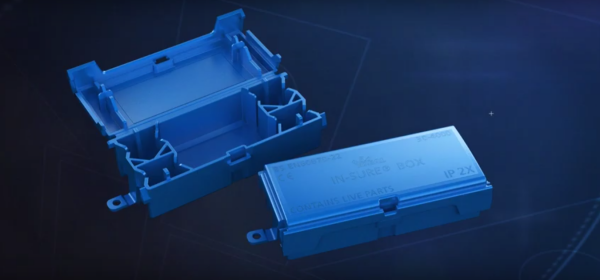
Ideal Industries, a producer of connectors, hand tools, testers, and meters for the electrical and telecommunications industries, has published the below video to explain the benefits of its In-Sure electrical junction box. The BS 5733 maintenance free accessory standard stipulates that a maintenance free junction box should be used when installing an electrical junction in an inaccessible location, i.e. behind plasterboard or under a floor, for instance. This eliminates the need for access panels or expensive re-work of finished surfaces. The In-Sure Box complies with the BS 5733 and the 18th Edition of the Wiring Regulations, and it makes electrical junction enclosure installation fast and easy without the need for any tools. Watch the below video to find out more. https://youtu.be/u7ertCaI20k For more information, visit www.wire-connectors.com

Tamlite supporting 'Building in Quality Tracker' initiative
Lighting manufacturer, Tamlite Lighting, is supporting a new initiative which aims to put an end to ‘spec breaking’ on construction projects. Tamlite believes that the Building in Quality Tracker (BIQ) initiative – which is led by the Royal Institute of British Architects (RIBA), in association with the Chartered Institute of Building (CIOB) and Royal Institution of Chartered Surveyors (RICS) – is vitally important for the reputation of the UK built environment industry. The lighting manufacturer says this initiative will go some way to rebuilding confidence, particularly from a consumer safety perspective. The BIQ tracker is a free to download digital tool which aims to improve the quality of outcomes in the construction industry. It sets up a chain of custody, allowing project teams to track quality on construction projects. Using the tracker, contractors are able to review and record the level of quality considered appropriate for a particular project, and then provide the means to deliver better quality outcomes. It allows clients to demonstrate their commitment to quality and differentiate themselves in the market. It is hoped that the wider adoption of the Quality Tracker will incentivise better quality in buildings, leading to improved human health, safety and wellbeing, whilst boosting the construction industry’s reputation. Commenting on the Building in Quality Tracker (BIQ) initiative, Tamlite Lighting’s Managing Director, John Allden, says, “In our view, the nature of lighting makes it far too vulnerable to spec-breaking. In the long-term, this ‘value-engineering’ or cost-cutting approach can present all kinds of issues. “Put simply, quality must never be compromised at any point in the supply chain. There is no doubt that in the age of LED, the landscape of our industry has altered irrevocably since high-profile tragedies such as at Grenfell Tower. As a leading lighting manufacturer, we must take the lead. We will do this by working hard to communicate a clear case for quality. We will help our customers to understand why our recommended offering may come at a higher price than cheap alternatives, and we will always help end users see the added value in our products and solutions.”

More smart meter owners report higher bills than savings
Having a smart meter installed at home very seldom means lower energy bills, according to new survey findings published by leading electrotechnical trade body, ECA. In the ECA’s recent YouGov survey of adults who are eligible for a smart meter, just one in 14 respondents with a smart meter (7%) said that having one had reduced their energy bills, while one in 11 (9%) said they had increased. This is despite one in four (23%) reporting that the main reason for having a smart meter installed was to reduce their energy bills. Overall, nearly half of respondents (47%) said they were ‘very unlikely’ to have a smart meter installed during the next 12 months, with 20% ‘fairly unlikely’ to do so. Just 5% of respondents said they were ‘very likely’ to do so, with a further 13% ‘fairly likely’ to have one installed in the next year. ECA Energy Advisor, Luke Osborne, comments, “These ECA findings suggest that smart meter users seldom report lower energy bills – which seems at odds with the Government’s ‘save money’ message. Smart meters can play a role in stimulating a shift towards a lower carbon future. However, the Government needs to do far more to incentivise change and explain the benefits of using smart meters if they are to increase consumer confidence and take-up in the near future.” While 61% of smart meter owners reported that they had no issues with their smart meter, almost half (45%) reported they had experienced no benefits in having one. The benefit that came out on top for respondents with a smart meter was more accurate billing (29%), while one in 11 (9%) cited connectivity issues as a problem. Furthermore, fear of data breaches and cyber-attacks came out as the top reason (30% of respondents) for not getting a smart meter, among those unlikely to do so. However, of those with a smart meter, less than 1% reported any issue with data security or hacking. Osborne adds, “Public awareness of data security has increased significantly recently. These ECA findings show that the Government must do more to explain to the public why smart meters do not present a security risk from hacking or other data breaches.” Less than one in three adults who are eligible for a smart meter (32%) surveyed have a smart meter installed, despite a Government commitment for all UK homes to have one by 2020.

NAPIT announces new technical roadshows for 2019
Following the success of its first eight events, NAPIT has added 10 more dates and locations to its NAPIT Expo technical roadshow line-up for 2019. NAPIT has revamped its EXPO events following the 18th Edition of the Wiring Regulations coming into force, and is offering attendees free CPD certificates of attendance for masterclasses in surge protection, EV charging and EICR codebreakers. Joined by supporting partners at each event, Expo visitors can browse the latest products and services available in the exhibitor’s area from the likes of Megger, Hager, LED Hut, Surge Protection Devices, Chint, Aico, NAPIT Insurance, Dehn and more. The expert panel will continue to be present at every show, giving attendees the opportunity to speak directly with industry experts who have been specifically selected to align with the masterclass topics covered at each event. As always, the technical roadshows are free to attend, both for NAPIT members and non-members. Visitors will also receive a complimentary welcome bag, refreshments, and the opportunity to win at every show, via two prize draws, with prizes provided by Megger and Chint. The new dates and locations are as follows: June 12 & 13: Basildon/Slough September 4 & 5: Doncaster/Derby October 8 & 9: Sunderland/Lancaster November 12 & 13: Cardiff/Wolverhampton December 10 & 11: Cirencester/Southampton In addition, there are still tickets available for the Norwich, Cambridge, Bradford and York roadshows. To book a free ticket, visit napitexpo.co.uk/events.