2 November 2026
Product of the Month: Amari Floodlight range by Aurora Lighting
 
24 November 2026
JTL celebrates opening of new Tyneside training centre
 
24 November 2026
LiGHT 26 welcomes record number of visitors to fifth event
 
23 November 2026
Advanced acquires communications specialist Baldwin Boxall
 
23 November 2026
Trades face 'skills squeeze' as apprenticeship demand soars
 

Latest News


Homes and businesses to benefit from £35 million power boost
Thousands of homes and businesses in Bedfordshire and Cambridgeshire are set to benefit from a £35 million investment in the electricity network.    UK Power Networks’ major project at Little Barford, which began in 2018 and has now gone ‘live’, involved upgrading the capacity and reliability of power supplies for 190,000 properties across Cambridge, Bedford and St Neots.    In one of the biggest infrastructure investments in the region for many years, the project involved the installation of new cable circuits, re-routing of overhead power lines and the installation of new towers.    All equipment on the Little Barford site was dismantled and replaced with a new kit installed under cover. Ten-metre high concrete frames were taken down, with one left standing for an extra few months while house martins nested on it.    Working alongside its Alliance partners Kier, Wood and Morrison Energy Services, UK Power Networks installed new 132,000V underground cables that stretched 2.5km between Little Barford and Eaton Socon. Engineering teams used directional drills to channel underneath main roads, a river and a golf course with minimum impact on the local environment.    The work will future-proof local power supplies as well as enable more low carbon electricity generation to feed into the grid. As more people connect renewable energy, heat pumps and electric vehicles to local electricity networks, UK Power Networks plays a critical role in helping to enable the UK’s transition to a net zero economy.   Arinze Udenwa, Project Manager for UK Power Networks, says, "The improvement works at Little Barford have replaced old equipment with modern kit that will increase network reliability for years to come.”   To read more on UK Power Networks, click here.

Survey: 1 in 5 tradies have sustainability concerns
As the nation continues towards its net zero pledge, sustainability concerns will impact every person in the UK, both in their personal and professional lives. However, jargon can make it unclear what new pledges and changes mean, especially for those whose livelihoods will be directly affected. Experts at job management software provider BigChange surveyed professionals across the trades to understand how many remain unsure of the impact of recent sustainability changes for their businesses while helping clarify some confusion on what businesses should be doing to prepare. The state of sustainability in the trades  Recent research revealed one in five tradespeople are concerned about what recent sustainability initiatives will mean for their role and how they implement those changes. Despite this, one in eight believe these initiatives will have a large impact on their business. When asked which areas of the business they believe will be impacted the most, tools used came out on top (39%), while transport (23%) and materials (20%) closely followed. In particular, building surveyors (68%), maintenance service providers (53%) and heating and gas engineers (40%) are the most concerned about the impact on the tools they use. For builders (39%), bricklayers (59%) and heating and gas engineers (60%), however, the concern lies in the potential changes to the products and materials used to complete their work. Daniel Briggs, Director of Digital Marketing at BigChange, says, “Learning new skills so you and your team are up to date on how to install and maintain the latest green technologies is essential. Making the changes and investing in training now will ensure you are well-equipped when the time comes. “The Further Homes and Building Standard initiative set out by the government, for example, means all homes built after 2025 will be required to comply with the new standard in order for new homes to be 'zero carbon ready'. “Following this, gas boilers will be phased out in the UK as of 2025 with an aim of gas boiler installations expected to be phased out completely by 2035, so gas engineers are needing to adapt to install alternatives such as heat pumps.” Daniel advises, “Start making switches now for minimal impact when the time comes. For example, switching to a digital system will reduce the need for paperwork - which will also benefit your business with automated processes and workflow efficiency - allowing more time for upskilling. “Make an effort to reduce your plastic and chemical usage by making simple but practical swaps on small items you use day to day. You could stop using single-use plastic sheets and opt for a reusable option, for example, or switch white spirit for cleaner alternatives.” “Similarly, if you’re thinking about upgrading your fleet to electrical vehicles to reduce your business’s carbon footprint, why not consider the change now? Many tradespeople are eligible for grants to support this, such as the Green Homes Grant.” He explains, “While it can seem overwhelming, it’s essential business owners stay up to date with the latest news regarding their industry and sustainability. Look to bookmark useful resources and set up handy reminders with tools such as Google Alerts, using industry-specific terms to help with this. “The Glossary of Sustainability is a great tool for cutting through any sustainability jargon that may be difficult to understand.”

Thorn Lighting’s new portfolio for building surrounds
Thorn Lighting says its new outdoor portfolio offers a comprehensive choice of luminaires to bring building exteriors and surrounds to life, complementing the architecture and providing definition and identity whilst approaching the application with dark sky sensitivity in mind. The portfolio combines two distinctive design languages for a product range that provides the flexibility to create complete lighting schemes with visual consistency throughout.    Furthermore, its new surface-mounted, in-ground, recessed, linear, flood, bollard and pole luminaires go hand in hand with its existing urban and architectural range.   Axyl  The new Axyl range, with a distinctive square-edged visual identity, consists of Etch, Geo, Gild, Glow, Greet (with wall-mounted and bollard variations), Opera, Stride and Trim. Each with their unique qualities, they can expertly light the building surround, creating the right effect for the right area. Axyl Etch, for example, features an optic specifically developed to provide optimum light distribution for impactful accent lighting of window reveal applications. Meanwhile, the wall-mounted Axyl Stride, with its slimline design to create the effect of a recessed wall fitting, possesses good asymmetric light distribution and complete glare control, ensuring a dark sky-sensitive and safe lighting installation.   Cesar  Similar to Axyl, the new Cesar range, with its sleek, stylish curved aesthetic, is made up of a variety of products. Amp (ceiling and wall-mounted), Jazz, Opera (walk-over and drive-over), Stride, Stroll (bollard and pole) and Strut all solve a particular challenge when it comes to lighting building surrounds. Well-suited to car parks, pedestrian areas and gardens, Cesar Strut, for example, is a pole luminaire featuring omni-directional light distribution, which offers maximum inter-distance between each luminaire position and a soft-lit effect. Moving towards the building, projects can then benefit from the likes of Cesar Jazz. Thanks to high-performance COB LEDs and multiple beam angles working in harmony together, the Cesar Jazz allows the user to be creative with light, generating impact and drawing interest to any building or space.   Eliot Horsman, Thorn’s Head of Application for Urban and Architectural, says, “Turning 95 in 2023, Thorn has a long history in lighting generally, but is well-respected as a provider of functional outdoor lighting for projects covering roads, streets, sports and urban environments. However, with the addition of Axyl and Cesar, plus an inherited range of products from the former acdc brand, Thorn is now well-equipped to provide a full suite of solutions for building surrounds.”   To read more on Thorn Lighting, click here.

Charity receives £11,679 cheque from BCIA Past-President
Graeme Rees, Immediate Past-President of the Building Controls Industry Association (BCIA), has presented a cheque for £11,679 to the Teenage Cancer Trust. The Teenage Cancer Trust was Graeme’s nominated charity during his two-year term as BCIA President. Teenage Cancer Trust offers unique care and support, designed for and with teenagers and young adults affected by cancer. The charity funds specialised nurses, youth workers and hospital units in the NHS, so young people have dedicated staff and facilities to support them throughout treatment. As a charity close to his own heart, Graeme was committed to raising money and awareness of Teenage Cancer Trust’s work and an impressive £5,000 was raised in just one night at the 2023 BCIA Awards. The BCIA also set up a five-million-step challenge to attract sponsorship and donations, with a number of BCIA members getting involved and committing to the cause. The challenge was inspired by Teenage Cancer Trust’s Walk With Us 15,000-step challenge, which is driven by the number of steps per day the average nurse works in their role of supporting young people and their families affected by cancer. Graeme’s tenure as BCIA President ended on 1 March as Stacey Lucas took on the role, with Jen Vickers taking the position of Vice-President. Graeme says, “One of my wishes when I became BCIA President was to see if we could do more to support our nominated charity and I am delighted at how our members responded and engaged so passionately with the challenge. I am very proud to sign off my term with this contribution and I would like to thank everybody who has done their bit to support this hugely important organisation.” Helen Farquharson, Senior Relationship Manager at Teenage Cancer Trust, says, “We are so grateful to Graeme for choosing Teenage Cancer Trust as his charity and to all at the BCIA for their fantastic support in 2022 and 2023. Members have really gone above and beyond with their efforts, with an incredible response at the Awards and the five-million-step challenge. “Every day, seven young people aged 13-24 hear the words ‘you have cancer’. They will each need specialised nursing care and support to get them through it. The money raised will help our teams support young people with cancer through treatment, helping them cope with anxiety and isolation, and connecting them to a network of other young people to chat to.” To read more on the BCIA, click here.

Aztec Solar designs and installs a PV panel system
Aztec Solar has designed and installed a huge photovoltaic system of over 3000 PV modules and 10 inverters for a new £230 million logistics hub located in the West Midlands. It will save almost 550t of carbon dioxide emissions per year which is the same as planting almost 21,500 trees.   The company designed the system to meet the hub’s kWh peak of 1260kWp within the available roof space. The power will generate electricity for the operation’s internal and office spaces.   The demand for electricity from the new unit means that it will need its own substation. The company wants to provide most of this from renewable self-generation.   With a roof space of 36,000m2 on the larger of the two buildings, Aztec Solar designed the PV system to provide maximum output while avoiding skylights and providing safe passage for future operations and maintenance and in case of an emergency.   David Ludlow, Construction Manager for Aztec Solar, says, “This was a complex installation where, unfortunately, the main contractor went bankrupt, and we had to work through variations to the original quotation to complete the job.   “Due to the speed of the installation, we also had to work alongside a number of other contractors at the same time, including behind the soffit manufacturer, which meant that there was no scaffold edge protection since they removed it as they worked. This meant that our team had to use mansafe harnesses and inertia reels. We also imported and stored the PV panels on-site ourselves and craned them up onto the roof space in just one week to minimise disruption.”   Aztec Solar specified 10 Solis three-phase inverters, which provide high-precision intelligent string monitoring to reduce future fault location time. For safety, the system is integrated into the main fire alarm systems with a manual stop button for firefighter safety in case of an emergency.   The new logistics hub is due to open in the summer.   To read more on Aztec Solar, click here.

Fergus’ guide to preparing for the new financial year
Fergus is encouraging the trade to prepare for the new financial year this coming April. As the financial and tax period approaches, tradespeople should look to enhance efficiency and ensure their businesses are set for success across 2024/5. "The transition into a new financial year is a crucial time for trade businesses to reflect, adjust and plan. It’s an opportunity to refocus, improve financial health and position your business for growth," says James Chillman, UK Country Manager. To help the trade, Fergus has put together a seven-step guide to preparing for the new financial year: Review and refresh your business plan The end of the financial year is an ideal time to review your business plan. Reflect on the past year’s achievements, challenges and the lessons learned - tradespeople will be amazed at how this will help focus and identify areas for growth and set realistic, measurable goals for the upcoming year. Consider how market trends, new regulations and technological advancements can impact the business and adjust the business plan accordingly. Financial health check A thorough review of financials is essential. Analyse profit and loss statements, balance sheets and cash flow statements to understand your financial position. Identify any areas where costs can be reduced and where investment is needed. This is also the perfect time to chase up outstanding invoices and tidy up accounts. Embrace technology Leveraging technology is key to staying competitive. Fergus' job management software is designed to simplify and automate many of the administrative tasks that tradespeople face daily. From scheduling and dispatching to invoicing and payments, Fergus says it provides a comprehensive solution that saves time, reduces errors and improves cash flow. Skills and compliance update Ensure you and your team’s certifications are up to date and plan any necessary training for the new financial year. Staying compliant with industry regulations is not just about legal compliance; it’s about providing quality service that protects your reputation and clients’. Plan for tax Organising finances for tax purposes doesn’t have to be daunting. Utilise Fergus to streamline the process of bringing financial records up to date and ensuring they are accurate so it is easy to manage finances and prepare for tax season. Consider seeking advice from a tax professional to make sure you’re taking advantage of any available deductions and credits. Invest in marketing A new financial year is a great time to review and adjust marketing strategies. Digital marketing, including SEO and social media, can be particularly effective for reaching new clients and building brand awareness. Consider how Fergus’ software can showcase professionalism to potential clients with seamless job booking and communication. Get set up for scalability As you plan for growth, it's important to ensure business operations can scale accordingly. Fergus’ software is designed to grow with the business, offering features that accommodate an expanding client base and workforce. To read more on Fergus, click here.

blip partners with BoB to provide insurance to tradespeople
blip, a small business insurance provider, has announced Band of Builders (BoB) as its charity partner, offering affordable insurance and support to its network of tradespeople from less than £10 a month. blip is built on community, providing affordable, tailored and easy-to-understand insurance with a model where members share in the profits collectively. BoB, a registered charity helping members of the UK construction industry and their families battling illness or injury, was an obvious choice for a partner. blip and BoB share a common mission for the new partnership, which is removing the stress and worry in times of crisis for tradespeople and offering peace of mind when starting or running a business. The partnership will see blip support BoB through charitable sponsorship and by providing blip members the opportunity to donate the value of up to 10% of their premium to BoB through its profit-share model. Gary Ross, Founder and CEO of blip, says, “We are delighted to be partnering with BoB to deliver life-changing support to tradespeople going through tough times. They put real people first and that’s exactly what we do at blip. “Growing up with family working in the trades, I know firsthand the toll it can take mentally and physically - blip and BoB are working to alleviate this pressure. We are supporting the people who keep our communities running by ensuring they have the protection they need and a community around them.” Gavin Crane, CEO of BoB, says, “Teaming up with blip, who share our passion for giving back, marks a significant step forward in enhancing the well-being of our community. In the construction industry, when life poses challenges, decision-making can be difficult for small business owners. blip's business toolkits provide practical templates and guidance, easing stress and enabling businesses to grow. This collaboration is a positive step in tackling the challenges faced by tradespeople, offering actionable support for our community members.” To read more on BoB, click here.

Aico launches bespoke training for electrical distributors
Since 2019, Aico has supported over 40,900 electricians and contractors through its Expert Installer Training. This Fire Industry Association (FIA) CPD-certified training course ensures attendees have a full understanding of Domestic Fire and Carbon Monoxide Alarms and how to install them. After the dramatic success of this course, Aico has now launched its Expert Distributor Training. This bespoke course is made specifically for electrical distributors and aims to provide an in-depth understanding of industry standards, regulations and legislation as well as relevant products and technology. This new course is completely free and open to all Electrical Distributor Association (EDA) members, giving attendees 30 minutes of FIA-accredited CPD time. It provides an overview of legislation and grading, alarms and sensor types, and a detailed look into Aico’s full product range, assisting in promoting best practices within the industry. It explores examples of the diverse housing stock in the UK and the possible product specification needs of different end users. With industry technology and products constantly evolving, it is vital that distributors are up to date with the latest legislation, products and devices, providing consumers with the best possible advice and recommendations. This type of training is unique to Aico and ensures distributors are committed to promoting the current best practices and procedures for domestic alarm and sensor installations. This collaboration promotes knowledgeable industry professionals working together to create safer, healthier and more sustainable homes. To read more on Aico, click here.

Enact updates its Solar Design software for installers
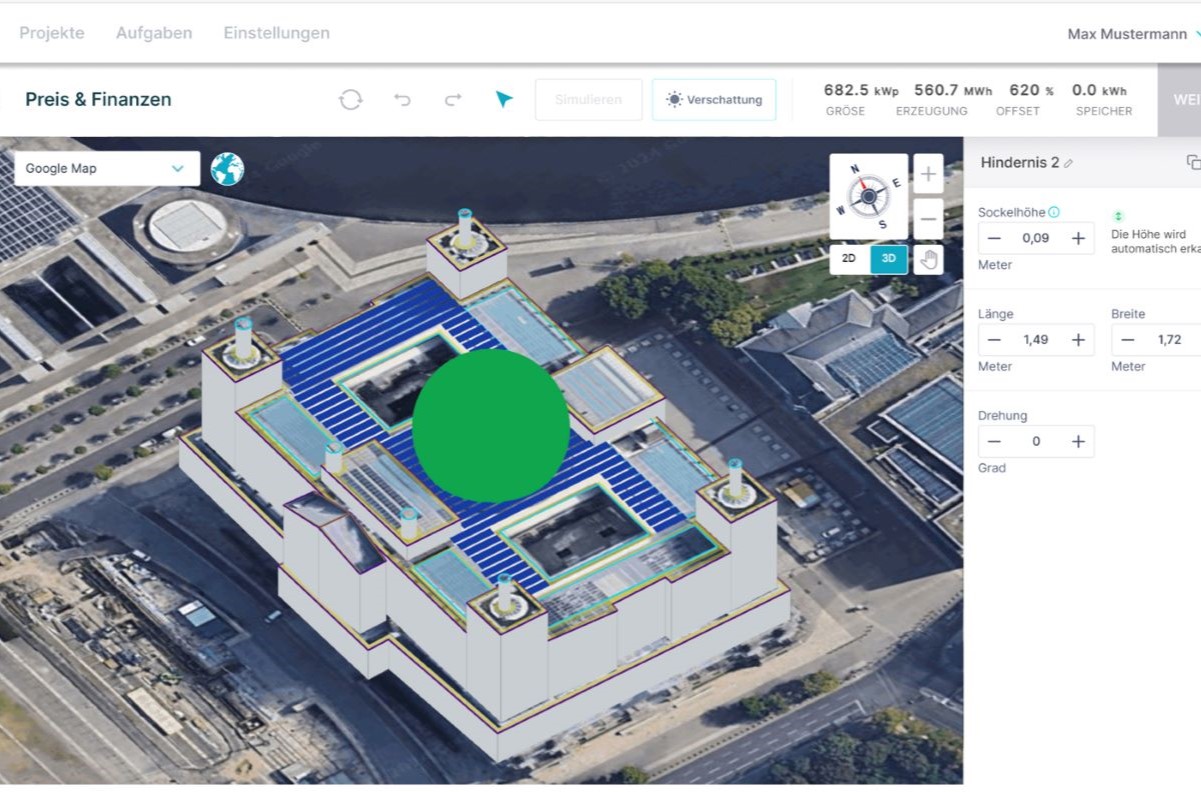
Enact, an all-in-one cloud platform, offers remote solar design using high-resolution satellite imagery and generates rapid proposals with detailed pricing, energy and finance analytics.   The company has announced an update to its Solar Design software, aimed at optimising the installer experience. The new software allows auto height detection of roof height and obstacles such as surrounding trees. This streamlines the planning process, making it smoother and more precise, and helps installers optimise shading analysis by identifying roof panels with poor solar-access values. Moreover, Enact proposals equip installers with hourly simulations of solar and storage charging cycles and strategies. Enact also accelerates the contract signing process through custom contracts with e-signatures and dynamic pricing data.   “Our newly enhanced Solar Design software for solar installers transforms how solar and storage projects are planned and executed. By harnessing cutting-edge data-driven analytics, installers can now discuss design plans with homeowners and businesses confidently, minimising errors. This means faster, more accurate implementation for installers and greater transparency for customers,” says Manasij Kar, Co-Founder and Head of Product at Enact.   The new software comes with a planning option to include east-west facing PV panels. This is especially important for European key markets such as Germany and the commercial and industrial (C&I) customer segment. The new version also comes with other features tailored to the needs of European markets, such as the addition of components used in Europe. For example, the German language interface and special financing options.

Rules of the EV road part ways in the UK and EU
Electric vehicle drivers in the UK and EU can expect to see a divergence in how they pay for public charging sessions. The fork in the road is being generated by the different rules in the UK’s Public Charge Point Regulations 2023 and the EU’s alternative fuels infrastructure regulations (AFIR). Both sets of regulations were approved last year and their impacts will be felt in 2024 and beyond. In the UK, it appears that the contactless bank card is going to be the dominant tool at all charge points at or above 8kW.  Apps will still be available as a method but with every new public charge point at 8kW+ needing to offer contactless (either at each charge point unit itself or close by at a card reader shared by several charge points), the bank card or its digital equivalent becomes the default. Meanwhile, on the EU’s roads, contactless payment will also be allowed - in fact, it will be a mandatory option required at 50kW+ charge points. Below 50kW, operators may have the option of using a unique QR code for each charging session, although this is still somewhat undecided. Charge point manufacturers, therefore, have some decisions to make. Include a digital screen capable of displaying the unique QR code and/or a payment terminal capable of communicating with a contactless bank card. Throw in the added complication of potentially having to manufacture different units for the EU and UK markets (an unwelcome complication) and the additional costs begin to mount up. The downside to extra cost and complexity is the potential impact on the roll-out of charging infrastructure. Anything putting brakes on more public charge points diminishes the EV driver experience and risks a knock-on effect on non-EV drivers’ appetites for their transition to electric mobility. For charge point operators (CPOs), the new regulations stipulate an additional series of ‘must haves’ including reliability targets, reporting, e-roaming, 24/7 helplines, data availability and price visibility. Existing UK rapid charge points have a year to be retrofitted with contactless card payment readers. A big question lurking in the background is whether those hundreds of thousands of card readers (and, potentially, QR screens in the EU) will rapidly become redundant with the rise of ‘plug and charge’. The ISO15118 standard primes new charge points for the upcoming V2G (Vehicle to Grid) and V2X (Vehicle to Everything) revolutions, including Vehicle to Grid bidirectional charging and ‘plug and charge’ automatic vehicle identification. As more public charge points and more EVs are capable of ‘plug and charge’, with the charging costs billed to the account linked to the EV, it is likely to become the payment method of choice, thanks to its convenience for the driver. It offers both simplicity and speed. It’s tempting to wonder if we should just leap forward to ‘plug and charge', but the early generations of EVs now on the road cannot play that way and will still need one or more of the old ways to pay for public charging. Daniel Forsberg, CTEK’s Marketing Manager EVSE, says, “In the face of these regulatory shifts, it's imperative for all stakeholders in the EV sector to embrace adaptability. We encourage consumers to stay informed about these changes and how they will impact their charging experiences. “For CPOs and manufacturers, this is a call to action to ensure compliance while innovating for future needs, particularly in embracing technologies like 'plug and charge'. “As we transition to a more electrified future, collaborative efforts and open dialogue across the industry will be key to navigating these changes effectively and ensuring a seamless EVSE experience for all.” To read more on CTEK, click here.