2 November 2026
Product of the Month: Amari Floodlight range by Aurora Lighting
 
25 November 2026
Scolmore helps rejuvenate Tamworth Cancer Support Centre
 
25 November 2026
Leicester apprentice crowned 2026 SkillELECTRIC champion
 
24 November 2026
JTL celebrates opening of new Tyneside training centre
 
24 November 2026
LiGHT 26 welcomes record number of visitors to fifth event
 

Latest News


Earnings For Trade Apprentices Set To Soar Above National Average By 2022, Says Screwfix
Screwfix is calling for the next generation to consider a career in the electrical trade as new research shows a job in the trade could lead to higher wages than other career choices. According to the retailer, future electricians are set to earn at least £2,500 a year more than the national average by 2022, bringing their average salary to over £27,500. In addition, apprentices can enter their chosen career free from the debt of university fees, which now averages £50,000, according to ONS' Annual Survey of Hours and Earnings (ASHE). This comes from new research commissioned by Screwfix which examined ONS salary data from 2010-17 to forecast future earnings of apprentices entering a profession. Along with the benefits associated with a long-term career in the electrical trade, including flexible working hours, becoming a skilled expert, being your own boss and working with a wide range of people, research has found that pay really cements why a career in the trade is the right choice. Along with electricians, plumbers are predicted to be future high earners with a forecasted wage of over £31,000 per annum. Plumbers are forecast to see a five percent increase (over £300), while electricians are to see a rise of three per cent (over £150). The research was commissioned by leading trade retailer Screwfix as part of its Trade Apprentice initiative, which aims to celebrate and champion the best trade apprentices and future stars of the trade. Graham Bell, Screwfix CEO, said, “The research supports our belief at Screwfix that a trade apprenticeship is a strong career choice for young people in this country. Apprenticeships lead to careers in highly skilled jobs, which are in high demand and therefore attract a healthy, competitive salary. For young people starting out, they offer a great career choice without the burden of large debts from university fees." Meanwhile, in a separate piece of research conducted by the retailer with electricians and other tradespeople, it was revealed that more than half (57%) struggle to find skilled labour. For those who struggle to recruit skilled employees, more than one third (37%) believe it is because apprenticeships are not given the same level of respect as a university education, while 31% say poor public perception of a career in the trade means school leavers are not interested in pursuing a future in construction. “We believe the whole industry should play a part in encouraging and inspiring more people to undertake an apprenticeship. There is an ongoing focus on the importance of trade apprenticeships for the UK economy and for construction in particular, which is facing a significant skills gap. That’s why we are continuing to support the industry with The Screwfix Trade Apprentice initiative, which not only supports young people to kick-start their career but also inspires a strong future for the UK’s construction industry,” added Graham Bell.

J S Wright Launches New Apprentice Training Initiative
J S Wright has launched a training programme to help its apprentices fast-track their way up the career ladder. The J S Wright Experience will complement existing academic and work-based college courses to provide the company’s technical trainees with the all-round knowledge and skills to become high-flying corporate engineers. Dedicated mentors from within the company, which has its headquarters in Birmingham and offices in Bristol and London, will guide and support the trainees in understanding and experiencing J S Wright’s values, processes and procedures, and help them develop their leadership and communication skills. Over the four-year course, each apprentice will follow a monitored schedule of working in different office departments from contracts and design to aftercare, and on site in areas including commissioning, quality and health and safety. They will also get to learn industry design regulations and become involved in supplier and manufacturer visits and client networking as stakeholders in the business, attend mandatory training courses, and carry out a yearly in-house project that will also provide evidence for college qualifications. The J S Wright Experience has resulted from consultation with academic qualification providers and former apprentices, who will also be able to take advantage of the programme to hone their managerial skills as mentors. J S Wright is now in the process of devising a similar hands-on project-based experience programme for its craft apprentices.

NICEIC Launches New Membership Scheme For Students
NICEIC has launched a new student membership scheme to offer greater support to the electricians of the future. The scheme is free to join for all students and apprentices currently undertaking full or part time courses within the electrotechnical industry. All those who join will be able to access the latest advice and support which will complement their current training and development. Darren Staniforth, senior training development manager at NICEIC commented, “As the leading brand in the electrical industry NICEIC have a responsibility to work with, encourage and promote those who will be working in the sector for years to come. “The student membership scheme will ensure all those who join have access to the most appropriate technical information and advice which will ultimately help them in their career. “It complements the work we have done in the past with our Apprentice of the Year competition and Jobs for the Girls campaign and further demonstrates our commitment to helping those who will help shape the future of the electrical industry.” The scheme is open to anyone currently undertaking relevant technical competency training; full-time, part-time or apprenticeship within the industry. Those who sign up will receive: Welcome pack Membership certificate Regular e-news and bulletins Free quarterly Connections magazine Access to discounted products Free admission to award-winning NICEIC events Technical advice and support Increased visibility for future employment opportunities For more information about joining please visit www.niceic.com/join-us/student-membership  

SELECT Demands Lower Threshold On Project Bank Accounts
The uncertainty which rocked the construction industry in the wake of the collapse of industry giant Carillion has led to renewed calls for increased regulation regarding payment security from SELECT, the campaigning body for the electrotechnical trade in Scotland. SELECT, which is Scotland’s largest trade association, has added its voice to many others – including the Specialist Engineering Contractors (SEC) Group – which are calling for a lowering of the threshold at which Project Bank Accounts (PBAs) become mandatory and for PBAs to be universally required. Newell McGuiness, managing director of SELECT, said, “The crisis which has surrounded the construction industry since the collapse of Carillion illustrates perfectly why payment protection is required. "The Scottish Government had the foresight to introduce Project Bank Accounts two years ago, and now is the time for them to reinforce that foresight with a proactive, forward-looking legislative agenda and to provide a safety net for the SMEs which are building Scotland’s future infrastructure.” Presently, all Scottish government bodies must include a PBA – which is a retained account earmarked for payment of contractors and ringfenced from spending – for all building projects over £4.1 million. Bodies such as SELECT and the SEC Group, however, wish to see the Scottish Government lower the threshold of applicability to projects valued at £2 million. McGuiness said, “Having a PBA in place would provide peace of mind, not just for our members, but for all of Scotland’s SMEs, who work in the construction industry in Scotland. This legislation could arrest the ‘domino effect’ that can devastate an industry in the event of another collapse like Carillion.” SELECT has 1,250 member companies who account for around 90% of all electrical installation work carried out in Scotland. They have a collective turnover of around £1 billion and provide employment for 15,000 people.

Increase In Electricians Certifying Skills, Says JIB
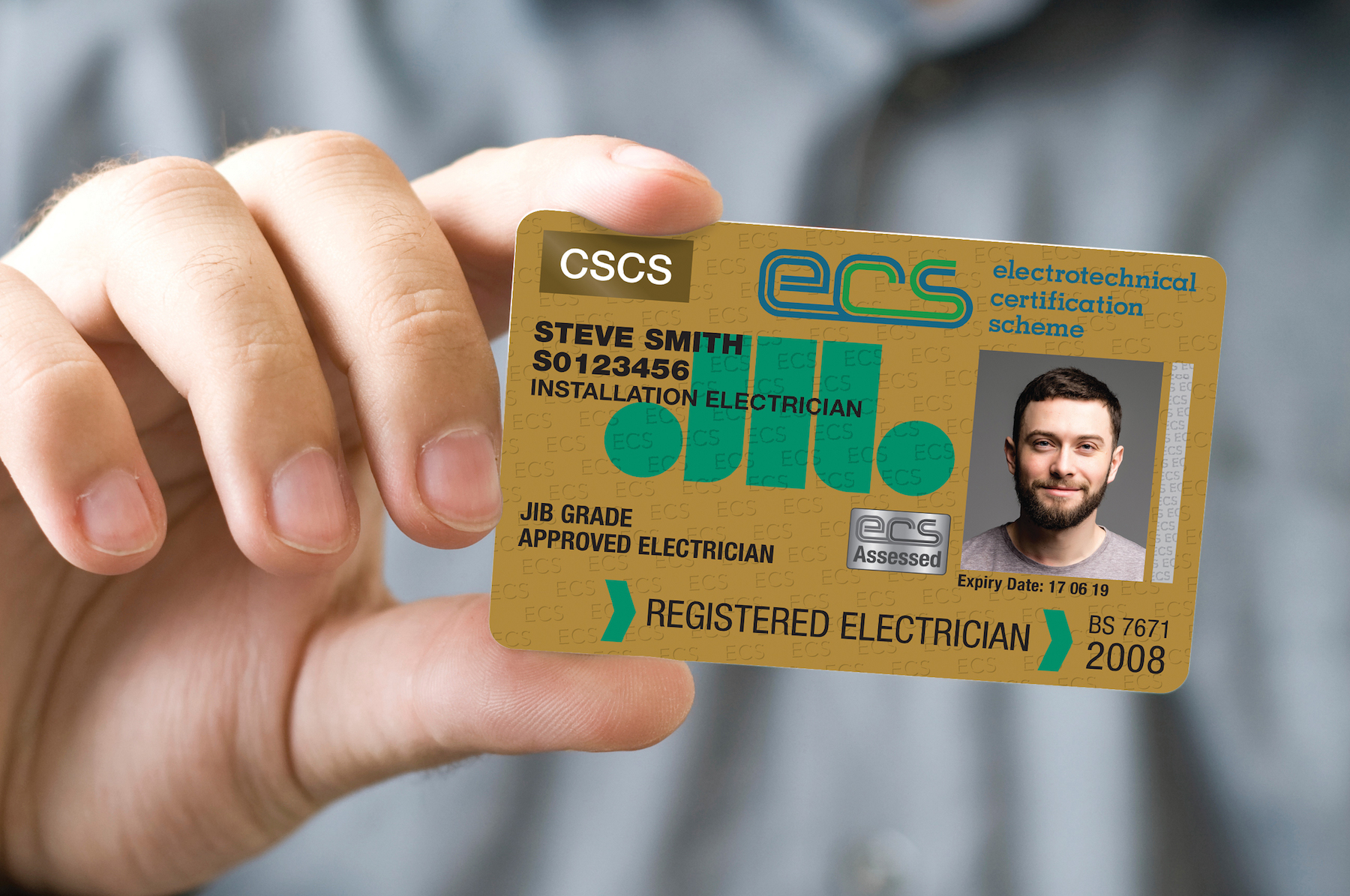
Applications for ECS gold cards from the Electrotechnical Certification Scheme increased by 36% in 2017, signalling a boost in the number of electricians looking to formally certify their skills.  In total the scheme in England, Wales and Northern Ireland now has around 128,000 cardholders, ranging from apprentices to electricians and managers. In addition to core electrical occupations, the ECS also covers other electrotechnical disciplines such as fire, security and datacomms systems. Following investment in IT systems in recent years, customer service has also improved, with card processing turnaround times being significantly reduced from typically four to five weeks to, on average, 10 working days or less.   To date, around 6,000 electricians have opted to recognise their skills since the ECS Registered Electrician scheme launched late last year.  "The increase in gold card holders is good news for the industry, as it reflects a significant rise in the number of electricians looking to recognise their skills at the industry-recognised Level 3 standard," said David Thomas, ECS strategic development manager. "The initial interest shown in becoming an ECS Registered Electrician is also encouraging and we hope that as more electricians sign up to this new status, it will help to raise standards across the industry even further."

ECA and BESA Issue Retentions Plan To Government
A hard-hitting action plan to finally put the issue of cash retentions in construction to bed has been issued to the government by leading engineering services bodies the BESA and ECA. The submission follows the collapse of Carillion last month, which has severely affected many subcontractors. In the submission, the two trade bodies called on the government to put retentions in trust as a key first step, with the Peter Aldous Bill seen as a suitable legislative vehicle. This would then be a stepping stone on an industry roadmap to full abolition of retentions in the near future. The joint submission also includes new findings from a joint survey issued in late 2017, as follows: Over nine in 10 (92%) of respondents said they have faced construction retentions during the last three years, with two-thirds of current contracts involving retentions; Over half (56%) faced total retentions of over £100,000 against current contracts; Many respondents wait longer to get their retention monies than the typical 12 months defect liability period – six months more on average; The average amount of monies held over the past three years, which has not been paid back after the completion date and is thus outstanding, is £34,826; and The average retention was five%, which exceeds many supply chain profit margins. “Prompt and fair payment is essential for industry collaboration, increased productivity and investment," ECA director of business Paul Reeve commented. "Putting retentions in trust is vital to making early progress with protecting and supporting SMEs. Looking forward, it would help the industry not just to survive, but to modernise and deliver on the new sector deal”. “The government’s Industrial Strategy relies on an engineering services sector which has both the capability and capacity to continue to deliver against UK demand. Recent events have shone a spotlight on just how critical prompt and fair payment is to ensure a financially healthy, innovative and productive sector best achieved through a move away from the use of retentions, ” added BESA director of legal and commercial Rob Driscoll. The joint submission also backed conclusions from consultancy Pye Tait that withholding retentions is widespread across construction. However, BESA and ECA noted that Pye Tait’s research was only based on the top three supply chain tiers, thereby underestimating the scale of the problem. The ECA and BESA solution – for retentions to be held in trust – already exists in Australia and has been compared to the UK’s private housing rental deposit scheme. The trade bodies noted that had such a scheme existed before the Carillion collapse, this would have protected many subcontractors, and the fallout must serve as a catalyst for change. The BESA and ECA made the submission in the context of the Government’s consultation into the practice of retentions in construction, which closed in late January.  

Aico Offers Free Smoke Alarm Training In Scotland And NI
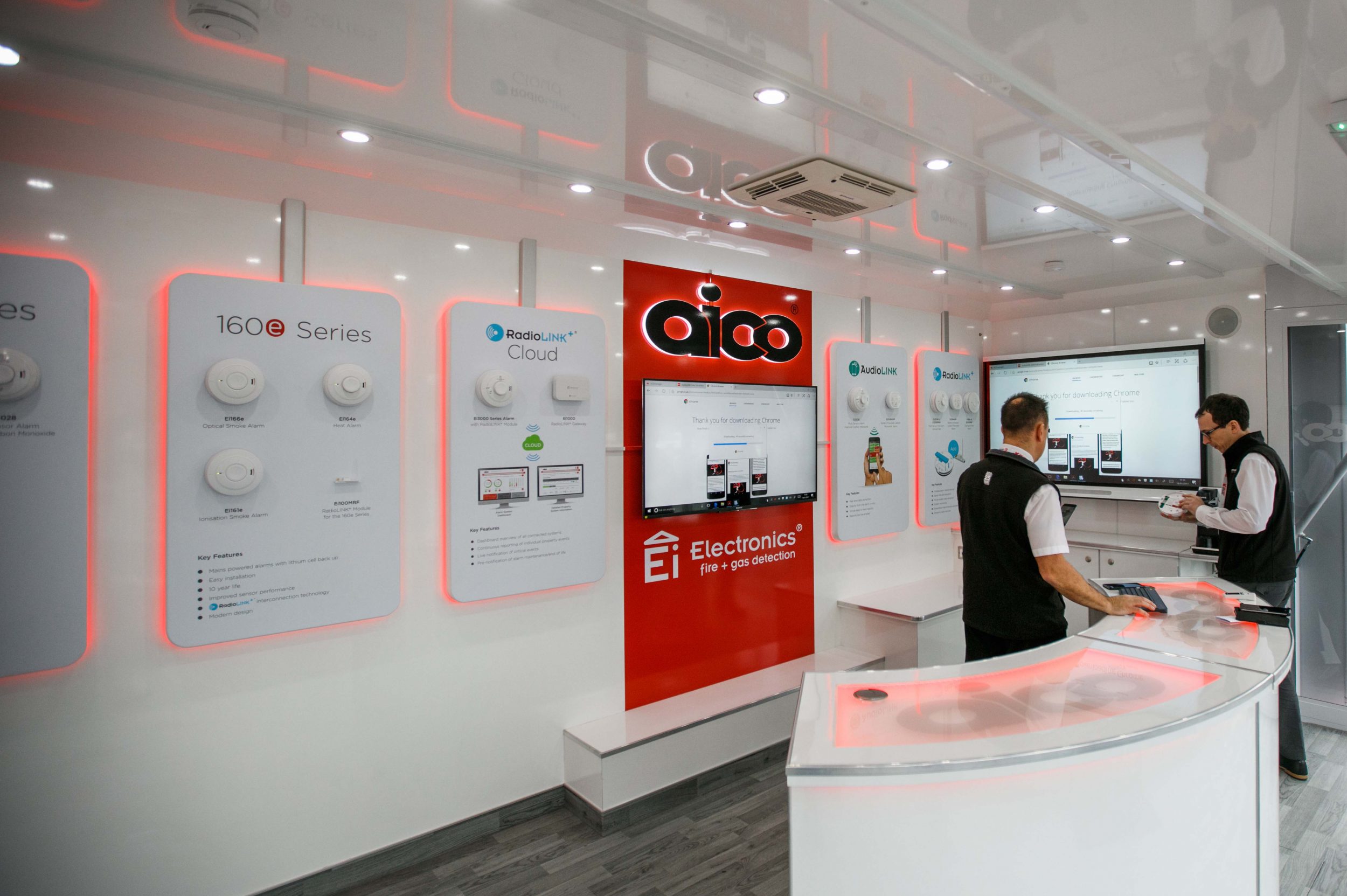
Aico Ltd. has announced its mobile training and demonstration units will be delivering 'Expert Installer' training in Northern Ireland and Scotland this spring and summer. The first mobile unit visited Northern Ireland on February 13-14, with more dates planned for March, May and June.  Dates in Scotland start from February 20 – 22, with further dates running through to June 1. A specially designed webpage on Aico’s website tracks all the mobile units and provides the latest information on dates and venues.  Aico’s CPD accredited Expert Installer is a free of charge modular training scheme designed to ensure everyone involved in domestic alarm specification and installation has all the information they need.  Aico’s Mobile Training and Demonstration Units have proven highly effective in bringing Expert Installer training to more people across the sector than ever before.  Their internal layout can be configured to meet different requirements, be it a product demonstration or a hands-on training session with Aico alarms and technologies, such as AudioLINK data extraction or RadioLINK+ wireless alarm interconnection.  

VEO Oy Acquires I.C. Electrical
Finnish technology firm, VEO Oy, has acquired UK-based electrical installations and contracting company I.C. Electrical Ltd (ICE) for an undisclosed sum. VEO Group, headquartered in Vaasa, on the west coast of Finland, has strengthened its position in the UK marketplace to support its ambitious international growth strategy. During the last 10 years, both companies have worked closely together, and this acquisition is part of VEO Group’s commitment to stay, grow and develop its services in the UK despite the uncertainties posed by Brexit. The range of products and engineering capacity offered by the group will provide ICE’s customers and partners with access to a broader scope of supply, turnkey EAI engineering and high-end technology products made either locally or in Finland. As well as the UK, VEO Group also operates from seven other locations across Finland, Sweden and Norway. Marko Ekman, CEO of VEO Group, said, “ICE’s extensive experience in the UK market combined with VEO’s products and expertise creates a strong foundation to build on. Growth and internationalisation will continue to play an important role in VEO’s plans for the future.” Tim McNeilly, managing director of I.C. Electrical Ltd, said: “The synergies between our businesses are enormous. This, matched with an unrivalled level of trust, cooperation and engineering knowhow, gives us a winning formula. “The acquisition represents a positive step forward for VEO in the UK and is evidence of our genuine desire to continue on the path of growth despite the uncertainty created by Brexit. Together we can provide our customers with the most suitable and comprehensive deliveries on a project-specific basis. We offer engineering, design, control panels and installations that complement VEO’s existing products and services and we look forward to sharing these benefits with both new and existing customers.” Jarkko Aro, sales and operative director at I.C. Electrical Ltd, added, “The increased capacity to design products and produce them at our own factories supports the flexibility and efficiency of our increased operation. Moving forward, our combined expertise can be utilised particularly well for waste to energy operations by generating electricity to the network, as well as heat to local houses or businesses by incinerating waste which normally would go to landfill.”

Tackling Gender Inequality Must Be Priority, Says NICEIC
"Tackling gender inequality must be a trade priority," NICEIC CEO Emma Clancy has said. As the nation celebrates the 100th anniversary of the female vote Emma has said that despite a certain level of progress in other industries, gender disparity still remains a prevalent issue in the electrical and wider construction sectors. “February 6, 1918, was an important milestone in our history, but it only marked the start of a journey that we are still on today to bring about equality,” commented Emma. “The unfortunate reality is that, despite great progress being made in breaking down gender barriers in other areas of life, there is still a huge job to do in the construction industry. “In the electrical industry alone, women only make up around 1% of the total workforce. As an industry we need to broaden our approach to recruitment and the image we portray.” NICEIC continues to promote opportunities for women in the electrical industry through its Jobs for the Girls campaign. The campaign has helped bring greater focus to the issue and while perceptions of the construction industry are changing, Emma believes there are still more steps that can be taken to create a more inclusive environment. “There are some great success stories out there of women who have made a great career in the electrical industry," added Emma. “They are real trailblazers and evidence that the industry is changing. However, the numbers are still painfully low and many young women are still pushed into careers such as hairdressing or childcare as it is the perceived norm. “We need to change the perception of the industry as one traditionally for boys and make it more inclusive and appealing to women. Young females need see it as a viable, exciting career option from the very beginning. “What we have found in particular is that women who do become electricians often do so later on in life – when in fact they could have started out much sooner if they had the appropriate information or encouragement.” For more information, visit the NICEIC's Jobs for the Girls campaign.

Triveneta Admits Production Fault In Flexible Cord
Italian cable company, La Triveneta Cavi (LTC), has confirmed it experienced a production fault last year that resulted in flexible cord cable with exposed copper conductors, on sale in the UK, reports the Approved Cables Initiative (ACI). The cables, which failed the British and European Standards flex test, were found on sale following random market place sampling by the ACI. The Initiative has recently stepped up this programme of surveillance following an increase in reporting of substandard cable. In a written notification, LTC outlined that the incident, which the ACI originally reported in November last year, may be attributed to the `running-in’ phase of a new production plant in Moldova at the end of 2016 and into early 2017. Since the ACI’s original announcement, certification body IMQ has indicated that it has been addressing issues identified during routine surveillance work with the Triveneta factory in question. These issues were being dealt with in accordance with the HAR scheme rules and IMQ requirements. The company has also confirmed it is working with IMQ and that during the latest inspections at its production site by IMQ, no problems or anomalies were detected. BASEC also reported that testing of a further batch of cable passed relevant tests. In September last year, tests of cable samples were commissioned by the ACI and carried out by three independent sources. All showed similar results. Other non-conforming results were also noted but the exposed copper conductors were deemed to be the most dangerous failing of the tested cable. All cable samples failed flex tests under BS EN 50525-2-11 2014. The affected three core 1.5sq.mm cords could potentially be fitted to vaccuum cleaners, electric drills and extension leads, all of which are exposed to constant flexing during their everyday use. The ACI believes the copper conductor strands which penetrated the PVC insulation and sheathing during the test could cause serious electric shock or even death if they come into contact with a user. The samples of Triveneta flexible cords which were tested were marked with the manufacturer’s identification ‘La Triveneta Cavi’ and carried a 2016 manufacturing date. They were also marked with the IEMMEQU <HAR> approval mark. The failed flexible cords were orange and white in colour – however the ACI advises that all colours should be treated with great caution. For further advice on this issue and other substandard cable can be found at www.aci.org.uk.