2 November 2026
Product of the Month: Amari Floodlight range by Aurora Lighting
 
25 November 2026
Scolmore helps rejuvenate Tamworth Cancer Support Centre
 
25 November 2026
Leicester apprentice crowned 2026 SkillELECTRIC champion
 
24 November 2026
JTL celebrates opening of new Tyneside training centre
 
24 November 2026
LiGHT 26 welcomes record number of visitors to fifth event
 

Latest News


NICEIC/ELECSA Apprentice of the Year Contest Enters Final Stage
Eight finalists have been chosen to go through to the final stage of the NICEIC and ELECSA 2018 Apprentice of the Year competition. The final group will battle it out over a series of practical tests at the headquarters of competition sponsor Scolmore on June 5. The winner will be announced that evening during a ceremony at The Belfry Golf Course and Hotel. More than 600 students – representing an increase of 50% on 2017 – applied to take part in this year’s competition, which recognises the talents of the brightest electrical apprentices in the UK. The final eight are: • Zach Swift from Helensburgh, Scotland. Zach is employed by North Star Electrical Ltd and attends West College Scotland. • Ben Vanstone from Somerset. Ben is employed by 1K1 Limited and attends Weston College. • Jonah Edwards from Kent. Jonah is employed by HV Wooding and attends IPS International in Rochester. • Morne Louw from Barnsley. Morne is employed by FSH Maintenance and attends Barnsley College. • Dan Dring from Banstead. Dan is employed by Randburg Electrical and attends Carshalton College. • Patrick Henderson from Falkirk, Scotland. Patrick is employed by Arthur McKay and attends Forth Valley College. • Matt Jones from Bristol. Matt is employed by Mobius Works and attends DCET Bristol. • James Taylor from Lancashire. James is employed by Bainbridge Electrical Limited and is a JTL apprentice. The finalists have had to battle through two stages of the contest, which began back in October last year. The first stage of the contest was an online exam comprising of a variety of questions relating to electrical installations. The top 20% performing students then progressed to stage 2 – a written 1 ½ hour exam held at eight locations across the UK. Each finalist will now receive an iPad with a host of other prizes up for grabs including a £2,000 holiday voucher for the winner, which can be spent on a trip of their choice. There is a £750 holiday voucher for the runner up and £250 for third place.

Hamilton Launches New Brochure
Hamilton Litestat has launched its new-for-2018 kitchens, bedrooms and bathrooms brochure, featuring its latest solutions, technologies and product finishes. The six-page KBB brochure showcases Hamilton’s latest electrical solutions and smart technologies for the home, including smart lighting control and multi-room audio. It illustrates how the solutions can be used effectively within the home. According to Hamilton, when considered early in the interior design process – from both a functional and design point of view – electrical accessories can provide the perfect finishing touch to the kitchen, bedroom and bathroom.

Industry Leaders Present Retentions Petition To PM
In the aftermath of the Carillion collapse, a petition on fair payment and retentions – representing over 355,000 businesses – was delivered today to Prime Minister Theresa May. The petition was presented by Peter Aldous MP and a delegation of industry leaders, including FSB national chair Mike Cherry, FMB chief executive Brian Berry, director general of the Institute of Directors Stephen Martin, ECA CEO Steve Bratt and BESA CEO David Frise. Supporters of the Aldous Bill and the petition on fair payments also gathered outside the gates of Number 10, including business owners directly affected by the collapse of Carillion in January. Coordinated by leading industry trade bodies BESA, ECA and SEC Group, the petition urges the Government to back reform of payment practices and retentions. It comes just days before the second reading of the ‘Aldous Bill’ on Friday 27 April, which proposes cash retentions be held in trust accounts, to protect the supply chain. The Bill is supported by over 120 MPs and 76 industry trade bodies, representing over 355,000 companies and many self-employed professionals. Cross-party support for reform includes Conservatives, Labour, Liberal Democrats, SNP, DUP, Plaid Cymru and the Green Party. Support has also been given from across the construction supply chain, including house building, roofing, scaffolding, electrical, heating, plumbing, interiors and demolition. Peter Aldous MP commented, “This is an unprecedented opportunity to improve the industry for the better, level the playing field for SMEs and protect thousands and thousands of jobs. Construction is an essential underpinning of our lives and work, and we need to support the industry and especially SMEs to ensure future growth and prosperity. The industry loses around £1m for each working day, mostly from SMEs. There have been proposals to stop the abuse of retentions before, but this time there is the largest coalition on fair payments ever.”

RCDs And The 18th Edition
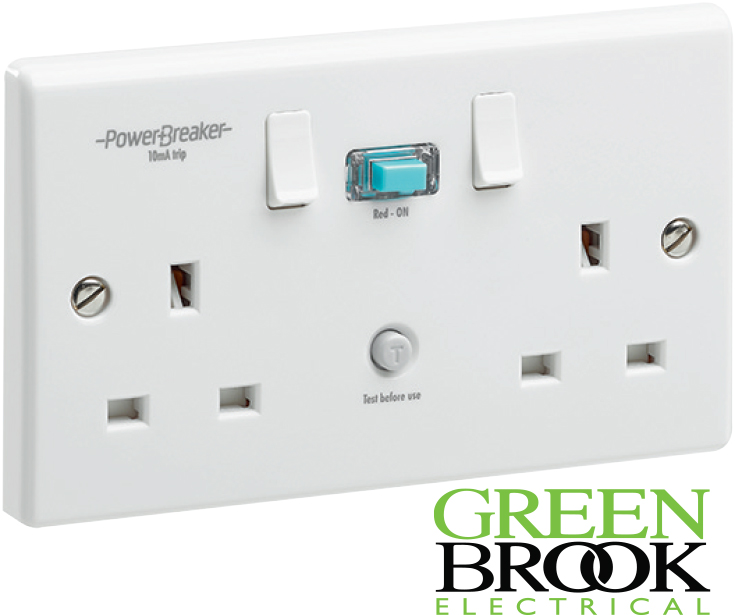
So let’s talk about the basics. Residual Current Devices are electrical devices which, when incorporated into an electrical installation, will provide the highest degree of protection against the risks of electrocution and fire caused by electrical earth faults. PowerBreaker were the first to create the RCD back in 1975. The 17th Edition of Building Regulations recommends the use of RCDs for sockets as well as for inside consumer units. The new 18th Edition recommends that RCDs be used for all public spaces and for retrofitting sockets that are not already RCD protected. Despite this recommendation, there are still approximately 13 million dwellings in the UK that have no RCD protection at all. Approximately 10% of all fires are caused by electrical faults, and many of these could be prevented by using RCDs. RCDs are available in different variants, namely Passive or Active, and can be used for different applications. Many people are unaware of the differences between these two products and do not understand where best to use what. For Passive RCDs, a typical application would be a refrigerator or freezer that would return to its regular mode of operation as soon as the power supply resumes normal operation. Passive RCDs are also useful to use for for sockets in hard to reach places, where having to gain access to re-set an RCD would be tricky, but where protection is still required. An active RCD is better used for electrical equipment such as hedge trimmers, machinery or power tools, where unexpected restarting of the equipment could present a danger to the user in a power cut situation. PowerBreaker 10mA RCDs are the latest products to hit the market. These RCDs trip earlier, as they are more sensitive to a fault current flowing, breaking the circuit before the trip occurs further upstream in the consumer unit – often then cutting out other faultless items. These RCDs have been deemed safer for use in areas with young children, such as nurseries and schools, but also for use in places with more vulnerable people like hospitals or old people’s homes, where a chance of electric shock could be fatal. As detailed earlier, the 18th Edition now deems that all public access areas would be advised to use RCDs (we would suggest 10mA) as all types of people can pass through these areas. PowerBreaker offers both a 30mA RCD as standard plus a 10mA option. The PowerBreaker 30mA RCDs trip at least 10 milliseconds faster than the BSEN standards require. PowerBreaker socket RCDs also offer MFBL (make first break last) technology, which is critical to avoid upstream RCD nuisance tripping at the consumer unit.

BCA Updates CPR Guidance
Specifiers looking for the latest Construction Products Regulation (CPR) guidance can now download the British Cables Association’s paper Construction Products Regulation and Cables – UK position from its newly updated website. The paper, as well as the BCA’s Guidance for Specifiers document, has been updated to reflect concerns and questions raised by specifiers over Reaction to Fire cables and which Class should be achieved for each installation. Construction Products Regulation for cables came into effect last year, and over the past nine months the BCA has received numerous enquiries from specifiers looking for clarification on this issue. Unlike many other EU countries, the Ministry of Housing, Communities and Local Government (MHCLG), charged with responsibility here, has said that the UK has no legislation to determine the level of performance required for Reaction to Fire cable. Although amendments to The Building Regulations 2010, and especially to Approved Document B, may happen in the light of Dame Judith Hackitt’s report, it is most unlikely to lead to any prescriptive legal requirement on Reaction to Fire for cables. The choice of performance level, which is expressed in terms of Classes, is therefore a matter for designers and specifiers who are free to make their own decisions if it reflects the demands of other applicable regulations. The BCA’s guide explains the general nature of the range available so that specifiers have an awareness of the types and their terminology. From July 1 2017, it became compulsory for cables, with a Reaction to Fire performance and intended for permanent installation in buildings and constructions works, to be accompanied by a Declaration of Performance (DoP) and have CE marking. The updated guide can be downloaded on the BCA website.

Contractor Gets Hands Dirty For BBC Garden Rescue
An NICEIC approved contractor has been featured in an upcoming episode of BBC’s Garden Rescue. Gavin Jones of Gavin Jones Electrical was invited to take part in the filming after NICEIC was contacted by producers of the show. He said, “It’s a little out of the ordinary to get a call on a Tuesday morning asking to be part of a television programme for the BBC, but after giving it some thought (only a couple of seconds) it didn’t take long to see what it could do for me and my business. “The job was simple; to run a steel wire cable from the customer’s garage, underground, to a water feature in the garden. It was like any other job, apart from having to repeat a few parts of it so the cameraman could get the shot he was after. “The producer was really interested in the process of digging out a trench for the cable to go in, securing the cable with electrical warning tape, backfilling the trench halfway, placing another piece of warning tape as a precautionary measure, and finally filling the trench. “It’s really refreshing to see someone who’s not in the industry show real interest in the work that every electrician would see as best practice and an industry standard.” NICEIC’s technical expert Darren Staniforth was also invited along to the recording of the show. He provided general advice for anyone considering electrical work in the garden. Gavin Jones Electrical are NICEIC Approved Contractors based in Northampton but also service Wellingborough, Kettering, Corby, Towcester, Silverstone, Milton Keynes and the surrounding areas. They carry out a wide range of electrical service in domestic commercial and industrial sectors. The new series of Garden Rescue will air on BBC 1 at the end of May. NICEIC has also been asked to help out with the next series of Love Your Garden on ITV. The producers of the show contacted NICEIC to help find reliable contractors for a series of shows to be filmed across the UK.

CEF Raises Money To Fund Macmillan Nurse
[caption id="attachment_14340" align="aligncenter" width="640"] Photographer: Derek Harper, www.geograph.org.uk/photo/4646220[/caption] CEF staff have set a goal to raise enough money to fund a Macmillan nurse for a year by walking the Macmillan Way. The total cost to fund a nurse is £54,000, and the walk will be taking place between June 1 and June 17 this year. Macmillan Cancer Support is CEF’s nominated corporate charity. The Macmillan Way is a 290-mile footpath in England that links Boston, Lincolnshire to Abbotsbury in Dorset and follows footpaths, bridleways and byways. Andrew Moseley, along with a number of CEF general managers and members of the procurement team, will be taking part in the charity walk. To donate, visit Andrew's JustGiving page. More information about the Macmillan Way walk can be found on the website. For more information about the charity event, email cefcaresmacmillan@cef.co.uk.

Shortlist for ECA Industry Awards Announced
A shortlist of 26 leading businesses from across the electrotechnical and engineering services sector have been chosen by judges for this year’s ECA Industry Awards. This year’s award winners were drawn from a highly competitive pool of entries. The successful organisations have been recognised for their outstanding performance and achievements in the last year, with awards including ‘Contractor of the Year’, ‘Best Health and Safety Initiative’, ‘Excellence in Training and Development’, and a number of new specialist engineering categories.  The independent panel of judges, including Certsure marketing director Mark Smith, Electrical Safety First chief executive Philip Buckle and Electrical Industries Charity managing director Tessa Ogle, convened on April 10, 2018 to consider all entries and compile the shortlist. Adjudicator and ECA director of member services Helen Atkinson commented, “The number and quality of entries this year was impressive; whittling down the shortlist was no easy task. I would like to congratulate all the nominees, and also thank this year’s entrants for the significant time and effort they put into their award entries. I’m very much looking forward to meeting many of these organisations at our industry-leading Awards Dinner ceremony in June, where the winners will be announced.” The ECA Industry Awards Dinner, which is headline sponsored by Electrium and LEDVANCE, is being held on June 8 at the Hilton Bankside in London. On the night, guests will be treated to entertainment from award-winning comedian Alastair McGowan, as well as live music, magicians, and more. The ECA Industry Awards Dinner will also offer the opportunity to network with colleagues and make new contacts with industry contractors, specifiers, manufacturers and distributors, and other key figures from the electrotechnical and engineering services sector. 

Contractors Warned Over Medium Voltage Cables
AEI Cables has issued a warning to make sure that Medium Voltage (MV) cables coming onto the market are independently approved and certified as compliant as the pressure mounts on the installation of quality products in modern building developments. As the incidence of non-approved cables continues, the company is warning the supply chain to be particularly careful around the application of these cables into high-risk environments including hospitals, industrial sites and sub-stations serving infrastructure sites. Stuart Dover, commercial manager for AEI Cables, said, “We are advising contractors to be careful, especially with new building design and development for modern complex buildings. If these cables are not approved, just question why not and check them out. To follow best practice and all compliance, we also advise that these cables are independently tested and certified by a third-party such as BASEC. “There have been many instances in the recent past of non-approved cables coming onto the market, but in these environments it is crucial to get it right. “Take all due precautions. Look for the British Standard, European or international standard number, the manufacturer’s mark and third-party approval markings. Even if there are markings, it is worth checking because some labels and stamps have been used fraudulently. “Cables which are unmarked but not checked can become untraceable, so it is important at the point of receipt for contractors to check every time. Also keep records of purchases and deliveries to ensure that what is being installed is what was specified originally.” He added, “It is well worth the small amount of time to make these checks, especially by the nature of the new designs of buildings these are going into and how they will be relied on to provide continuous power supply.” Of the 29,312 accidental electrical fires in England during 2016-17, 5,241 (18 per cent) were attributed to wiring, cabling or plugs and of these 2,693 (51 per cent) were down to faulty electrical supplies and 1,728 (33 per cent) were caused by faulty appliances and leads.

Aldous Bill Petition To Be Presented To 10 Downing Street
A petition on fair payment and retentions will be delivered to Prime Minister Theresa May later this month by Peter Aldous MP and a delegation of industry leaders. The group will take the petition to 10 Downing Street on Monday April 23 at around 1.30pm.  The group of industry leaders presenting the petition includes FSB National Chair Mike Cherry, FMB chief executive Brian Berry, director general of the Institute of Directors Stephen Martin, ECA CEO Steve Bratt and BESA CEO David Frise. BESA and ECA, who are coordinating the presentation on April 23, are urging the industry to support the petition, which comes four days before the second reading of the ‘Aldous Bill’ (Friday 27 April), which proposes cash retentions owed to suppliers are held in trust accounts. ECA CEO Steve Bratt commented, “Putting retentions in trust is a vital first step in helping to protect the supply chain from future upstream insolvency, and it will also help to prevent the abuse of retention monies owed to the supply chain. “Our petition aims to raise awareness of this critical issue with the Prime Minister in advance of the Aldous Bill being heard in Parliament. We urge the entire construction industry to back the bill and show support for immediate retentions reform.” BESA CEO David Frise added, “This represents a tremendous show of support from industry and MPs. At its best, the industry can deliver a first-class built environment, but cash retentions impact every one of the 330,000 SMEs and sole traders represented in this petition. We need reform now and the proposal to hold cash retentions in trust will be a start to demonstrate lessons have been learned from Carillion.” Reform of unfair payment practices, including excessive withholding of retentions, is already supported by over 75 industry trade bodies, representing over 330,000 companies and self-employed professionals. Support has been given from across the entire construction supply chain, including house building, roofing, scaffolding, electrical, heating, plumbing, interiors and demolition. Payment abuse has climbed up the political agenda since construction giant Carillion collapsed just six days after the first reading of the Aldous Bill, leaving many SMEs owed huge sums of money. Had retentions owed by Carillion to suppliers been held in trust, this money could have been recovered.