2 November 2026
Product of the Month: Amari Floodlight range by Aurora Lighting
 
25 November 2026
Scolmore helps rejuvenate Tamworth Cancer Support Centre
 
25 November 2026
Leicester apprentice crowned 2026 SkillELECTRIC champion
 
24 November 2026
JTL celebrates opening of new Tyneside training centre
 
24 November 2026
LiGHT 26 welcomes record number of visitors to fifth event
 

Latest News


Electrical contractors advised not to rely on project policy cover
ECIC, the specialist insurer for the building services sector, is warning electrical contractors working on major building sites and projects, that they may not be covered under the site’s project policy as they have been in the past. This could leave them exposed if they are found to be at fault in an insurance claim. The warning follows an out of court settlement which has left insurers and contractors in the dark about the extent of cover offered by Project Policies – in the eyes of the law. In 2018, a High Court decision found in favour of a project policy insurer recovering their costs from the contractor who caused a site fire. The Court concluded that, under the terms of the project policy, the subcontractor was required to have separate cover - which was not in place. This meant the contractor was liable for the full cost of damage caused. The contractor in this case was due to appeal the High Court’s decision in early 2019 but instead settled out of court, prior to the appeal hearing. Ian Hollingworth, Technical Claims and Relationship Manager, ECIC, comments, “The out of court settlement has left insurers supporting the UK’s construction sector in need of urgent clarity over policyholder and sub-contractor’s rights under these policies, and where the sub-contractor needs to take out their own CAR/public liability insurance. “Traditionally, employers on larger construction projects take out a project policy to cover damage to the existing structure. There is also the option of adding cover for contract works being undertaken by appointed sub-contractors, including electrical contractors. “The project policy would normally provide protection to named contractors, and sometimes all contractors in the contractual chain, reducing delays in the project and avoiding costly litigation between sub-contractors. However, in this case, the sub-contractor had not been appointed at the start of the project and was not named on the policy. This meant the subcontractor required their own insurance, clearly highlighting the importance of checking insurance cover thoroughly, and not taking for granted that full cover is held for all sub-contractors working on site. “Whilst the situation remains somewhat unclear for the insurers, what is very clear is that electrical contractors and sub-contractors can no longer rely on a project policy insurer to cover any losses in the event of damage they may cause. A project policy does not necessarily provide the catch-all cover on which contractors have come to rely, and overlooking this could be an extremely expensive mistake for any electrical contractor or sub-contractor. Thorough checking of existing cover and the terms of that cover is even more important than ever, so we advise all electrical contractors to work closely with their broker or insurance provider to confirm they are adequately insured for their potential liabilities.”

Rexel launches Industrial Solutions division
Rexel UK has launched a specialist Industrial Solutions division, with a national network of branches delivering expert insight and bespoke solutions to improve business efficiencies. With the development of Industry 4.0 and smarter solutions becoming an expectation within most businesses, Rexel recognised the need to advance its industrial offer to support its customers in developing improved processes and efficiencies. Ian Pegrum, Sales Director of Industry, said they were excited to be launching the industrial strategy into the marketplace, following much development. He comments, “Today we see a very different industrial marketplace than ever before. The technological developments, specifically within the world of intelligence and smart solutions, are becoming so advanced, businesses now demand far more from suppliers – they need a one-stop supply solution that is tailored to their individual needs. “Machinery can now have a requirement to monitor performance and output, gathering intelligent data to improve production process. For example, the world of ordering will change, becoming low in size but higher in frequency. Our customers will adopt an automated system that will ensure they are placed to achieve this, otherwise they will struggle to adapt.” Rexel Industrial Solutions will provide bespoke, tailored supply solutions. This will include technical support from expert staff leading to solutions such as supplier rationalisation, integrated supply solutions, 'just in time' solutions and smart stores. Nick Brent, Head of Industrial Sales, already operates within the field. He says, “The offer we can provide is very diverse and is not limited to our electrical supply focus, we can, and have, delivered a huge range of products and cost saving initiatives. Rexel have free services available to the market, looking at lighting designs and energy management. “We’re very well positioned with our offer to be able to provide full supply solutions to businesses and realise this is the way that businesses must go as the world continues to develop.” The current Rexel Industrial Solutions branches are in Deeside, Birmingham, Bradford, Leeds, Whitehaven, Trafford and Peterborough, alongside field-based sales engineers, working throughout the UK, helping to secure Rexel’s development for the future. The Deeside branch has already become the fifth UK Industrial Automation Distributor (IAD) under an initiative from Schneider Electric, designed and developed by Schneider Electric’s Industry division. The scheme is part of a Channel Segmentation Strategy Plan for the establishment of ‘Master’ Partners. It sets out to make a step change in its automation specification and services, offering the highest level of technical training and support for its customers, including end users and OEMs. This training will continue to be rolled out across the specialist branches.

Aico publishes guide to BS 5839-6:2019
With the recent changes to BS 5839-6:2019, Aico – a provider of domestic mains powered fire and carbon monoxide alarms - has condensed the information into a pocket-sized guide. British Standard BS 5839-6:2019 covers specific recommendations for fire alarm systems in all domestic premises, and covers both new-build and existing properties. The standard contains a large amount of detail on all aspects relating to the design and installation of fire alarm systems, including the type of alarm to install and the areas of the property to protect. To further support customers with the changes, Aico has updated its counter mat for wholesalers. The counter mat has a picture of a house with alarms in situ, providing the information about where to site alarms conforming to the changes in BS 5839-6:2019 Table 1. All of Aico's alarms are designed and built in Ireland specifically to meet the UK standards and regulations. If you would like further information on the BS 5839-6:2019 updates, visit www.aico.co.uk or email marketing@aico.co.uk to order your free pocket-sized guide.

Tamlite Lighting welcomes investment in wellbeing
Research which identifies the start of a three-year phase of significant investment in wellbeing across the UK’s built environment sector has been welcomed by Tamlite Lighting. Published last week, the report from the Urban Land Institute (ULI) - a global non-profit research and education organisation focused on the built environment - presents data from the first ever comprehensive survey of leading property experts into understanding health and wellbeing. It looks at the way the wellbeing agenda is influencing investment decisions across the real estate industry. Entitled, Picture of health: the growing role of wellbeing in commercial real estate investment decision-making, it reports on survey responses and interviews with more than 100 investors, developers, fund managers, consultants, valuers and analysts. Of particular note is that 86% of the survey respondents expect to increase their investment in wellbeing in the next three years, with 17% anticipating this increase to be ‘significant’. For Tamlite, a company that has long-championed the benefits of investment in more ‘human centric’ approaches to building services, such as lighting, the survey’s key findings are welcomed, but not surprising. Commenting on the report, Debbie-Sue Farrell, Head of Wellbeing at Tamlite Lighting, said, “Tamlite has spent the last 12 months talking to architects, consultants and building owners and operators about the benefits of investment in wellbeing. Clearly, we wanted to lay clear the commercial business case; a key message is that improvements to office environments, particularly in terms of lighting, offer a way to enhance UK workers’ daily experiences of the workplace. “The feedback from our engagement with the market shows us that the agenda is moving on at some pace; more and more companies are now looking for new ways to enhance the workspaces they offer. It is therefore no surprise that the demand for ‘better spaces for better people’ is now shifting to building owners and real-estate investors. To stay competitive and attractive to tenants, commercial landlords simply have to provide the type of spaces that end-users want. Wellbeing measures are one of the best ways to do this.” Victoria Lockhart, co-chair of ULI UK’s Sustainability Forum and Director of Market Development at the International WELL Building Institute, adds, “The increased interest in health and wellbeing we are already seeing from major players in the real estate industry cements the fact that wellbeing is becoming central to development and investment strategies. “As companies seek to attract top talent, wellbeing is increasingly prioritised as fundamental to environmental, social and governance (ESG) factors. Companies are looking closely at the workspaces they offer, as well as how the workplace can help translate a company’s values and build a culture of health.” To download the full report, visit uk.uli.org or click here.

ECA issues five-point plan for new Government
A five-point plan for the new Government to improve the UK’s built environment has been set out by leading engineering services body, ECA. The proposals include reforming cash retentions, reducing false self-employment, and preventing the use of unskilled labour. ECA CEO, Steve Bratt, comments, “If the new Government is to deliver a range of key infrastructure projects, such as high-speed rail, major housing developments and renewable power generation, then it needs to promote a competitive market based on quality and innovation. Unfair, unsustainable practices such as false self-employment, cash retentions and reliance on unqualified, incompetent labour need tackling as a priority. “The engineering services industry plays a fundamental role in improving the UK’s built environment, which in turn is the engine of progress and growth across the economy. Businesses stand ready to support Government to reach its ambitious climate targets and deliver key infrastructure, but change is required to make this a reality.” ECA’s five-point plan is as follows: Reform cash retentions. Cash retentions are held by private and public sector clients against their subcontractors, with some £7.8bn unpaid in the last three years. This has severely hindered business growth and in some cases, led to insolvency. ECA, BESA and a coalition of more than 90 other bodies, with the backing of more than 275 MPs, have long been pressing Government to reform this practice. Make buildings energy efficient. To deliver on the ‘net zero’ carbon emissions commitment by 2050, the Government needs to put in place a clear plan to deliver more energy efficient buildings. This needs to include policy shifts to help decarbonise buildings, and ongoing monitoring to check whether targets are being met. The use of green finance initiatives could help to achieve this. Build more houses. It is widely recognised that house building needs to increase to 300,000 every year if supply is to meet demand. Government needs to incentivise house builders and housing associations in order to meet this target, as well as encouraging the use of modern methods of construction, such as modular housing. Reduce false self-employment. ECA, alongside influential business leaders from across the construction sector, has called for higher levels of direct employment to be implemented across the supply chain, and less reliance on agency labour. Doing so will help boost productivity and innovation, strengthen health and safety on-site and deliver improved outcomes for clients, including the Government. Ensure operatives are suitably competent. The clear view of ECA and industry partners is that the best and most practicable way of assuring competence is by individuals holding the relevant qualifications, which is often an apprenticeship or equivalent. This will help ensure work is of a higher quality, create safer buildings, and preserve standards when firms are tendering for business. This five-point plan is clearly on top of the Government’s need to resolve the current Brexit impasse, and therefore bring certainty to businesses”, adds Steve Bratt. “The industry is increasingly keen the new Government focus on delivering a compelling domestic programme for enhancing our infrastructure and boosting the built environment”.

NICEIC renews sponsorship with Luton Town
IMAGE: Paul Collins (left) pictured with Luton Town defender, Sonny Bradley (centre) and Luton Town’s manager, Graeme Jones (right). NICEIC has renewed its deal to sponsor newly-promoted Championship side Luton Town FC. The NICEIC logo will appear on the back of the Hatters’ shorts and away kits for the 2019/20 season. The latest deal marks a decade of continued sponsorship between NICEIC and the club. This season’s partnership will kick off in style, with Luton taking on Middlesbrough live on Sky Sports on Friday, August 2. Paul Collins, Communications Manager at NICEIC, comments, “We are delighted to once again support Luton Town FC, and couldn’t ask for a better start. Luton will be kicking off the new season in front of a TV audience of millions. It will ensure great coverage for the NICEIC brand, and promotion to the Championship will bring further TV exposure throughout the season.” In addition to the shirt deal, NICEIC will be updating its boards around the ground, including new LED adverts promoting NICEIC registered contractors. There will also be increased advertising in the club programme and around Kenilworth stadium, where Luton regularly attract crowds in excess of 9,000 for every home game. Collins adds, “We are committed to promoting our contractors in new and innovative ways, and will continue to push the benefits of using an NICEIC registered electrician. We would like to wish the management and players at Luton Town FC all the best, and we are looking forward to another great season working together.” David Hoskins, Commercial Manager at Luton Town FC, notes, “We are delighted to have NICEIC on board again. It is a great supporter of our club, and has been with us all the way, from our time in the Conference to where we are today. It has been a positive journey for both organisations, and we look forward to more success over the next few years.”

CEF invites customers to opening of new store
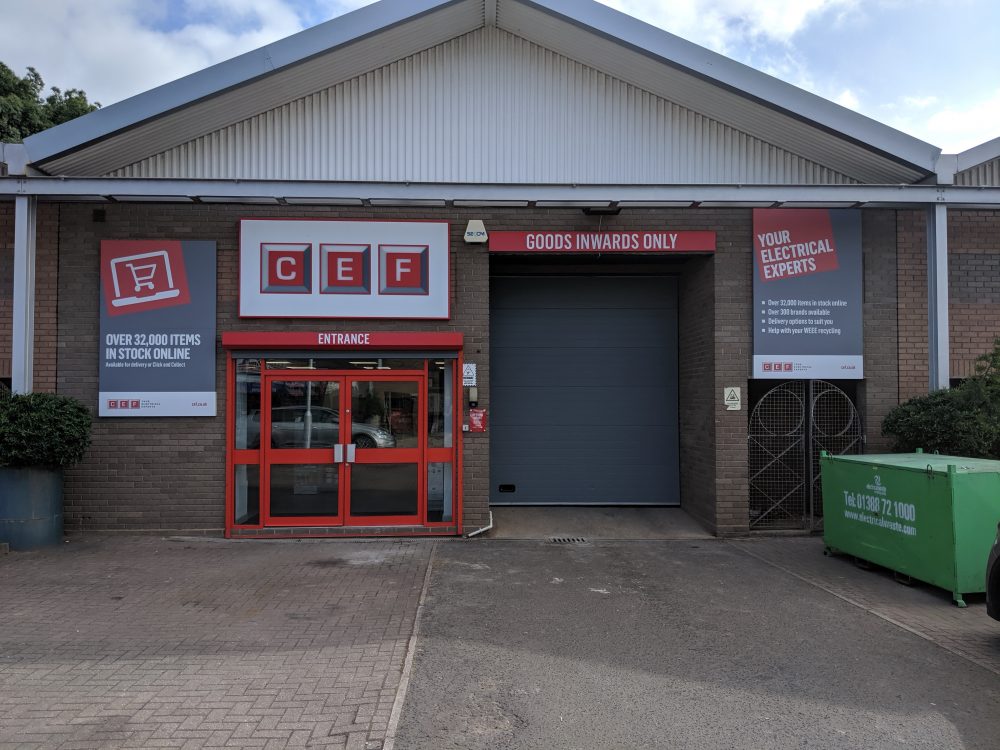
CEF, the UK’s leading electrical wholesaler, has opened a brand new store in Stratford-upon-Avon and is inviting local customers to its official opening this August. CEF – which has nearly 400 stores nationwide – supplies everything from cable and lamps to sockets, ventilation, heating and switchgear, and its new store in Stratford-upon-Avon is already fully stocked and ready to supply to customers at the trade counter. Moving from its previous location on Western Road Industrial Estate to new premises on Avenue Farm Industrial Estate gives the CEF team more space to keep an even greater number of products in stock. On Friday 16th August, the electrical wholesaler is celebrating the opening of its new premises by inviting local electricians and tradespeople to an official opening, packed with food, drinks and special offers. New opportunities CEF states that the new store is an asset to the Stratford-upon-Avon area, bringing valuable electrical expertise and resources to the local trades, as well as new job opportunities to the area. The team has already hired one local candidate and is on the lookout for more enthusiastic, customer-focused people to join them. Dave Cooper, Store Manager at CEF Stratford-upon-Avon, comments, “We’re delighted to be able to offer our extensive local stock and outstanding service to customers in our new and improved location, together with our online range of almost 30,000 products – all available next day at everyday value prices. Our customers are at the heart of everything we do at CEF, and this store has been designed with tradespeople in mind, making sure we’re ready to respond to every individual’s needs. “At CEF, we believe in building relationships with our customers, so we’re really looking forward to welcoming people to our official opening on Friday 16th August. We’ll have some exclusive product offers available on the day, as well as food and drink, so we hope to see lots of people there.” “As a local store, we’re keen to employ local people and have just welcomed one new person from the area to our team. Anybody who is passionate about providing excellent customer service, and who is interested in joining our dedicated, expert team, is welcome to get in touch.” The new CEF store is located at Unit 9 Swan Trade Centre, Avenue Farm Industrial Estate, Birmingham Road, Stratford-upon-Avon. Its opening hours are 7am to 5.30pm on Monday to Friday, and 8am to 12pm on Saturdays.

Tridonic opens lighting academy and tech hub
Tridonic UK, a manufacturer and enabler for smart, connected lighting, has opened a technology hub at the Business Design Centre in Islington, London and invested in a new Connected Lighting Academy, in its Basingstoke headquarters. These investments are central to its digital and business transformation strategy, designed to help support and educate its OEM partners through training on the company's latest products. This includes net4more and basicDIM wireless, and will enable partners to learn more about the opportunities for connected lighting and how best to sell these complex, integrated lighting solutions. Simon Blazey, Strategic Solutions Sales Manager at Tridonic, says, "The ubiquitous nature of light, in our buildings and the wider urban environment - combined with advancements in technology - means that lighting is set to be the communications backbone for the smart buildings and smart cities of the future. The London hub is intended as a ‘think tank’ to help incubate ideas around real business issues, through demonstrations of our technology, and help visitors to gain an understanding of how the many building technologies deployed today can interoperate." He continues, "Our first OEM has already undergone training at the academy, and they were excited about the new opportunities that are opened up with our products and solutions." - Tridonic has also welcomed Chris Slattery to its team. He takes on the role of OEM Controls and Solutions Manager, and was previously Emergency Lighting Product Manager. Slattery comments, "I enjoyed the challenge of bringing innovation into the emergency lighting sector and now look forward to using my experience and technical and business knowledge in this new position. Our latest solutions including basicDIM wireless and sceneCOM, alongside net4more offer great opportunities for OEM's looking for innovation and wanting to expand their offering beyond the traditional lighting market."

Homing in on surge protection
On the back of a 20-year partnership, Hager and Taylor Wimpey, one of the UK’s largest housebuilding companies, are working together to ensure safety remains the number one priority for the owners of the developers’ newly built homes following recent electrical industry regulation changes. As a result of the introduction of the 18th Edition of the Wiring Regulations, all new Taylor Wimpey homes, where construction was started after January 2019, will benefit from an ‘as standard’ installation of a surge protection device within the property’s consumer unit as an extra safety precaution. The new 18th Edition regulations state that all new build properties should have surge protection unless a risk assessment is carried out by electrical contractors to look at the likelihood of lightning strikes and other geographical factors that could result in short, disruptive and excessive voltage levels. The risk of such occurances can adversely affect properties and their contents such as electrical devices like laptops, and TVs. From this assessment, electrical contractors can decide if the consumer unit installation warrants the cost of including a surge protection device to help protect potentially expensive household technology items from damage due to an unpredictable spike in voltage. However, committed to the highest levels of customer service, Taylor Wimpey has taken the strategic decision to phase in the roll out of consumer units prefitted with a surge protection device across its new build developments going forward. As well as offering complete peace-of-mind for the new property homeowner, by specifying Hager’s Design 30 consumer units, electrical contractors can benefit from a straightforward and fast on-site installation process as the surge protection devices come pre-wired. This helps to keep the construction programme on schedule and allows purchasers to take ownership of their new homes without any undue delay. Ian Smith, Marketing Manager at Hager, says, “The introduction of the 18th Edition regulations mean many in the electrical industry supply chain have had to reassess their specification and installation processes to comply. Surge protection was an area of major change, especially with the onus on contractors to carry out a risk assessment before the installation of a consumer unit. “While this could lead to potential confusion among the market, Taylor Wimpey, as a responsible developer, has taken the decision to ensure all its new homes offer increased electrical protection. The company’s judgement to install the Hager Design 30 consumer units with factory pre-wired surge protection on a blanket basis, means it has removed any doubt about the best course of action. “The impact of the 18th Edition changes can be seen by the fact that production of Hager’s surge protection-ready Design 30 consumer units has increased ten-fold, as the electrical industry gets to grips with the new regulatory landscape.” A spokesperson for Taylor Wimpey comments, “By taking the strategic decision to install 18th Edition-ready consumer units into all of our new build homes where initial construction has started after January 2019, we are able to assure our new homeowners that their property and valuable items are better protected from unpredictable surges in voltage. We also take the pressure off electrical contractors. They no longer have to make the decision around the suitability of surge protection for a home following the risk assessment. They can simply get on with the installation. “Our long-standing relationship with Hager means we are totally confident we are specifying a quality, high performing solution thanks to the Design 30 consumer unit.”

Electrical contractors show further fall in reportable accidents
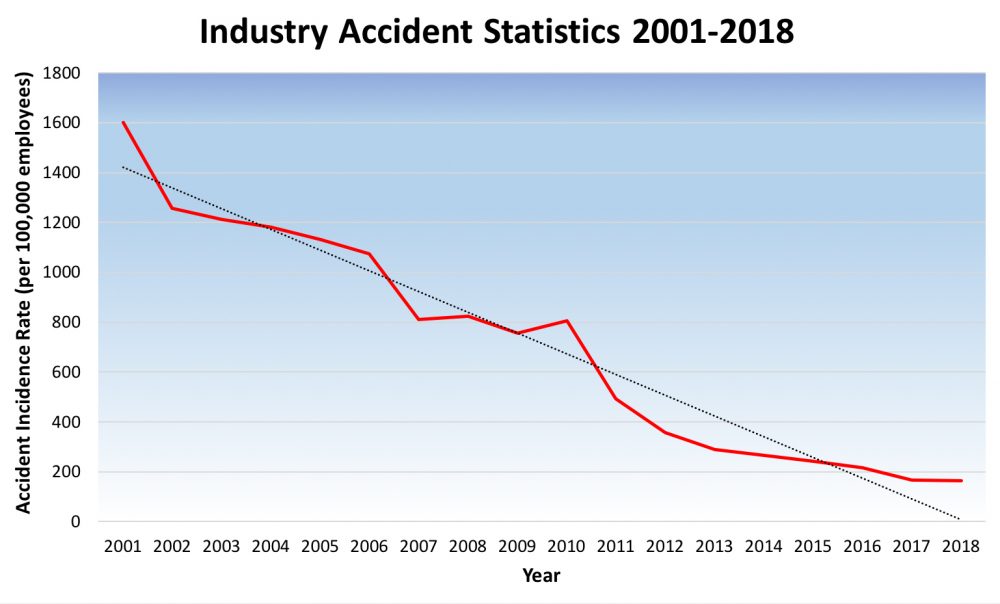
The latest accident statistics for electrical contracting businesses, employing over 13,000 operatives in total, show a further reduction in the accident rate in 2018. The figures, collected by the Joint Industry Board (JIB) on behalf of leading electrotechnical trade body ECA and Unite the Union, show that the rate of RIDDOR-reportable accidents fell once again, to 164/100,000. Significantly, no fatalities were reported during 2018 and the rate of specified (major) accidents was also lower than in 2017 at just over 52/100,000. The main causes of injury were falls, slips and trips, and there was one reportable injury due to electric shock. Steve Brawley, Chief Executive of the JIB, comments, “It’s very encouraging to report that the rate of reportable accidents in our industry continues to fall, and it means that the rate of these accidents is now, remarkably, only slightly more than 10% of what it was in 2001, the year we started to collect data for the industry’s highly successful ‘ZAP safety initiative.” Paul Reeve, ECA Director of CSR, adds, “Since the turn of the millennium, there has been near continuous improvement in the accident rate reported by participating companies. The 2018 figures mean that the accident rate has fallen nearly 90% since 2001, which is a great achievement. In fact, the number of RIDDOR-reportables – in a sample of over 13,500 operatives – is now so low, that in 2019 we will be asking companies for additional details of any ‘over one day accidents’. While these accidents are not RIDDOR-reportable, this will give us more data to work with in future.” Rob Miguel, Unite National Health and Safety Advisor, notes, “While these new figures are very welcome and show huge improvements in safety in the electrical contracting industry over the last two decades, JIB is also working to improve occupational health. “The JIB occupational health scheme provides operatives employed by a JIB member company with the opportunity to receive a fully funded occupational health assessment every three years. This facility, funded through the JIB Benefits Scheme, will deliver various benefits including improved compliance with health and safety law, meeting client and main contractor requirements, and helping people to identify and remedy health issues at an earlier stage. This assessment looks for the effects on health that might be caused by situations people are exposed to at work, and highlights action which employers will need to take to protect the health and wellbeing of their employees and our members.” To download the accident report visit: www.jib.org.uk/jib-accident-survey