2 November 2026
Product of the Month: Amari Floodlight range by Aurora Lighting
 
11 November 2026
Energy, AI and smart buildings: register now for EMEX 2026
 
11 November 2026
Solar and batteries could cut electricity costs by 40%, data finds
 
11 November 2026
EIC confirmed as ECN Awards 2026 charity partner
 
11 November 2026
Acrospire to support Green Frog's European expansion
 

Latest News


Develop Training team returns from life-changing venture in Nakuru, Kenya
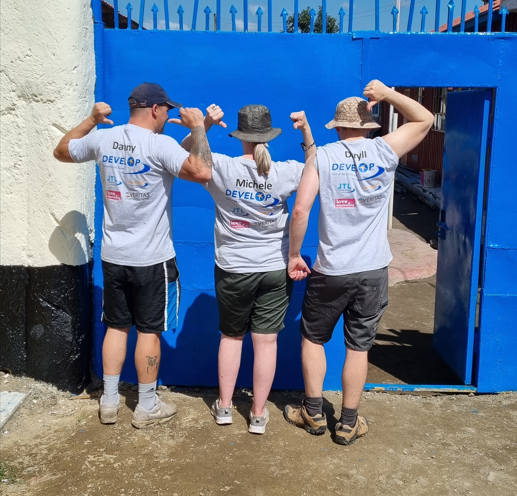
Develop Training welcomes home three of its colleagues who have recently returned from Nakuru, Kenya after embarking on a project to change the lives of communities in remote and impoverished areas. The project, in partnership with Derby County Community Trust (DCCT) and African Adventures, saw the team from Develop Training work with limited resources to develop utility systems that will help to improve the lives of Nakuru communities and their children by installing systems that deliver clean water and sanitation. The team, comprised of Michele Clark, Daryll Garavan and Danny Connor, worked with the wider team of 70 volunteers alongside the local community to improve and install new toilet facilities. Some of the schools in the community host over 5000 students with as little as two toilets; this has subsequently exacerbated the problems surrounding young girls missing out on schooling due to not having sanitary supplies or adequate toilet systems. Due to this, Develop Training’s long-term plan is to train the community to enable them to maintain and sustain the equipment and systems installed independently for decades to come. Daryll Garavan, Operational Training Manager at Develop Training, says: “The Kenya Project was an eye-opening experience that allowed us to give children, who originally wouldn’t have had access to schooling, the opportunity for an education. It was an honour to be able to lay down the foundations and legacy for accessible education in a community where it will have a huge positive impact. Working with local builders to improve the utilities systems at the five schools we visited at times felt like a drop in the ocean. However, we were all immensely proud to see how grateful the community was and how such a small sacrifice for us made such a positive difference to their lives”. One of the utility companies joining Develop on this unique project was Northern Gas Networks (NGN). Chris Adair, Training Manager at NGN was joined on the trip by three of his apprentices, Chris comments: “It was an amazing project to be involved in, life changing, life affirming and a real rollercoaster of emotions. For NGN to commit to supporting myself and three apprentices to embark on this project is simply amazing and shows their commitment to a sustainable future for all. “The impact this opportunity has had on the apprentices has been life changing and certainly puts everything into perspective. I’d urge any utility company to consider getting involved in Kenya 2023 – it will be an experience you will never forget!” Daryll adds “We are now motivated and committed to ensuring we leave a long-lasting legacy and are therefore urging other utilities companies to join forces for the Kenya 2023 trip. As rewarding as the trip has been, resources in Nakuru aren’t easy to come by, and at times it could be frustrating when you knew you could be doing more. Because of this, we are actively encouraging other utilities companies to join us on our next Kenya trip, and we look forward to seeing what we can achieve with a few more hands on deck and much more awareness of the task at hand.”

NICEIC delivers update on electrical safety in the rented sector
Are you an electrical contractor undertaking electrical safety checks in the rented sector or a landlord, letting agent or local authority looking for more information relating to compliance? If so, look no further. On Wednesday July 13th at 8pm the NICEIC is hosting a free webinar just for you. The session will discuss the current legal requirements for the electrical sector in each nation and will provide insight into proposed future legislation. Hosted by NICEIC’s, Paul Collins, the panel will include Martyn Allen from Electrical Safety First, the charity leading the charge for mandatory electrical checks across all housing tenures. Delivering practical guidance for contractors and expert advice for landlords, letting agents and local authorities, the update will cover the importance of appointing the right electrical business for the job. “Raising standards of electrical safety in the rental sector remains a top priority for the NICEIC, Electrical Safety First, and the entire industry,” says Paul Collins. “As such, we warmly welcome any legislation which makes regular electrical safety checks a legal requirement. “However, there is still disparity across the UK, and the legal requirements are evolving. To help keep everyone up to speed, this webinar will outline the facts, dispel common myths, and reinforce the importance of electrical safety. We hope you can join us on the night and look forward to answering your questions”

Knightsbridge’s smart range helps beat the cost-of-living crisis
With recent increases in energy costs, consumers are under intense pressure to save money and one major drain on budgets is 'vampire appliances’. Consuming power even when not in use, these appliances cost households hundreds of pounds per year. Smart technology may significantly cut living expenses in respect of these appliances, and Knightsbridge offers a comprehensive variety of intelligent app-controlled accessories that help consumers in managing their energy-burning equipment. According to British Gas, up to 23% of residential electricity usage is due to 'vampire energy' drawn by phone chargers, set-top boxes, monitors, printers, and other devices that continue to take power when not in use or on standby. A Sky box, for example, can consume 30W, which costs more than £70 each year. At the heart of the Knightsbridge range are two 13A, 2-gang, smart switched sockets that can be controlled remotely or by voice. The sockets, which were designed to match the company's existing square and curved edge accessory ranges, have a power monitoring function that displays live power usage in kWh and a green LED that indicates which gang is in use. For outdoors, there is an IP66, two-gang switched socket with a range of up to 40m depending on WiFi coverage. The range also includes a 16A smart plug adapter, a 10A three-gang smart extension lead with a quad USB charger, and smart motion and entry sensors to help extend the smart capability of the home. Knightsbridge also has a range of smart LED downlights available that may give a variety of illumination settings. Depending on the model, the homeowner can change not just the colour temperature from warm white to daylight and everything in between, but also the RGB colour, which has over 16m variations. Designed to be easily installed and quickly configured into Knightsbridge’s user-friendly SmartKnight app, the wiring accessories and lighting products can be controlled via a smartphone. To get started the user simply downloads the SmartKnight app to their smartphone from either Google Play or the Apple App store and follows the instructions. Once downloaded they will be able to take advantage of a variety of features, including timers, schedules, scenes, and geo-fencing (so devices can activate when the user gets home). And users can also issue instructions to either Alexa or Google Assistant to turn on downlights or turn off connected appliances. The Knightsbridge range of smart products makes use of existing home routers to install a simple-to-use smart system that provides ease, flexibility and scalability, and most crucially, cheaper energy. The cost-of-living crisis is hitting consumers’ pockets in a way not seen since the 1970s, and the Knightsbridge collection of intelligent app-controlled accessories have a critical role to play during this difficult time.

New fund to accelerate uptake of clean air in schools before Autumn
Schools and colleges struggling to cope with the twin challenges of staff and pupil safety and energy efficiency can now finance ‘Clean Air as a Service’ through a new £3.5m fund established by Energys Group. Repayment costs are a little as 5p per day per pupil on a five-year agreement. The fund, which goes live today (27th June) is designed to be off-balance sheet; simple to administrate and apply for; and presents no commercial risk to successful applicants. Any educational establishment (local authority maintained, academy, or faith school) is eligible to apply. Independent schools are also eligible and welcome to apply. Energys Group is already known for its installations of energy efficient retrofit technologies including LED lighting in over 1000 schools and colleges. The company believes its new Clean Air as a Service (CAaaS) model and dedicated £3.5m fund will act as a much-needed driver for safer, more energy efficient schools, in line with a school’s duty of care to provide a safe environment. Well-managed indoor air quality delivers a wide range of benefits including: - lower rates of sickness and absenteeism - higher levels of productivity and cognition, leading to better results - peace of mind to staff, pupils and other building users. Energys Group’s CAasS finance model is very similar to that used in other sectors where the upfront cost of investment in hardware is prohibitive to uptake. For a pre-agreed monthly ‘packaged fee’, a school can benefit from Energy Group’s Goji Air indoor air management technology, any ongoing maintenance and spares, plus warrantees. Energys Group calculates that, on average, the cost of monthly payment will be 5p per child, per day – averaging at £17/per month over a five-year agreement. ‘Paradigm shift’ “The COVID-19 Pandemic has led to a paradigm shift in attitudes towards indoor air quality,” says Kevin Cox, CEO at Energys Group. “Last Autumn, we saw two things happening in the school’s market. Our customers were already struggling to cope with the rising cost of energy in a volatile market, whist COVID safety concerns led to national guidance that ‘open windows’ meant ‘safer spaces’. Of course, the truth is, open windows do not necessarily result in safer environments. Plus, of course, it creates a massive additional demand for space heating – and this is something most schools and colleges can’t afford,” he says. The company says this combination of factors and challenges has resulted in significant interest from schools and colleges in new approaches to clean air management. However, the recent and rapid rise in energy prices means many schools are simply unable to afford to invest in the available technologies. The new CAaaS model offers an easy ‘win-win’ route to safer, cleaner air – and a more sustainable approach to heating-related energy in school buildings. Goji Air technology Energys Group offers best-in-class technologies as part of its technology portfolio. Its patented technology, sanitises and protects like no other air purifier on the market. It is trusted by a multitude of businesses and facilities around the world including hospitals, schools, transport operators, wellness clinics, residential care homes and in the hospitality industry. Goji Air is also the only medical grade air purification system with NCCO Technology, proven, in laboratory conditions, to minimise the transmission of airborne viruses like seasonal flu and COVID-19 by neutralising such viruses with 99.95% efficiency. Next steps Schools and colleges interested in applying for its £3.5m fund for Clean Air as a Service are urged to act quickly – as funds will be released on a first-come-first-served basis; and demand is expected to be high.

UK Power Networks helps smooth the path to ‘civvy street’
UK Power Networks and UK Power Networks Services are currently helping two new former servicemen settle into new roles in the wake of Armed Forces Day (June 25). They include Harvey Miller (26, from Littleport), fresh from the Royal Air Force who is working as an electrical fitter in Cambridge, and Alastair Smith (41, from Westbury) who joined UK Power Networks Services as a Senior Project Manager after more than 20 years at HM Forces Corps of Royal Engineers. Harvey says: “The transition has been smooth. Before starting I was away on deployment, but the company was flexible and accommodated my needs. “The main difference for me is the type of work, going from being a mechanical aircraft technician to an electrical fitter has its challenges and I am looking forward to completing the relevant courses and learning on the job. It’s a nice change to be able to go home every night after work rather than staying away all week, as I did in the air force. It’s great to be able to see my family and friends more than before.” Alastair comments: “It’s exciting to have a new challenge and every day there’s something different. It’s not mundane and that allows me to travel and get involved in new and exciting projects. “I still get to go to army bases as part of the role involves delivering power for the defence sector. Prior to joining I was regularly in touch with UK Power Networks Services through its Armed Forces Community, receiving mentorship and spending my time doing the relevant qualifications to allow for this smooth transition.” Having signed the Armed Forces Covenant back in 2015, UK Power Networks has pledged to support veterans, reservists and their families. The company hosts insight days and offers work experience to recent and future services leavers. Over 70 employees who are veterans, reservists or military spouses are part of the company’s Armed Forces Community which also helps support armed forces charities. On July 19 the company is also holding an Armed Forces celebration at the Imperial War Museum in London. Anita Boye, Talent Acquisition Partner at UK Power Networks, adds: “We aim to attract, recruit, retain and develop high quality talent thousand recognise that many people who have served with the armed forces have a wealth of experience and transferable skills. “Our Armed Forces Community of employees is always ready and willing to give advice, support and direction to ensure there can be an easy and seamless transition to civilian life. “We recognise the sacrifices servicemen and women have made for their country in the course of their job. We do everything possible to support them in maximising the career opportunities plus they can take pride in knowing that they are working for a very successful business.”

Stay switched on to designing safe electrical installations
Are you up to date with the latest safety regulations for electrical installations? Electricity can kill or severely injure people and cause damage to property. However, following industry best practices when working with electricity can significantly reduce the risk of injury to you, your workers, and others around you. The recently published new amendment to the IET Wiring Regulations, BS 7671:2018+A2:2022, includes key changes that cover both the general safety of electrical installations, as well as advanced fire safety requirements to reflect the latest thinking in industry safety best practices. It is the result of years of work by the JPEL/64 committee, the committee responsible for BS 7671, taking on board requirements from international and European standards, as well as input from organisations such as the Health & Safety Executive (HSE) and the findings of the Independent Review of Building Regulations and Fire Safety (2018). Improving the general safety of electrical installations All electrical systems have the potential to cause harm and so it is vital for those involved in their design and installation to be up to date with current industry knowledge on designing safe installations. The newly published amendment to the IET Wiring Regulations reflects the latest industry safety best practices in several key areas: Protection against transient overvoltages BS 7671:2018+A2:2022 deals with the protection of electrical installations against transient overvoltages of atmospheric origin transmitted by the supply distribution system, and against switching overvoltages generated by the equipment within the installation. A risk assessment now must be performed to determine if protection against transient overvoltages is required. Changes to identification, labels and notices The ways of how safety information is provided to the user of the electrical installation has been updated in BS 7671:2018+A2:2022 to reflect current industry best practices. Reducing the risk of electrical fires Protection against fire resulting from the electrical installation and the use of the electrical installation has been necessary ever since electricity was first introduced into buildings. These changes in the newly published amendment also represent a major step to increase safety by reducing fire risks: A new requirement for Arc Fault Detection Devices (AFDDs) BS 7671:2018+A2:2022 includes requirements for the protection of persons, livestock and property against fire caused by electrical equipment, against burns and against overheating, together with precautions where particular risks of fire exist. It is now a necessity (rather than a recommendation as it was in previous editions) to protect final circuits supplying socket-outlets and fixed current-using equipment with a rated current not exceeding 32A by Arc Fault Detection Devices (AFDDs). Updated requirements for the fire safety design for buildings BS 7671:2018+A2:2022 introduces requirements for the fire safety design of buildings to be documented where specific conditions of external influence exist, such as, protected escape routes and locations with risk of fire. Ensure you are complying with the latest essential electrical safety regulations when carrying out electrical installation activities, by buying BS 7671:2018+A2:2022 from the British Standards Institute’s (BSI) online shop today.

TSG welcomes Michael Mounteney as UK Director of Electrical Business
TSG UK is delighted to announce the appointment of Michael Mounteney as its UK Director of Electrical Business. Michael joined the company in March 2022 and is already making his mark by introducing proven processes and recruiting new experienced staff to join its rapidly expanding team. Michael's credentials speak for themselves, with over 12 years of experience in renewable energies and a wealth of knowledge in the electric vehicle (EV) marketplace. Michael's role will encompass the management and growth of TSG Charge, along with the current integration of the company's two most recent TSG UK acquisitions; DRB UK and UCP Choice. DRB UK specialises in EV installation, signage and branding solutions, electrical testing and preventative maintenance contracts. Meanwhile, UCP Choice is a leading national independent connection provider (ICP), delivering a full service including design, equipment supply, project management, high-voltage connections, installation and maintenance to the EV, battery storage and solar solutions. The synergy between these companies is abundantly clear and Michael is ready for the challenges that lie ahead, he comments: "The combined strength and capabilities of these three businesses will ensure that we achieve our objective of becoming the UK's first choice engineering, procurement and construction (EPC) contractor for electrical infrastructure." Michael started his professional life in the automotive sector before following his great passion for sustainability, working for top-flight multinational energy companies such as Hanergy and BP Pulse. Michael's high standing within the solar and e-mobility sectors led to an exciting and extremely successful career that has taken him all over the world, giving him the insight and the experience to take TSG UK to the next level in EV solutions and infrastructure. Henry Simpson, Managing Director of TSG UK, says: "We are absolutely delighted to welcome Michael on board with his extensive knowledge and experience of renewable energies. He will play a key role for TSG UK as we help businesses to participate in the transformation from traditional fossil fuels to new, greener fuelling solutions including EV, gas and hydrogen."

Ansell unveils Leo wall light
Sleek and modern in its design, Leo is a new external wall light from Ansell Lighting. Available in both half and full lantern styles, the wall light features a white reflector with clear polycarbonate diffuser and black casing – ideal for residential and commercial applications. Giving installers an extended level of choice, the half and full lantern luminaires are also available in two distinctive models - CCT Selectable and Connected by WiZ. Traditionally operated, the Leo CCT half lantern and Leo CCT wall lantern are wall lights that offer users the option to manually set colour temperature between 3000k and 4000k. With a L70 54,000 hour lifespan, they are available with PIR options for added convenience and security. For those requiring a smart lighting system, the Leo Half Lantern Connected by WiZ and Leo Lantern Connected by WiZ luminaires are instantly pairable and WiFi and Bluetooth enabled. Embedded with WiZ technology, they are operated via the WiZ app or voice control and have a L70 36,000 hours lifespan. Both lights are Tunable between 2700K and 6500K. Mark Abbott, Managing Director at Ansell Lighting says: “Leo is an extremely versatile wall light which, thanks to the different functional options available, will appeal to a wide variety of projects and settings. Energy efficient, the WiZ Connected and PIR options will also help to ensure that the lights are used economically – helping to reduce electricity consumption and costs.”

Electricity price surge dramatically reduces solar payback timescales
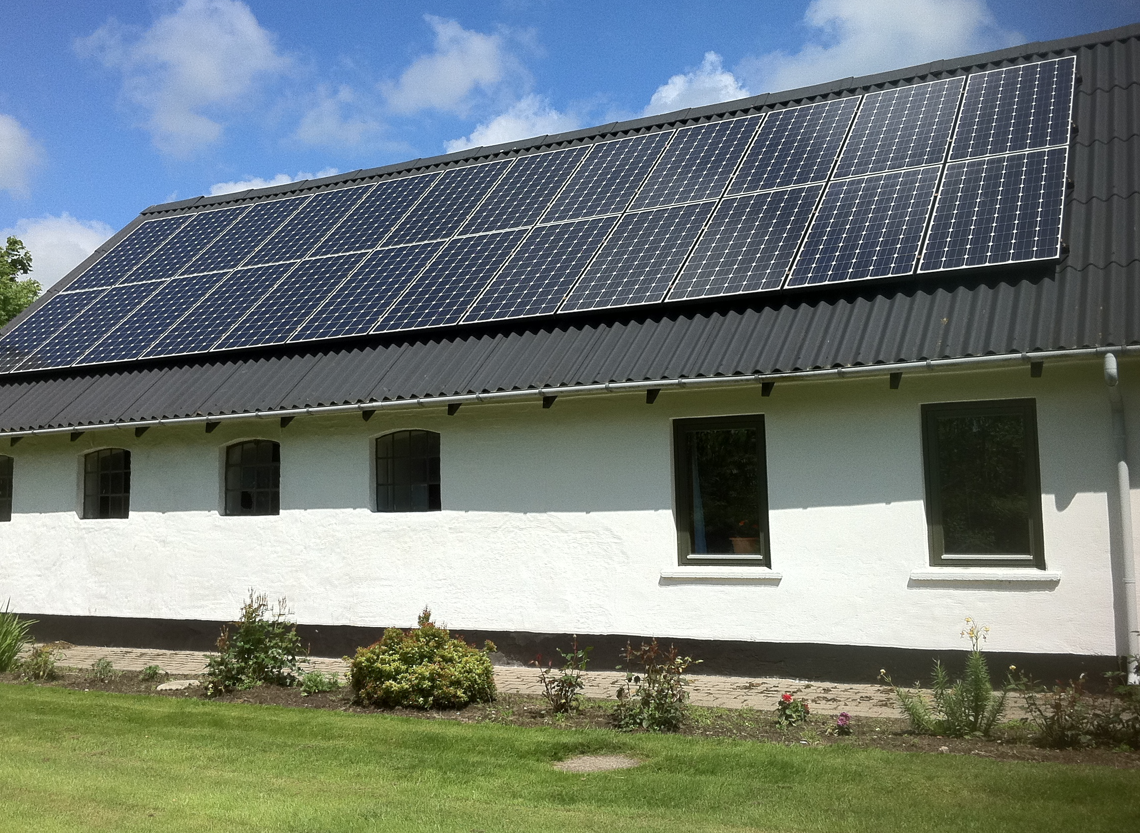
The surge in electricity prices is likely to drive a dramatic increase in solar uptake, with payback periods being slashed to less than six years. The verdict from GoodWe UK is driven by the spike in electricity prices resulting from the 12% increase in the Energy Price Cap that has allowed energy companies to increase the price for each unit of electricity or gas. The current 12-month inflation rate for electricity stands at 8.7%, the highest level since 2009. As a result, Eugene Lucarelli, Strategic Marketing Manager at GoodWe UK, says the potential payback period for a solar installation has been slashed to below seven years for the first time ever. “Our view is that the payback periods on solar are now somewhere between five and seven years as a result of the electricity price spike and the VAT cut on solar installations announced by the Chancellor in the Spring Statement. Previously, with lower electricity prices the working assumption was that payback periods were between 15 and 19 years.” GoodWe is basing its payback period calculations on an average household installing a typical 4kw solar system. This size of system can generate 3,600 units of electricity per annum, more than enough to power the average UK household. With electricity currently costing 30p per kilowatt hour, a £6,000 installation could deliver an annual saving of £1,080 per annum, paying for itself in less than less than six years. Mr Lucarelli says the cost-of-living crisis coupled with the dramatic reduction in the payback period is driving customer enquiries. He states, “What we are beginning to see is a renewed interest in solar as a way of mitigating household energy bills. What’s more, with the introduction of battery technology or a diversion device to heat water, households can become energy self-reliant very quickly.” He continues: “Previously, payback periods were too long for many consumers but with no end in sight to this era of high energy prices we believe this makes solar a much more financially attractive proposition.” Payback periods for 4kw solar system Current electricity cost price per kilowatt-hour Installation cost Usable units of electricity (per annum) Potential saving Payback (years) 30p £6,000 3,600 £1,080 annual saving Less than six years

NAPIT opens low carbon technologies centre of excellence
NAPIT's new centre of excellence for low carbon technologies, located at its Mansfield headquarters, has opened its doors to learners, including those wishing to upskill in low carbon cutting-edge technologies. Designed to offer a variety of low carbon training, the centre will offer courses on solar PV, heat pumps, energy storage, and electric vehicles. “We have created a space for tradespeople to learn about ever developing low carbon technologies, which includes the use of all the necessary training rigs and components with an outdoor roofing structure that stimulates real-life conditions for solar PV installations,” states Brett Forster, Head of Training at NAPIT. For more than a decade, NAPIT has been offering a range of courses with a team of professional trainers who each have many years' experience. Through its new centre, NAPIT aims to develop a centralised location for learning that brings together many areas. In the new hub, learners will be able to take advantage of excellent training facilities that provide real-life work scenarios and will be able to earn industry-recognised credentials upon successful completion. “As NAPIT is a microgeneration certification scheme provider, offering a route for training, certification and assessment for low carbon technologies all in one place enhances our offering to tradespeople looking to showcase their competence” says Brett. The centre aligns with NAPIT's goal of supporting the Government's initiative to reduce carbon emissions from homes through its net zero strategy. Frank Bertie, NAPIT Chief Technical Officer adds, “Despite uncertainty about the future, it seems clear that the Government is committed to decarbonising homes and that heat pumps are at the forefront of their approach.” As a result of the decarbonising strategy, it is expected that more people will wish to install low carbon elements in their homes, creating a demand for installers with the knowledge and skill required to complete such installations. Frank adds, “There is a pressing need to create a strong and competent workforce that can be relied upon to deliver the installations needed to meet the net zero targets. Our hubs will help support the training needed to develop competency across the country”.