2 November 2026
Product of the Month: Amari Floodlight range by Aurora Lighting
 
25 November 2026
Scolmore helps rejuvenate Tamworth Cancer Support Centre
 
25 November 2026
Leicester apprentice crowned 2026 SkillELECTRIC champion
 
24 November 2026
JTL celebrates opening of new Tyneside training centre
 
24 November 2026
LiGHT 26 welcomes record number of visitors to fifth event
 

Latest News


Data published from unsafe electrical work reporting tool
Following a unique collaboration between the Electrical Safety Roundtable (ESR) and TrustMark, a tool for reporting unsafe and non-compliant electrical work was launched in January 2022. The tool allows electricians and homeowners to report unsafe and non-compliant electrical work via a simple online form. Individuals from across the UK have used the form to help fill a data gap on the quality of electrical installations in homes. According to data collected over the past nine months, 68% of instances of unsafe electrical work reported were found in owner-occupied dwellings, while 28% were found in privately rented dwellings. This statistic illustrates a high level of risk in an area which currently has no legislation requiring electrical safety checks at specified times. The reporting tool results add weight to the wider campaign within the industry in relation to enhancing electrical safety standards in the owner-occupier sector. Worryingly, 27% of all faults identified by electricians were classified as a Category 1 (C1) hazard. A C1 hazard poses an immediate threat to life. Pleasingly, in all but one case where a C1 hazard was discovered, it was immediately reported to the occupier or landlord. Responders also submitted photographs of the unsafe work unearthed in addition to the forms which illustrate some truly shocking situations. Simon Ayers, CEO of TrustMark, comments: “The ongoing data collected continues to underline the need for improving the quality and standards of electrical installation work in homes across the UK, along with enhanced consumer protection. Having a simple tool to enable homeowners, householders, and electricians alike to report unsafe electrical work means that these issues can be highlighted to help tackle key areas of skills, knowledge, and training.” Chris Pack, Chair of the ESR in the Home group, says: “The reporting form is an excellent addition to our arsenal for improving electrical safety standards in homes across the UK. Gathering data to quantify the need for change is critical to enact reform. This easily accessible reporting tool allows for simple reporting of unsafe or non-compliant electrical work, and we encourage anyone who uncovers unsafe or non-compliant electrical work in their homes to use it.”

UK Power Networks Services wins award for smart charging solution
Engineers from UK Power Networks Services are celebrating after securing a top award for their influential sustainability work. The team, in conjunction with UPS, Cross River Partnership and Moixa, won Major Project of the Year at the National Sustainability Awards. The team was praised for demonstrating how smart charging can incentivise large fleet operators to go electric through providing flexibility to the grid. Businesses and organisations needing to find cost effective and quick ways to switch the EV fleets is one of the key challenges for the electrification of transport across the UK. The smart charging solution, EV Fleet-Centred Local Energy System (EFLES), builds on the company’s Active Network Management system to dynamically move charging demand off-peak, and avoid any need for significant investment in new electrical infrastructure. It also uses artificial intelligence to optimise the EV charging operation, reducing recharging costs and unlocking new revenue from any existing assets the fleet owner has, such as solar generation. Sefinat Otaru, Project Manager at Cross River Partnership, says: “Cross River Partnership is pleased that the EFLES project has been recognised at the National Sustainability Awards. Given the pressure to mitigate climate change by reducing emissions, particularly in the transport sector, fleet managers must have the tools they need to manage their electric vehicles efficiently.” Adam Cundy, Senior Delivery Manager at Moixa, says: "EFLES is a great example of how intelligent control can not only reduce the operational costs of managing an electric fleet, but also unlock additional revenue streams through participation in flexibility services. We're very proud of this award and the recognition that technology like Gridshare plays a big part in enabling sustainable transport." Kieran Coughlan, Head of Strategic Advisory Services at UK Power Networks Services, adds: “We have a key role in making sure our customers can benefit from new technologies that help reduce the costs of transitioning their fleets to fully electric. Smart charging and EV charging optimisation are key parts of the solutions to help commercial fleets to transition to EVs in a sustainable and cost-effective way.”

Fuuse helps minimise energy crisis with new scheme
Fuuse is enabling businesses to utilise their EV charging assets to help protect the UK’s energy supply this winter. The announcement comes in response to the National Grid’s Demand Flexibility Service, launching on 1 November, which incentivises those who can to reduce their energy consumption at peak times. In a bid to relieve pressure on the grid, Fuuse users who sign up to the scheme will be financially incentivised to turn down their vehicle charging during peak times. These ‘demand response’ events are expected to happen mainly between the hours of 8am and 10am, and 4pm and 8pm, and could occur any day of the week. All participants will be notified by email the day prior to an event, with the Fuuse platform automatically handling the appropriate EV charging response. This winter’s pilot scheme is due to begin on 1 November and run until March 2023, with financial rewards paid to all participants in one lump sum after the scheme ends. Gary Highton, Head of Energy Services at Fuuse, explains: “With the UK potentially facing its first planned power cuts in decades, it is imperative that everyone who can play their part in helping to keep Britain moving supports the scheme. As a business with the innovative solutions and tools in place to facilitate response needed for the new Demand Flexibility Service, it is our responsibility to get as many organisations on board as possible. By enabling our customers to turn down their EV charging during peak demand times via the Fuuse platform, we can not only ensure businesses generate revenue from the scheme but facilitate their social responsibilities at a time of unprecedented crisis.” Fuuse's demand-side response solutions are delivered as part of the soon-to-be released Fuuse Energy suite, allowing customers to monitor, manage and monetise their EV charging assets. Following the acquisition of Envisij earlier this year, Fuuse has made plans to bring to market a unique offering, enabling clients to optimise their energy use and make informed decisions on their core energy infrastructure.

BGEN outlines commitment to support more female employees
BGEN has outlined its plans to support the recruitment and retention of female employees across its business. Central to the company’s commitment is the creation of a women’s forum to drive meaningful change across the business. At the same time, the company has launched enhanced adoption, maternity, and shared parental leave packages, and signed up to the industry-backed ‘Inspiring Women’ pledge to help create a more diverse, equitable, and inclusive environment. “Women are under-represented in our industry, and while we may not be able to fix this problem overnight, we’re determined to play our part,” says Robin Whitehead, Chief Executive at BGEN. “We have talented female employees across our business, and with their help, we’re keen to make our business a more diverse, equitable and inclusive environment.” The BGEN women’s forum has been established to identify and fully understand attitudes around women in engineering, as well as looking at issues regarding representation of women in the wider industry. The forum is open to all female employees. One key outcome of the women’s forum to date has seen BGEN launch enhanced packages for adoption, maternity, and shared parental leave. Eligible employees will now receive 29 weeks on full pay, followed by 10 weeks on statutory pay. This is a significant uplift on the industry standard package of six week on 90% full pay, followed by 33 weeks on statutory pay. In addition, the packages include optional paid ‘keep in touch’ meetings and a phased introduction back to work. “We believe these enhanced packages are at the forefront of what companies in our industry are offering their employees,” says Michelle Stott, HR Director at BGEN. “In determining these enhanced packages, we looked at the support offered by other leading national and international companies outside of our industry.” To support BGEN’s focus on diversity, equity, and inclusion, the company has also signed up to the industry-backed Inspiring Women in Construction and Engineering Pledge. The pledge is a commitment from organisations to strive for a more inclusive industry, improve business environments for women and champion equal representation on boards.

Top apprentices to help UK Power Networks charge a low carbon future
14 new apprentices have joined UK Power Networks to help to keep the power flowing to millions of homes - while supporting net zero carbon emissions targets by 2050. Places are highly sought after, and after succeeding in a rigorous selection process, the 14 have joined a two-year adult apprenticeship programme with the opportunity to qualify in one of three trades: cable jointer, overhead linesperson or electrical fitter. The practical skills are taught at the company’s dedicated training centres in Suffolk and Kent, coupled with training with experienced field staff, putting their new skills into practice while under supervision. The apprentices will learn vital skills and play an important role in meeting the growing demand from communities and organisations as more turn to low carbon technologies such as electric vehicles and heat pumps. Murtaza Hasmi, 26, from Woodford, who is part of the new intake, says: “I’m looking forward to joining a company that values me and has my best interests at heart. “I’m hoping this apprenticeship will help me get the accreditation to become a proper, recognised, skilled worker. The stability of work and being a worker for an essential service is something I’m looking forward to.” Charlie Aston, Engineering Trainee Manager at UK Power Networks, says: “As more industries look to low carbon technologies to help achieve their sustainability and cost ambitions, our apprentices can play an important role in helping to achieve the country’s net zero carbon emissions targets over the coming years. “We look to recruit people who share the company’s focus on teamwork and values of continuous improvement, integrity, responsibility, diversity and inclusiveness, respect and unity. They will shadow an experienced team as part of their training, spending at least a quarter of the programme completing on-the-job training. “Our apprenticeship an ideal opportunity for people who enjoy working outdoors and want variety as they will face different challenges every day, usually in different locations.”

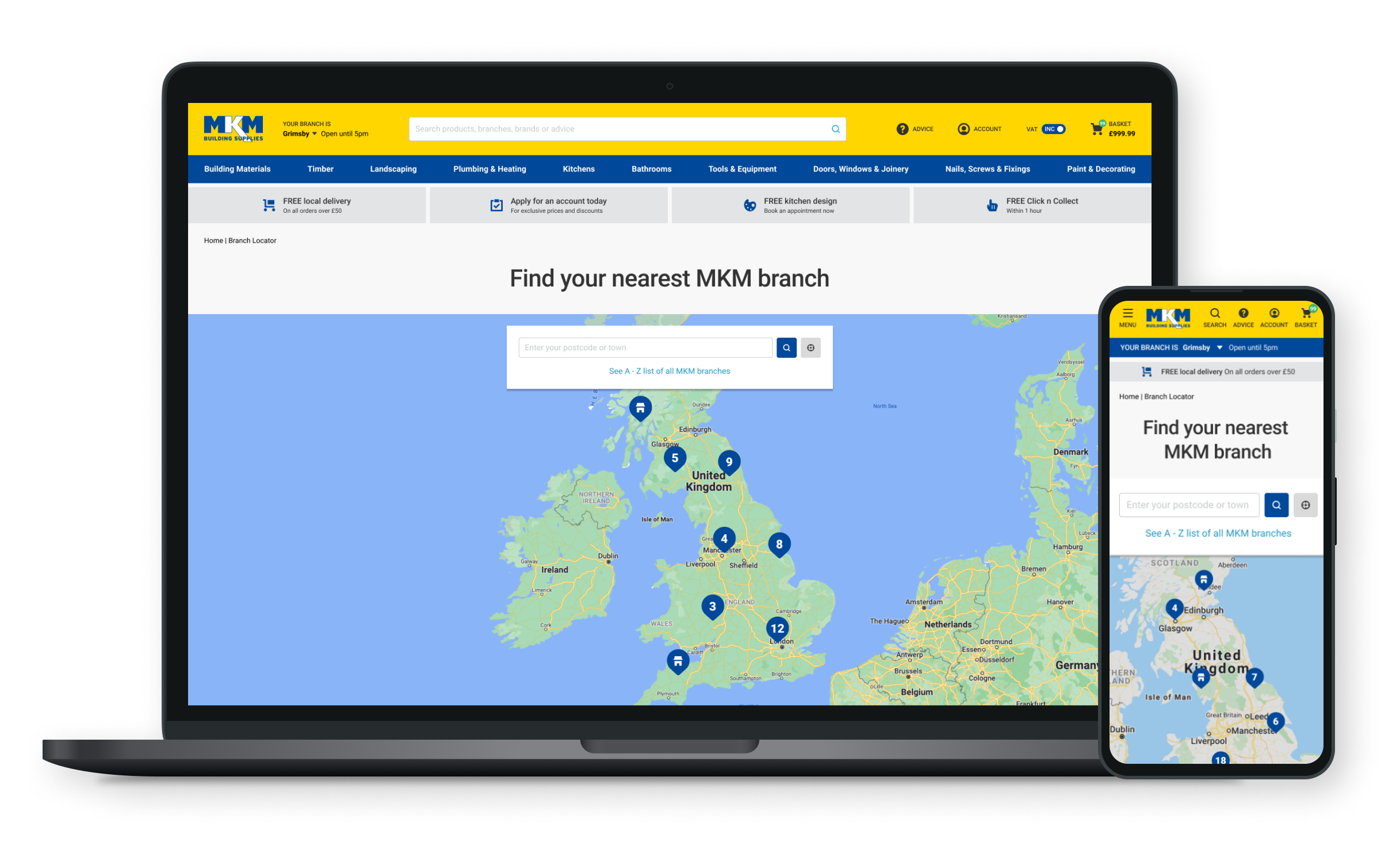
MKM launches new website
The site utilises world-first technology to offer an advanced user experience and personalised journey for MKM customers. With more products and information available than ever before, all at the click of a button, it means finding the right products or tools, whatever the project, is simpler and faster for customers. The site features an Intelligent, flexible product search function based on shoppers’ behaviour, hyper-personalisation that remembers users preferences and tailors the customer journey accordingly, and curated product collections and targeted suggestions. This, coupled with enhanced site speed, makes the site easy to use. Andy Pickup, Digital and Marketing Director at MKM, says: “As a business, we have developed an excellent reputation for providing outstanding service in branch. We wanted to replicate this online too, that’s why we’ve invested to improve our online presence and digital service offering. “With an end-to-end curated customer experience, our website sets the industry benchmark for how merchants should be interactive with customers online and we are delighted to launch this fantastic new service.” The website also features a new blog section, with handy hints and tips for completing projects, how-to guides, plus all the latest news from the branch network. The site is also packed full of advice and technical support, covering all the latest trends and equipment. Front and centre of the new site is easy access to the complete range of renewable and sustainable products and services offered by MKM, making it easier and quicker for customers to find supplies and information about greener solutions.

New research reveals the most economical vans for tradespeople
New research has revealed the Vauxhall Corsavan to be the most efficient van for tradespeople when it comes to fuel. The diesel model costs just £13,875 and will take you 847 miles on one tank. The van that covers the most miles on a full tank in the data is the Citroen Dispatch - reaching close to 968 miles. This is according to new research by Toolstation, after analysing the fuel efficiency of some of the most popular petrol and diesel vans on the market. Electric alternatives have also been analysed for their distance on one full charge, for those who are looking to drive green. The top five most fuel-efficient diesel vans Diesel vans are also far more common than petrol vans as they offer a much more fuel-efficient drive, essential for larger makes and models. Taking the top spot is the Vauxhall Corsavan, travelling as far as 847 miles on a full tank - that’s equivalent to driving from London to Manchester and back twice. The diesel model also boasts the cheapest cost to purchase from new at £13,875 - so it’s perfect for those on a budget. This van is on the smaller side, so while it’s a perfect run-around van, it may be less suitable for tradesmen carrying hefty cargo. A larger alternative is the Peugeot Partner which ranks second overall on the list. This van will cost £15,825 to purchase from new and £290 per year in road tax. The distance on a full tank for the Partner is also one of the longest, at 884 miles. In fact, the only van to beat this distance is the Citroen Dispatch (ranking third overall) which will return a total of 968 miles on a full tank. It does cost a little more, coming in at £20,495 from new, but thanks to its fuel efficiency, many may deem it worth the extra investment. The top five most fuel-efficient petrol vans Though petrol is cheaper than diesel at the pump, the distance on a full tank is lower across the board - meaning a petrol van will likely have you spending more on fuel overall. The Vauxhall Corsavan comes in as the most fuel-efficient van in the petrol ranking too. The van costs just £12,038 to purchase from new, and just £190 per year in road tax. At 52.3MPG, the petrol van will take you 517 miles on a full tank. The only downfall is the limited space in the back of the van, meaning that for some trades it might not be suitable - particularly if a lot of tools are needed for the job. The Citroen Berlingo ranks fifth overall in the list, but will take you the furthest of all petrol vans at 574 miles per full tank. The model misses out on a higher ranking due to a greater cost to purchase and tax per year - but with its large fuel capacity and distance on a full tank, it could be worth the investment. The top five most economical electric vans Electric vans are continuing to grow in popularity, but they do come with a higher price tag. While some are on the more affordable side at £27,855 (Fiat E-Doblo), some are priced as high as £70,665 (Mercedes-Benz EQV). You will save money by not having to pay road tax each year - an average saving of £300 per year on road tax alone - but it’s still a more costly option up-front than petrol and diesel alternatives. The Fiat E-Doblo takes the top spot as the most economical electric van thanks to its more affordable cost of £27,855. The model also boasts a large battery capacity and will reach 173 miles on one charge (the fifth furthest distance). The vehicle you’ll have to charge the least is the Renault Zoe Van, which will take you 245 miles per charge - that’s 112 miles over the average. The average distance on one charge for electric vehicles is 133 miles - comfortably taking you from London to Nottingham, but not quite all the way to Manchester or Liverpool. This makes electric vans perfect for tradespeople who stay close to base, but not so much for those who cover longer journeys.

Wrexham Mineral Cables shortlisted for sustainability-focused awards
Wrexham Mineral Cables (WMC) has been shortlisted for three sustainability-focused industry awards. The company was shortlisted for the Made in Wales Awards, organised by Insider Media (Sustainable/Ethical Manufacturer of the Year), and the upcoming Make UK Manufacturing Awards for the Wales region (Energy and Sustainability category) and two awards at the Materials Recycling World (MRW) National Recycling Awards (Circular Economy Initiative - Business Model and Recycling Excellence). With increasing demand across the construction sector for products to be more sustainable and to have reduced, or be completely free of, plastic components, WMC believes specifiers and building designers can have the best of both worlds when it comes to building safety - the principal purpose of its products - and environmental credentials. WMC has set out to create as little waste as possible during the production and installation of its Mineral Insulated Copper Cables (MICC), focusing on three key principles: designing away waste, reducing maintenance costs and returning materials into the cycle. MICC Cable combines a total of just two elements - copper and Magnesium Oxide (MgO). Copper is an almost 100% recyclable material and can be used over and over again, whilst MgO is a natural element of massive abundance. The use of pure raw materials makes its cables suitable for most environments as it will not deteriorate and is a non-aging product; an initiative which has the circular economy at its core. This also reduces onward maintenance and replacements to practically zero. WMC is hoping to remove the usual performance enhancers such as plastics and halogens. Most polymeric/PVC ‘fire-resistant’ cables can contain around 270g of plastic per 1m length, which works out to around 54 plastic bags. To compare, WMC use equivalent to zero plastic bags with its MICC cable. Steve Williams, Commercial Manager at Wrexham Mineral Cables comments: “As a responsible manufacturer, we understand the role we can play in reducing the impact that our products have on the world around us. Over the last 30 years the company has worked hard to ensure our products are not only best in class but respond to growing demand for sustainable building products. To be recognised for the work we have done, and will continue to do so, demonstrates our commitment as an ethical manufacturer.”

Global Recycling Day: expert advice for dealing with each type of trade waste
To mark Recycling Week 2022 (17-23 October), experts have shared their top bits of advice for tradespeople on how to dispose of each type of waste. Research by IronmongeryDirect found that more than four in five (83%) UK tradespeople aren’t sure exactly which materials can and can’t be recycled, and almost nine in 10 (87%) aren’t confident about waste management regulations. With this in mind, IronmongeryDirect partnered with William Hobbs, sustainability and recycling expert at MyJobQuote, and Pauline Marchant, Customer Service Administrator at iWaste, to provide expert advice on what to do with each type of work waste and the rules that you need to follow. Which materials can and can’t be recycled? Recyclable Non-recyclable Cardboard Plastic bags Plasterboard Polystyrene bubble wrap Cables/WEEE waste Oils Monitors Ceramics Paper Ovenware Scrap metal Lightbulbs Garden waste   Tyres   Glass bottles and jars (green, clear, brown)     Pauline explains further: Cardboard - as heavy-duty paper, it can be easily recycled due to its fibres being previously processed from trees. Plasterboard - it is possible to recover the gypsum from the plasterboard and recycle the component parts back into raw materials to help produce new plasterboard. Cables/WEEE waste - these can be separated into components and the raw materials reused. Monitors - the components can be removed and sent to a specialist glass processor. The glass and other elements can be separated and reused. Paper - paper will be separated into different types and grades, before being washed to remove the ink and glue, and then be made into new products. Scrap metal - it can be smelted down and reused. Tyres - they can either be turned into tyre-derived fuel or fed into a shredder and be reused as rubber. What should I do with each type of waste material? William explains: 1) Hazardous waste It has been illegal to mix hazardous and non-hazardous waste during the disposal process since 2004. Once the hazardous waste has been identified, it must be kept separate from non-hazardous waste. To dispose of hazardous materials, you should use authorised businesses and complete and keep all necessary paperwork. Examples of hazardous waste include oils and filters, fluorescent lightbulbs and tubes, oily rags, lithium batteries and paints. 2) Landfill waste Inert and food waste are both included in landfill waste. Landfill waste can result from both domestic and commercial activity. To stop waste from being disposed of in a landfill, you should take steps to recover or reuse it. Any waste that cannot be disposed of in another way can be processed at a landfill. 3) Scrap waste Scrap can refer to various wastes, including metal and other by-products of the manufacturing process. Scrap metal should be classified as magnetic or non-magnetic. If applicable, separate it into hazardous and non-hazardous waste. A permit may also be required. 4) Bulky waste Bulky waste includes oversized items such as mattresses and furniture, refrigerators, and other white goods. Large objects are disposed of separately from regular commercial waste, as they are difficult to lift. Bulky items are typically discarded as needed. When you need to dispose of an item, decide with your waste management company or local council for a unique collection. 5) Other trade waste Most construction or renovation waste, such as plaster, rubble, and tiles, is classed as builders' waste. Because builders' waste encompasses a wide range of materials, it is governed by a variety of waste codes, identifying which are hazardous and non-hazardous. Which waste rules and regulations do I need to be aware of? Waste carrier license William states: “Anyone who collects waste from a client's location must have an Environment Agency waste carrier licence. It is illegal to remove waste for customers without a licence, and fines of up to £5,000 are levied. “Lower tier and upper tier waste carrier licences are available. If you are only removing your waste and not construction or demolition waste, you should register as a lower tier carrier. Upper tier is the most common and is used by anyone who removes other people's waste, including construction and demolition waste. “Soil, concrete, bricks, glass, wood, plasterboard, asbestos, metal, and plastics are standard construction and demolition waste components. Plumbers removing an old boiler and kitchen installers removing an old kitchen, for example, both require an upper tier licence.” Waste disposal registration Pauline says: “You should always ensure your waste disposal company is registered with the environment agency, has the correct insurances, provides you with waste transfer notes/duty of care note, can provide evidence of correct disposal and has separate arrangements for hazardous waste.”

FireAngel collaborates with Women in Fire Safety Awards
FireAngel has collaborated with the Women in Fire Safety Awards to honour the achievements and contributions of all women within the fire safety community whilst championing for a more progressive industry. This years’ event will be held on 10 November at the Tower Hotel in London. To further support the outstanding individuals within the industry, FireAngel has sponsored this year’s ‘Inspirational Award’, which will be presented to one of the finalists at the awards evening. Finalists were announced earlier this year after being nominated for their outstanding contribution to the fire safety industry. Striving to address the historical gender imbalance throughout the sector, the Women in Fire Safety Awards are being hosted for the second consecutive year to recognise the different roles and disciplines that all contribute towards the fire safety community, whilst promoting the women who improve fire safety standards. Speaking of the partnership, Elizabeth Mitchel, National Key Account Manager for FireAngel, says: “At FireAngel, we’re passionate about supporting progression and positive change in our industry. We respect and admire the hard work, determination, and pure passion from the amazing women within our sector, and we are proud to support and be partnering with Women in Fire Safety for this year’s awards. “FireAngel has always promoted diversity, equality and opportunities for all in our business regardless of gender, and we look forward to a fantastic partnership with Women in Fire Safety as we work together to achieve this.” Chloe Vickery, Co-Founder of the Women in Fire Safety Awards, says: “Throughout our journey, we hope to encourage the next generation to see fire safety as an astounding career opportunity by highlighting how varied, inclusive, diverse and rewarding the industry is as a collective. “We are looking forward to announcing our winners on 10 November and thank FireAngel for their support.”