2 November 2026
Product of the Month: Amari Floodlight range by Aurora Lighting
 
26 November 2026
Thorn scores second Highland football lighting installation
 
26 November 2026
Segen pens exclusive distribution contract with M-Rack
 
25 November 2026
Scolmore helps rejuvenate Tamworth Cancer Support Centre
 
25 November 2026
Leicester apprentice crowned 2026 SkillELECTRIC champion
 

Latest News


Four in five UK tradespeople could recycle more of their waste 
More than four in five (83%) UK tradespeople say they could recycle more of their work waste, but don’t because they aren’t confident on the rules and regulations, new research has found. The study by IronmongeryDirect found that almost nine in 10 (87%) tradespeople feel uncertain about waste management laws. In fact, the vast majority (80%) of workers don’t know where their local recycling facilities are located. However, there is a strong appetite to address the issue. Almost a quarter (24%) of tradespeople say they are actively trying to reduce the amount of excess they send to landfill, and a similar number (28%) would like more support from local authorities to be able to recycle more. Furthermore, a fifth (20%) try to reuse any materials leftover from jobs and almost one in six (16%) donate spare parts to good causes. Perhaps due to the nature of their work, some trades are more likely to recycle their waste than others. Plumbers recycle the most often, with almost three-quarters (73%) saying they do so either always or most of the time. This could be because they are the most knowledgeable about waste management regulations (23%), suggesting education is key. Interestingly, young tradespeople are far more likely to send waste to landfill than their older counterparts. Almost a third (31%) of millennials (25-34) say their excess materials go straight to the tip, which is more than double the figure for 45-55-year-olds and over 55s (both 12%). However, millennials are also the most vocal about wanting support to recycle more (36%), showing an eagerness to be more environmentally friendly. Dominick Sandford, Managing Director at IronmongeryDirect, says: “Tradespeople are naturally going to produce waste in their line of work, and while more could be recycled, it’s clear that there’s a real willingness to be as green as possible. "The figures around young workers in particular point to a clear opportunity to educate and train the next generation of tradespeople in more sustainable practices. “That’s why we’ve partnered with waste management experts to explain the rules tradespeople need to follow and give advice on how to dispose of each material.”

Electricians need to be prepared for rocky ‘road’ ahead
fuelGenie is aiming to help electricians prepare for a challenging road ahead with lower cost fuel, consolidated payments and easy to manage invoicing. It follows news that road tax changes are likely to hit electricians and SMEs hard. fuelGenie cannot impact government legislation or change, but the fuel card provider is experienced in helping organisations make time and money efficiencies and more effectively manage payment receipts. Scrutiny, understandably, increased recently over how fuel and roads are likely to be paid for during the next decade, as the landscape shifts and alters significantly. The rise of electric vehicles (EVs) brings new types of challenges, both in terms of returns on fuel duty and road tax. The government speculated that there could be a gap of c£35billion in lost revenue that needs to be recouped. However, proposed changes to road tax, which could potentially see a pay per mile road pricing system introduced on UK roads for all vehicles, are controversial as according to the Transport Select Committee, they would subject drivers to "double taxation". This could potentially occur in the future if electricians are forced to pay a national road pricing scheme and city-wide Clean Air Zone rates at the same time. While this may still be some time off, it is important electricians are prepared to be able to consolidate existing fuel receipts and payments, to make any future changes more manageable if and when they happen. It’s also vitally important to support them in finding the lowest cost fuel available. Prices at the pump have also crept up to an eye-watering 148.40p a litre for petrol, while diesel reached 151.90p a litre, according to the RAC. Electricians faced with increased fuel costs and administration are also facing difficult decisions about fleet renewal and investment at the same time. Fuel cards are an effective way for electricians to help reduce motoring costs and start to create a more efficient business model, especially if utilising fuelGenie which promotes cost-effective supermarket fuel. fuelGenie Managing Director Robert Pieczka comments: “Smaller businesses may be using pay and reclaim and many have substantial administration and receipt processing costs, not reclaiming all VAT because of misplaced receipts, or simply not be aware of the benefits of fuel cards – all of these factors impacting overall operating costs. “With the right advice and support from an established fuel card provider, SMEs can be better prepared for the road ahead, whatever bumps may occur along the way.”

TESP reports surge in electrical apprenticeships
Electrotechnical apprenticeships for 2021/2022 has got off to a positive start with nearly 4000 new apprentices recruited across England in the first three months of the academic year, The Electrotechnical Skills Partnership (TESP) has reported. Figures from The Institute for Apprenticeships and Technical Education show that the intake of electrical apprentices remained strong throughout the coronavirus pandemic, demonstrating the value employers place on apprenticeships as the preferred route for training. Currently there are around 28,000 apprentices in training in England, with nearly 17,000 of these under the age of 19. Over 80% of these apprentices are employed by non-levy paying companies, highlighting the strong industry tradition of apprentice recruitment amongst small employers. For those who cannot get an apprenticeship and don’t have a Level 3 qualification, the Government’s ‘Lifetime Skills Guarantee’ is currently funding the industry Level 3 Technical Diploma* or, for those with work experience, the Level 3 NVQ** which includes AM2. Both qualifications form part of TESP’s industry approved training routes to becoming fully qualified. Since the launch of the Lifetime Skills Guarantee, hundreds of adults have taken advantage of the funding for industry recognised electrical training and benefitted from upskilling. From April this year, any adult in England who is earning under £18,525 annually, or is unemployed, can also access one of these free qualifications – even if they already have a Level 3 qualification or higher. The popularity of electrical apprenticeships and the Level 3 courses are also reflected in a growing number of people accessing the Electrical Careers website for information and guidance. From 2020 to 2021 the site not only doubled its number of visitors, but also received triple the amount of page views on the previous year. “The current apprenticeship intake figures are extremely encouraging, but demand for apprenticeships continues to outstrip supply and we need more employers to get involved if we are to address the skills shortage,” says Ruth Devine, Chair of TESP and Managing Director of SJD Electrical. “There are no short cuts to becoming a qualified electrician, so it’s excellent to see there is interest in not only apprenticeships, but also Level 3 qualifications that are backed by the industry and form part of the approved, quality training routes. “As well as encouraging businesses to do more, it’s also important to improve the training provider infrastructure so learners and employers receive a quality training experience. Our work will continue into 2022 and beyond to support this.”

Toolstation targets Trade Account customers with 5% off all orders
Toolstation has launched a new initiative that means all customers with a Trade Account will get a 5% discount on all of their orders. To access the offer customers just need to show their Trade Account number at every purchase in branch or be logged on to it online. The move makes it easier and more accessible for trade professionals to source the best tools and products at the best prices. It is open to new and existing Trade Account customers and applies to all Toolstation purchases on top of any existing savings. Toolstation’s Trade Account also offers added support with more efficient financial management, with up to 60 days interest free credit, no minimum spend, flexible credit limits and online account management.  Signing up for a Trade Account means customers can buy now and pay later and get the tools and supplies they need for larger jobs. Toolstation’s Managing Director James Mackenzie  says: “We are continuously committed to providing our customers not just with the tools they need to get the job done, but looking at more ways we can improve their experience. Our Trade Account has proven really popular and this new initiative means they can now access the best prices on tools and products.” The discount is automatically applied at the checkout for customers who have a Trade Account. Business only. Conditions apply.

 Martindale Electric launches PAT Testing Quiz on new area of website
Do you know a PASS from a FAIL when it comes to Portable Appliance Testing? Can you recall the recommended pass limit for an earth bond continuity test? Martindale Electric has put together a fun online quiz that tests your knowledge on PAT Testing and helps gauge where there may be gaps in your understanding. Don’t worry if you get any incorrect, as along with the quiz Martindale has also launched a dedicated ‘Essential Guide to PAT Testing’ area of its website crammed with useful information, hints, tips and an overview of its popular HPAT series of PAT Testers to help top up your knowledge and point you in the right direction. “According to the Health and Safety Executive, 25% of all reportable electrical accidents involve portable appliances,” explains Steve Dunning. “From these figures, it is clear that a large number of incidents and injuries could be prevented with proper electrical checks, inspections and safety tests. That is part of the reason we wanted to put together an easy to access info hub for any competent person carrying out PAT Testing. Hopefully it’s a great reference area that users can come back to time and again.” When it comes to testing portable appliances, Martindale’s HPAT Series of portable appliance testers enables both contractors and competent in-house personnel to quickly and safely verify the electrical safety of all types of appliances. Designed to perform safety checks in accordance with the IET Code of Practice, these lightweight rechargeable handheld testers are designed for ease of use, with one button automatic testing and clear connection details shown on the tester. The small lightweight design and one button operation make the HPATs ideal for testing in all locations, be it under a desk or behind a monitor. The bright backlit display provides a clear pass / fail indication. For more demanding PAT applications, other more sophisticated testers are available which incorporate a greater range of tests and have the ability to store the test results for later recall on-screen, such as the HPAT600. For downloading results to a PC in order to manage assets and re-test requirements, Martindale offer the MPAT Plus with MPATSUITE software.

New ECA video calls on electricians to “Plan, Test, Isolate!”
ECA has launched a new video as part of its campaign to reduce the number of injuries caused by incorrect isolation of low-voltage circuits (up to 1,000V AC or 1,500V DC). According to the Office for National Statistics (ONS), 14 people died from exposure to a live electrical circuit in 2020 alone. Since 2015, an average of 7 people a year are killed because of contact with a live electric current, and many more are injured. ECA’s new video, called Don’t Cut Corners: Plan, Test, Isolate! highlighting the importance of safe isolation and outlining 10 key steps to planning, testing and isolating LV circuits before beginning work. Gary Parker, ECA Senior Technical Manager, says: “You wouldn’t drink and drive… so why would you work on a circuit without isolating it? “If contractors are prepared, the likelihood of an accident is significantly reduced. Following these simple steps in our new video, will help installers plan ahead, work safely, and avoid accidents.” Gary Parker has written a blog detailing the hazards of not isolating safety and outlining the employer’s role in making sure their staff work safely. You can read it here. [embed]http://www.youtube.com/watch?v=jFPz8xjlSuU[/embed] All electrotechnical professionals involved in the installation and maintenance of LV electrical installations should follow the advice in the Health and Safety Executive (HSE) guidance, Electricity at work: Safe working practices (HSG85), Guidance Note GS38 and the Electricity at Work Regulations 1989, as well as following the 18th Edition Wiring Regulations (BS7671:2018) and ESF’s Safe Isolation Guide.

Brand new Travis Perkins branch creates 20 new jobs in Aintree
Travis Perkins is set to open a brand-new branch in Aintree, Liverpool on the 1st of March. The branch is situated on Bridle Road and is an impressive 2.2 acres in size. The site will boast electric forklift trucks and electric charging points. These innovations will help to deliver on Travis Perkins' ambition of decarbonizing its fleet and becoming a net-zero carbon producer. As a result of the opening, 20 new jobs have been created, with five being filled by women, in what has traditionally been a male-dominated sector. The new branch will include Travis Perkins’ trusted Hire Service, where customers can hire tools, plant, and equipment on-site plus get all their building supplies in one go. Its yard will also boast an expansive range of products including bricks, blocks, timber, lintels, drainage, and landscaping. Customers will be given the choice to trade in-branch and online by using the Travis Perkins App – an industry-leading App and collaborative effort created with customers to help them not only work smarter but save time by allowing them to check stock on the go from their local branch and order them instantly at their personal trade prices, either for 1hr Click & Collect or for delivery. Branch Manager John Dempsey comments on the opening, “We’re really excited to give the trade professionals of Liverpool a place to access everything they need for their projects. The fact that 20 new jobs have been created because of the branch opening is a huge bonus too. It means we’ll be able to serve the community with expert knowledge and advice and support them at every step and offer a fantastic delivery and collection service that won’t compromise them on time or cost a fortune.” Its new Delivery Management Service also aims to give customers the best possible delivery notifications without having to make a telephone call too. Travis Perkins Aintree is located at Bridle Road, Netherton, Bootle Liverpool L30 1PG and opens on the 1st March at 7:00am.

Vent-Axia supports BEAMA’s new Ventilation White Paper
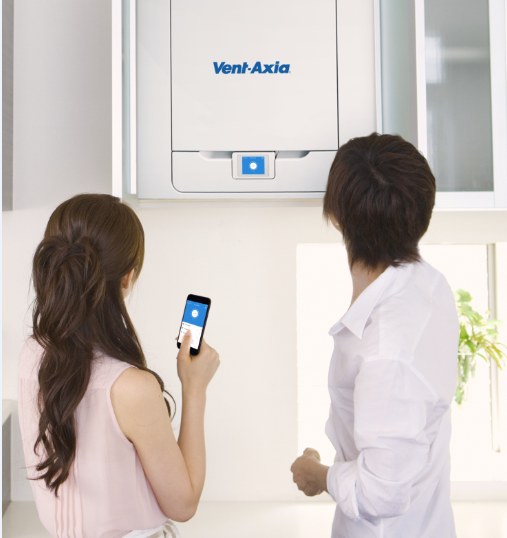
Vent-Axia is delighted to support BEAMA’s updated Ventilation White Paper. Launched on 16 February 2022, BEAMA’s ‘Better Ventilation, Better Homes, Better Health’ White Paper sets out a 4-step policy pathway for the future to deliver effective ventilation and improved indoor air quality (IAQ) inside UK homes in order to help protect health and wellbeing. Vent-Axia fully supports this White Paper as it aligns with the company’s commitment to improving IAQ through ventilation to protect public health. Vent-Axia welcomes the White Paper’s proposals as the next stage in improving IAQ. Its publication follows on from the new Building Regulations, launched in December 2021, which start to redress the balance between ventilation and the drive for energy efficiency. Amendments to Part F (Means of Ventilation) include: higher ventilation rates; considering ventilation when adding energy efficiency measures; ventilation compliance and improving ventilation to protect health. BEAMA's suggested policy steps in the report address all these points too but then take them one stage further, calling for additional measures to improve IAQ. BEAMA’s policy solutions includes four steps for sustainable, safe and efficient ventilation for a healthier nation. The first step is a move to continuous supply and extract ventilation with heat recovery in new build homes. This is of particular importance for delivering high standards of IAQ and ensuring energy efficient operation. It also recommends mandatory air quality monitoring to measure ventilation performance and to alert occupants when levels drop below the minimum standard as well as additional ventilation requirements for the management of airborne virus transmission. Step 2 aims to ensure energy efficiency retrofits are matched by ventilation measures to protect health and wellbeing, enshrining the principle of ‘Ventilate when you Insulate’. Vent-Axia welcomes this addition since previously many homes have suffered from condensation, mould and poor indoor air quality following energy efficiency measures, which have increased the airtightness of the building envelope to reduce carbon emissions. Furthermore, BEAMA recommends all existing homes should have a Part F compliant ventilation system and an assessment of current ventilation levels should be included as part of an EPC package. The third policy solution looks at driving ventilation compliance standards and providing clarity that systems must be installed and/or commissioned by a registered Competent Person or signed off by Building Control. Finally, step 4 recommends treating poor IAQ and ventilation as a public health emergency and, in addition to public education campaigns on the risks and solutions, making sure it is enshrined in all relevant policy areas. ‘Vent-Axia is committed to protecting public health by improving indoor air quality through ventilation. We therefore fully support the BEAMA 2022 Ventilation White Paper. As energy efficiency measures have been implemented to lower carbon emissions, we have all witnessed the consequences of sealing up homes and insulating them without considering ventilation. It has resulted in indoor air pollution,” says Richard Paine, Product and Marketing Director at Vent-Axia. “With the publication of this White Paper and the new Building Regulations we now hope to start to redress the balance of ventilation with energy efficiency, since the pandemic has clearly shown the importance of good indoor air quality to health and wellbeing.” Vent-Axia has a range of continuous ventilation solutions, suitable for both new build and retrofit projects. The Lo-Carbon Sentinel Kinetic mechanical ventilation with heat recovery (MVHR) range is ideal for airtight thermally efficient new builds, and is a whole-house, multi-room ducted solution that combines supply and extract ventilation in one unit. Warm, moist air is extracted from ‘wet’ rooms through ducting and passed through the heat exchanger before being exhausted to the outside. Low carbon, energy saving and clean, fresh incoming air is filtered and then preheated via the integral heat exchanger which recovers 93% of the heat energy [in line with Product Characteristics Database (PCDB) data] that would otherwise be wasted. With comfort key for occupants the systems also feature a ‘summer bypass’, for passive cooling when conditions allow and an integral humidity sensor for intelligent air quality control. The Sentinel Kinetic Advance is the best performing MVHR unit in its class due to its high SAP rating and a SFP of 0.39 and provides residents with many benefits including quiet operation, App control, constant volume control, lower energy bills and improved IAQ. For continuous ventilation in retrofit projects, the Vent-Axia Lo-Carbon Heat Save decentralised heat recovery ventilation unit is designed for living rooms and bedrooms in single and multi-family buildings. The unit provides extract and supply ventilation to improve IAQ and supply fresh air to rooms. Heat Save is very energy efficient, using only up to 3.1W, and also achieves up to 84% heat recovery, using the warmth from outgoing air to temper incoming air to avoid cold drafts and to reduce energy bills. Two or more reversible fans are installed in habitable rooms and they alternate between supply and extract fan modes every 70 seconds to extract dirty air from the room and replace it with filtered outside air. Heat Save provides a single room or whole house balanced ventilation system with heat recovery and is easy to expand as needed, adding more units for a whole house solution.

CEF launches 31 Live TechTalks to help customers understand wiring regulations
CEF is bringing free TechTalks to 31 locations across the UK to help its customers understand how the latest changes to the 18th Edition wiring regulations affect them. The TechTalks will be presented by one of the UK’s leading electrical experts, and CEF’s Head of Technical Solutions, Darren Staniforth, who will be helping electricians and contractors get to grips with the 2nd Amendment to the 18th Edition wiring regulations. Electrical expert presenter Well-known as a technical presenter, Darren has almost 30 years’ experience in the electrical industry and adds a wealth of technical knowledge to enhance CEF’s reputation as electrical experts. Commenting on his role as presenter of the nationwide TechTalks, Darren says: “I want to demystify the jargon, clear up any confusion and help everyone who comes along to the CEF TechTalks understand the new regulations. “At CEF, we want to make things easy for our customers. I’ll be presenting all the information they need to know in a way that’s easy to understand. I’m looking forward to answering their questions so that they can feel confident they know what they need to get the job done.” Darren will be joined on stage by Dave Austin, Technical Presenter of the Learning Lounge and guest speaker Mark Coles, Head of Technical Regulations from the IET. What to expect at a CEF TechTalk As well as a full breakdown of the changes within the 2nd Amendment, CEF TechTalks will also cover: Energy monitoring Battery storage EV charging and the opportunities it offers Changes to CO legislation Electrical Installation Condition Report (EICR) coding Technical Q&A The free TechTalk events will take place in 31 locations, including the Channel Islands. Where’s my nearest wiring TechTalk? Location   Date Aberdeen – Aberdeen FC Wednesday 29th June Belfast – Culloden Estate & Spa Wednesday 6th July Bristol – Ashton Gate Friday 22nd April Cardiff – Cardiff FC Tuesday 10th May Chelmsford - Racecourse Tuesday 24th May Cheltenham - Racecourse Tuesday 21st June Dundee – Apex City Quay Hotel Monday 27th June Edgeware – Saracens Rugby Wednesday 13th April Edinburgh - Murrayfield Thursday 30th June Epsom - Racecourse Tuesday 12th April Exeter – Westpoint Wednesday 11th May Glasgow – Hampden Park Friday 1st July Guernsey – Beau Sejour Leisure Centre Wednesday 20th July Hull – MKM Stadium Thursday 9th June Inverness – Drumossie Hotel Tuesday 28th June Jersey – Radisson Blu Waterfront Hotel Tuesday 19th July Kettering – Kettering Conference Centre Thursday 26th May Leeds – Leeds United FC Wednesday 1st June Liverpool – Aintree Racecourse Wednesday 15th June Maidstone – Kent Event Centre Wednesday 18th May Manchester – A J Bell Stadium Wednesday 6th April Newcastle – Falcons (Rugby) Wednesday 8th June Newmarket – Racecourse Wednesday 25th May Nottingham – Nottingham Belfry Hotel Tuesday 31st May Oswestry – Lion Quays Hotel & Spa Thursday 7th April Portsmouth – Village Hotel Thursday 19th May Preston – Preston North End FC Tuesday 7th June Reading – Reading FC Wednesday 22nd June Rotherham – Aeeseal New York Stadium Thursday 16th June Wadebridge – Royal Cornwall Events Centre Tuesday 21st April Wolverhampton – Racecourse Tuesday 5th April CEF TechTalks are supported by leading electrical brands Aico, Electrium, Rolec, Scolmore and Wago and are in partnership with the IET. Almost 20 additional leading brands will be attending to showcase their products and services and answer attendees’ questions. Every TechTalk is free to attend, but with huge interest already, anyone wishing to be there is encouraged to book their spot now to ensure that they can attend the event of their choice. The venues offer free parking and there will be free breakfast and refreshments available for attendees, alongside the chance to win amazing prizes including VIP British Superbikes hospitality.

Portable generator powers small safety devices
A new stick-like, water-based device can convert energy from movement into electricity. The technology, which was reported in the journal Science and Technology of Advanced Materials, could be used to power portable devices, such as safety lights.   With the growing interest in the internet of things and small electronics, there is high demand for portable energy sources. One way to produce power is to harvest energy from the environment, such as thermal, solar or mechanical energy. To capture mechanical energy – the power an object gets from its position and motion – scientists have developed triboelectric nanogenerators, which can produce electricity through friction.   “Triboelectric nanogenerators are one of the most effective tools for harvesting mechanical energy because of their high electrical output, low cost and easy accessibility,” says professor Sangmin Lee of Chung-ang University in the Republic of Korea.   Triboelectric generators are electrically charged when two dissimilar materials touch and then separate. For example, when a balloon is rubbed on clothing, the balloon becomes charged and can stick to things. However, friction between two materials inevitably causes damage, reducing device lifespan.   Using liquids can reduce friction, but liquid-based generators have a considerably lower electrical output than solid ones. There is also a trade-off between making the device large enough for the liquid to move and generate electricity, while also ensuring it is compact enough to be portable.   To overcome these problems, researchers at Chung-ang University, together with colleagues in South Korea and the US, developed a lightweight, compact, water-based generator that can produce electrical power when shaken.   The device has a simple stick-like design and consists of 10ml of water, a polymer cylinder and electrodes. The container’s polymer material is negatively charged. The water moves up and down when the device is shaken, acquiring a positive charge that is transferred to the electrodes to generate a high electrical output.   “Because of its simple mechanism and design, this small and lightweight device could be used in everyday life. Electrical power can be produced simply by pouring water into the generator then giving it a shake,” explains Lee.   The researchers tested different designs, changing the size and ratio of the electrodes, the physical space between the electrodes and the amount of water in order to determine the optimal combination. They found that the portable stick generator could generate a high electrical output reaching 710 volts when it had adequate space for water movement and a high electrode area.   The researchers showed that the generator can power 100 LED lights, meaning it could be used as a traffic safety light baton that illuminates when shaken. This study demonstrates the potential for triboelectric nanogenerators to be used for a wide range of everyday applications.