2 November 2026
Product of the Month: Amari Floodlight range by Aurora Lighting
 
26 November 2026
Thorn scores second Highland football lighting installation
 
26 November 2026
Segen pens exclusive distribution contract with M-Rack
 
25 November 2026
Scolmore helps rejuvenate Tamworth Cancer Support Centre
 
25 November 2026
Leicester apprentice crowned 2026 SkillELECTRIC champion
 

Latest News


CENTIEL expands its sales team
CENTIEL has expanded its hardware sales team with the addition of Graham Murray as sales engineer.  Graham will be responsible for external hardware sales, specialising in UPS system replacements. Graham Murray confirms: “My new role is varied and includes working on new projects and replacing end-of-life systems. I will be helping clients upgrade to the very latest technology which is right-sized to reduce the overall total cost of ownership (TCO) and at the same time offers the highest levels of efficiency, availability and reliability. “Having worked in the UPS industry for several years, I’ve been involved in my fair share of modular projects. Modular’s design and levels of resilience has changed the way that customers can choose to protect their critical load. CENTIEL’s true modular UPS CumulusPower which is known for its industry leading availability, has raised the bar for modular UPS systems. In addition, its safe-hot-swap capability means a module being added to a system can be fully isolated and tested within a running frame before it accepts any load. As a result, CumulusPower is currently the safest, most reliable and flexible UPS available for critical power protection. “These innovations and technological advances offer more flexibility for clients and will also ensure I can develop bespoke solutions, tailored to meet specific requirements. Every site is different, so being able to supply a variety of frame sizes or battery configurations will result in the most optimal solution to protect the power at critical installations.” Louis McGarry, sales and marketing director, CENTIEL UK comments: “Graham’s appointment will further strengthen our team and offer support to our valued customer base. His experience with system integration and project sales, will make a valuable contribution to the continued growth of CENTIEL in the UK.” Before joining CENTIEL, Graham was a sales engineer at Kohler Uninterruptible Power UK for more than four years and prior to that, he worked at UPS Systems plc for several years as a Technical Sales Account Manager. CENTIEL is a Swiss-based technology company designing, manufacturing and delivering industry-leading power protection solutions for critical facilities. Its three-phase true modular UPS, CumulusPower known for its 99.9999999% (nine, nines) availability has now been installed in datacenters and comms rooms in over 60 countries across five continents. More than 50 MW of critical power loads are now protected with CumulusPower in locations across the world including: the UK, Singapore, Australia, Germany, Spain, the Czech Republic and the Channel Islands.

The five most common assumptions about electricians - how true are they?
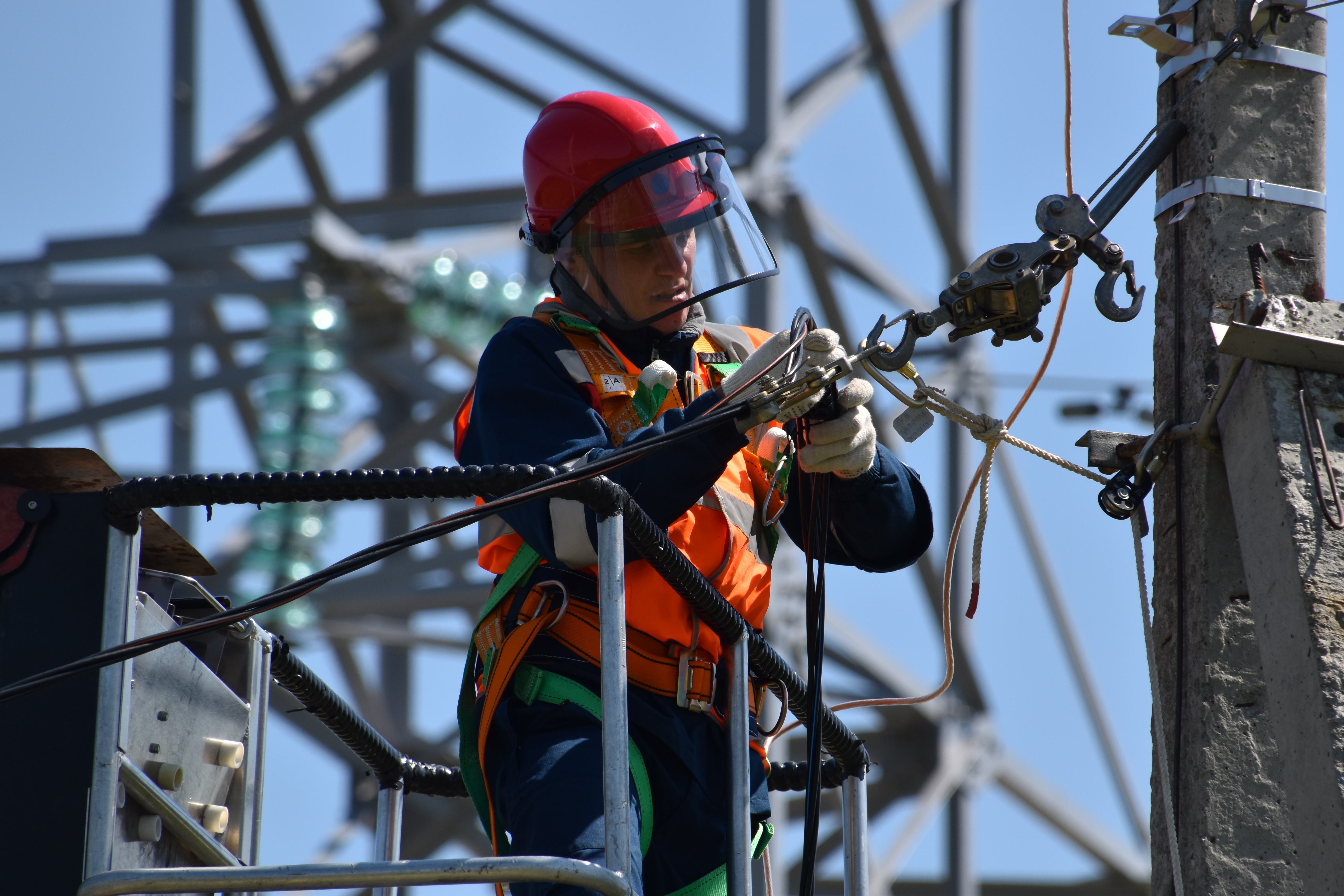
Like many tradespeople, electricians often receive plenty of unfair criticism as a result of long-standing misconceptions about the training they receive or the work they carry out. In a bid to put some of the most common myths about electricians to bed and to provide further insight into our industry, electrical wholesaler ERF has addressed five frequent assumptions people have about those working in the electrical trade. Electricians are all men  As with many roles in the trade industry, being an electrician was historically viewed as a ‘man’s job’ but thankfully these kinds of stereotypes are being broken down. Although the majority of tradespeople are male there has been a significant rise in the number of women working across all trades in recent years. According to the latest research from Direct Line, there were an estimated 33,000 female tradespeople in 2019 which is a 120% increase on the 15,000 reported in 2009. When it comes to the electrical trade specifically, it was estimated there were around 8,000 female electricians compared to 230,000 male electricians in 2019. That would mean women make up just more than 3% of all electricians. While this does highlight there is still a huge gender gap, the overall picture is improving. The key to addressing this disparity further will be ensuring avenues into the industry - such as through apprenticeships or college courses - become more attractive and viable options for women across the UK, from all backgrounds. Electricians don’t have university degrees  While training to become a qualified electrician doesn’t require you to go to university, there is plenty of theoretical and practical learning that has to be undertaken. In order to gain a full qualification you have to complete an industry recognised level three diploma which takes around three years to achieve. Generally this is completed through an apprenticeship which will involve one day a week at college and four days within a related job role. Following this, many electricians will also go on to undertake further job-specific training on topics including electrical vehicle (EV) charging points and solar power. University degrees such as electrical engineering or computer science are also an option for those wanting to expand their skill set further. Electricians have to be good at maths  This notion is contrary to the above. While reading about Ohm’s law and trigonometry is enough to put some people off studying to become an electrician - especially those who aren’t whizzes at maths - there really isn’t any need to feel daunted by these topics. Electricians do use maths on a regular basis but a lot of it is simple calculations which are used to figure out sizes such as room dimensions or wiring lengths. While there is a need to have a good working knowledge of Ohm’s law - an equation used to study electrical circuits - once you have completed plenty of practice, you soon become confident using it. The key to being able to effectively work with numbers in the job is to recognise the techniques which work best for you when it comes to problem solving. Those who are more visual learners may find it beneficial to draw pictures when tackling calculations, for example. You can’t be an electrician if you’re colour blind  There’s no doubting that in the past being colour blind would have been a major problem for electricians, but we’ve come a long way in the last 50 years. Up until the 1970s, single phase electrical wires were coloured red (live), black (neutral) and green (earth). Due to the most common form of colour blindness being when red and green are perceived to be identical, it’s easy to understand the difficulties which many colour blind electricians would have been faced with. To try and avoid any confusion, since the late 1970s the earth wire has been multicoloured (yellow and green). Further changes were also made in the early 2000s, meaning the live wire is now brown and the neutral wire is blue. These alterations mean being colour blind is much less of an issue for electricians than it was previously. That being said, it is worth noting that when applying for an electrical apprenticeship you do have to undergo a colour blindness test. This doesn’t apply to those who are training as a domestic installer or funding their own training though. Electrical work is really dangerous  All work involving electricity has the potential to be dangerous and therefore being an electrician doesn’t come without risk. As with many jobs though, if the correct health and safety procedures are followed nearly all of these threats are either eliminated or considerably minimised. To ensure electricians protect themselves as well as others, they are required to undergo thorough electrical safety training. The dangers associated with being an electrician aren’t exclusive to working with electricity though. Some of the most common injuries people sustain come from falls or trips which is why it is important electricians put aside a bit of time to identify all of the potential threats they could face before starting a job. In the last 12 months, all of those working in the trades have also had to adopt additional health and safety practices as a result of the spread of coronavirus. This has involved electricians wearing PPE and adhering to social distancing guidelines.  

DALI+ delivers DALI lighting control with wireless and IP-based networking  
The DALI Alliance has launched DALI+, a new brand that denotes DALI over wireless and IP-based networks. DALI+ builds on the proven and sophisticated DALI lighting-control features in wired (DALI-2 and D4i) options, and offers access to the same rich set of data from control gear, luminaires and sensors. DALI+ devices communicate using existing DALI commands, but these are carried over a wireless and/or IP-based medium rather than the dedicated pair of wires used by DALI-2 and D4i. The DALI Alliance has published a new DiiA Specification, which supports DALI+ across different carriers and will lead to certification of interoperable DALI+ devices. The first certification program will be DALI+ with Thread, a low-power, IP-based, wireless-mesh networking protocol. In combination with a wireless carrier, DALI+ enables true wireless DALI, without any need to translate between protocols. Where access to DALI wired subnets or luminaires is required from the DALI+ wireless network, the new specification also supports bridges. “Following the publication of our Wireless to DALI Gateway specifications last month, the introduction of DALI+ ushers in a new era of seamless, industry-standardised lighting control,” says Paul Drosihn, general manager of the DALI Alliance. “DALI+ extends choice, flexibility and creative freedom for lighting designers and specifiers by supporting the development of wired, wireless and IP-based systems, using DALI throughout.” DALI+ enables lighting solutions that can easily scale to building-wide networks, or even across multiple buildings, by using new addressing features. The implementation of IP-based networks in commercial buildings allows IT systems and building automation services, including lighting control, to operate on a common platform, with features such as end-to-end security, unlimited scalability, and easy connectivity to other applications. Leveraging the existing features of the DALI protocol, DALI+ networks connect sensors, controllers and luminaires in a data-rich environment. This enables real-time monitoring of energy and power usage, and access to diagnostics information for predictive luminaire maintenance, among many other examples. DALI+ is supported by a new DiiA Specification entitled ‘Part 104 Changes and Additions’. The specification provides updates to the published Part 104 of the international IEC 62386 standard. The first version of this new specification supports IP-based protocols such as Thread, Ethernet and Wi-Fi. Initially, the DALI Alliance is developing tests that will enable a new ‘DALI+ with Thread’ certification program. Further DALI+ certification programs utilising other carriers will follow.

Report from IDTechEx reveals shift to electric vehicles to be worth £12.7 billion
IDTechEx has released a new technical market research report, “Printed and Flexible Electronics for Automotive Applications 2021-2031: Technologies and Markets”, on the current status of printed/flexible electronics in all aspects of automotive design and manufacturing, along with future opportunities created by these transitions. It is an exciting time for the automotive industry, with technological transitions towards electric vehicles and increased autonomy occurring simultaneously. This of course creates extensive opportunities for many new technologies, including printed/flexible electronics. For example, the ability to make electronics on thin flexible substrates enables weight to be reduced, a key consideration for electric vehicles. Furthermore, the conformality associated with flexible electronics is highly suited to emerging automotive interior design trends with organic curves replacing flat surfaces.   This new IDTechEx report is structured around three key technological transitions: electrification, autonomy, and an increased focus on the interior for differentiation.   Electric vehicles. The accelerating transition to electric vehicles is well documented, with multiple countries announcing that sales of petrol/diesel fuelled new cars will become illegal at various points in the 2030s. It is clearly desirable for EV batteries to always work as efficiently as possible to increase vehicle range for a given weight. However, battery capacity is strongly dependent on temperature. This creates an opportunity for printed arrays of temperature sensors to provide local monitoring and for printed heaters to be integrated within the same functional film.   Increased levels of autonomy. Vehicles across the price range now contain sophisticated ‘advanced driver assistance systems (ADAS)’. Over time the level of autonomy will increase, with full Level 5 autonomy expected in some vehicles within a decade. This creates opportunities for multiple sensor technologies and associated features such as transparent heaters, integrated antennas, and even low-resolution flexible displays for the exterior to interact with pedestrians.   Differentiation shifts from powertrain to interior/cockpit. Car manufacturers are increasingly turning to interior design and features to differentiate their products. Given their lightweight and conformable nature, this transition means that interior applications arguably provide the greatest automotive opportunity for printed/flexible electronics. This trend is already being seen with the rapidly increasing adoption of displays, which is set to continue and extend to curved and flexible displays.   Human machine interface (HMI) technologies, more simply described as pressure or touch sensors, are especially promising. Already widely used in seat occupancy sensors, printed pressure sensors are likely to find their way into control panels to provide a wider range of inputs than purely capacitive touch sensors without the expense of mechanical switches.   Many of these touch sensors are likely to be produced via in-mold electronics. By combining the electronics with the thermoformed plastic, it enables integrated systems such as center consoles and overhead control panels to be much lighter, simpler, and easier to manufacture. Indeed, IDTechEx forecast IME to be an approximately $1.3 bn market by 2031.   Other opportunities for printed/flexible electronics within vehicle interiors include printed heaters, which enable heaters to be incorporated within touchpoints. This is significantly more efficient than space heating through the ventilation system, and much more responsive – flexible printed heaters can even be transparent!

Ventola on course for entertainment and leisure industry reopening
An LED lighting firm has bolstered its reputation in the Family Entertainment Centre industry following a raft of project wins across the world. And the news follows a period in which many facilities in the sector have been renovating their venues ahead of lockdown measures easing. Leicestershire’s UK based Ventola Projects has been in hot demand during the past twelve months, as entertainment venues enlist the lighting expert to modernise their facilities in COVID-conscious times. And now, with the next set of lockdown measures set to be eased this month in the UK, and similar procedures taking place across the world, the lighting specialist is set to hand venue operators a cost-efficient, timely and modern entertainment offering to entice customers back. Playing its part in multi-million pound refurbishment projects, Ventola, which has distribution models set up in the UK, US and Middle East, has recently secured wins with Bowl Incline, an FEC remodel project near Lake Tahoe (USA), as well as securing a contract to supply LED lighting to a number of FEC venues in Saudi Arabia, later this year. “This has been a tough time for venue operators,” explains Ventola Projects founder Mick Ventola. “Not only have they had to contend with months behind closed doors, but also, they know customers will be looking for something fresh, exciting and modern when they reopen. Simply reopening your facilities as they were won’t cut it in a market where competition will be fiercely contested. “I’m delighted that we’ve been able support in some way, providing economically sound and attractive lighting features that will help the industry get back on its feet.” Ventola’s specialist VAvR lighting is a multi-function LED system that can switch from general white to colour changing mood lighting and glow effects. Computer controlled and low voltage, they save venues such as entertainment complexes, leisure parks and bar operators time and money. In the UK, the business enjoys a fruitful relationship with Ten Entertainment Group, the parent brand of Tenpin, with Ventola installing his signature system at the operator’s Manchester Printworks and Acton venues towards the end of last year. And now, the Leicestershire firm is on a sweep of Tenpin outlets across the country, helping to ensure lighting operations are ready for the proposed lockdown easing opening date of May 17th. “Upgrades and venue facelifts are necessity in this market,” adds Ten Entertainment Group CEO Graham Blackwell. “To this end, we’ve been delighted to have Ventola onboard, whose products help to distinctly modernise the entertainment experience and will excite our customers upon their return.” Ventola, a Midlands Engine Export Champion for 2021, completely reengineered his VAvR system last March, delivering efficiency tweaks and less impact on the environment compared to traditional older lighting products. He also introduced an experiential projection system, which overlays in-game advertisements and exciting mini games into the bowling experience, helping to peak operator and guest interest in competitive times.

Homeowners urged to review home security during lockdown
Despite the vast majority of Brits spending more time at home than ever before, recently released data has revealed that 356,000 homes were broken into last year, prompting security experts to issue warnings surrounding improving home security during lockdown. According to a recent study, 64% of burglaries in England and Wales happen while residents are on the premises. Speaking directly to the culprits, when asked which were the best deterrents, twelve former burglars voted CCTV as the most effective, followed by the sound of a dog barking, security lights and fences. With its range of CCTV systems covering entry level CCTV kits right through to the more sophisticated IP CCTV solutions, leading security solutions supplier, ESP, has something to suit all requirements. For the installer there is scope to offer homeowners a starting from scratch system or an upgrade of an existing system to a more sophisticated solution and for the wholesaler, there is a breadth of choice to help boost sales. The RekorHD range from ESP is an ideal system for those homeowners looking for a premium quality CCTV system that is very competitively priced. These 4-channel CCTV 1080p Kits are packed with features, but come with an affordable price tag, making them ideal entry level products. They are designed with ease of set up as a key feature, including the option for remote monitoring via smartphone or tablet, using ESP’s specially developed ESP View APP.  So, whether they are working from home or in the office, users are able to keep an eye on their premises. The RekorHD kits have just been the subject of a revamp and now include new and improved cameras, which feature contemporary styling and robust metal housings. The infrared capture has been increased from 20 to 30 meters and the range now includes intelligent function, with perimeter intrusion detection and line crossing detection offering improved functionality compared with the traditional motion detection feature. There are 2 and 4 camera kits available, and they include a 4-channel DVR, premium quality surveillance hard drive, cameras, camera cables, system power supply, mouse and HDMI cable. The menu is designed to be very user-friendly and is navigated via mouse control, making it an easy sell to customers. For those willing to invest in a more sophisticated security solution, or are keen to upgrade an old system, there is the ESP HDView range of 4 Megapixel CCTV systems. These offer an upgrade from 1080p (2 Megapixel) to 4MP to give users a higher density of pixels to produce a super high definition image clarity. The HDview 4MP range was developed to bring to market a complete collection of superior quality, high end CCTV products that offer greatly improved image specification, while also benefitting from a contemporary look that is being demanded by more and more end users. At the top end of the market for domestic CCTV solutions is the latest IP POE CCTV technology. This is designed to offer superior, reliable and straightforward installation solutions.  ESP’s REKOR IP 2 Megapixel range features POE (Power-Over-Ethernet) which enables the camera and power feed to be wired in Cat5e cable up to 100 metres without the need for additional power, which makes installation much more convenient. A single Ethernet cable provides both the power and the HD digital feed, with just one cable per camera and multiple cameras can be installed anywhere on the network that the NVR is connected to. The NVRs are packed with features, such as remote monitoring via the ESP View App, H265 compression, motion record activation and they are supplied with quality surveillance hard drives for peace of mind.

Rishi Sunak meets industry representatives to discuss transition towards low carbon heating
Rishi Sunak, MP for Richmond (Yorks) met with representatives from organisations with an interest in low carbon heating, all working together to better prepare the supply chain for the changes which are set to take place over the next few years as we transition towards a low carbon future. The meeting was arranged and hosted by GTEC at their training centre in Rishi Sunak’s constituent area in Hawes, North Yorkshire. It allowed organisations to demonstrate their efforts to simplify the journey for installers looking to enter the low carbon heating market. From Awarding Organisation (LCL Awards) who develop qualifications that could be delivered by a training provider (GTEC Training) delivering courses to installers and preparing them for assessment by a certification body (NAPIT) in order to join a certification scheme (MCS). This collaboration resulted from the Renewable Heat Installer Support Scheme (RHITSS). RHITSS offers vouchers to provide up to 70% off the cost of becoming a renewable heating installer, and proved to be immensely popular with 1,000 vouchers, claimed within 10 days of the scheme opening. The visit coincided with confirmation from Midlands Energy Hub and BEIS that the RHITSS scheme has had its deadline extended to 30th September 2021. The extension was granted in recognition of the difficulties that some candidates have had in securing a place due to COVID restrictions (previously it was May 14th.) With the Prime Minister’s announcement just last week confirming the Government will bring forward the current target for reducing carbon emissions by 15 years, setting in law the requirement to cut carbon emissions by 78% compared to 1990 levels by 2035 rather than 2050- it is clear that this is an area of high importance to the Government. Rishi Sunak, MP for Richmond (Yorks), who was delighted to be able to visit a constituent company comments: “The RHITSS scheme has been a great success; GTEC has been able to pull together many different parts of the low carbon sector to deliver this ambitious programme very quickly. It’s been great to meet a local company playing their part in such an important national cause.” David Cowburn, Chief Operating Officer at NAPIT says: “I was delighted to be given the opportunity by GTEC to meet Rishi Sunak and discuss the pathway towards a zero-carbon world, and the important role installers will play in achieving this. RHITTS has been a great example of government and industry working together and further such collaboration will be needed to meet the carbon reduction ambitions, especially if the Government ambition of installing 600,000 heat pumps a year by 2028 is to be met which will require an additional 17,000 installers within the next 10 years. It was great to see how engaged Rishi Sunak was in the low carbon future narrative, and we look forward to continuing to play a collaborative role within industry to make the certification of renewable energy installers as straight forward as possible, whilst retaining high standards.”

Electricians are among the most in-demand professions of 2021
A new study by Paymentsense has found that electricians are among the highest increase in-demand for job vacancies. Paymentsense also analysed job boards across the UK and search trends to pinpoint exactly where these increases were happening and what industries are hiring the most for remote work. Over the past year, the job market has changed a lot, with more importance placed on key workers while much of the public have discovered that they can work remotely from home. This study delves into how the market has changed during the pandemic. Rank Job Titles Number of Roles 1 Courier 3,381,922 2 Sales 1,708,660 3 Customer Services 1,517,683 4 Teacher 964,039 5 Project Manager 866,728 6 Cleaner 783,140 7 Government Employee 640,012 8 Mechanic 505,865 9 Electrician 492,926 10 Software Developer 325,702   As the growing demand for installing new smart and green energy technologies rises, the need for the skilled trades people increases also. A study by Electrotechnical and Skills Partnership demonstrated that between 12,500 and 15,000 skilled electricians will be needed over the next five years to accommodate forecasted growth. When looking at the data pulled by Paymentsense it is a clear reflection of the demand needed, as 492,926 roles have been advertised. The most in-demand job roles were, however, couriers, as online orders reaching a record high last year, it’s no wonder that tan incredible 3.3 million job vacancies were advertised in 2020, seeing a 13.94% increase compared with the beginning of the year. Salesmen followed closely behind with 1.7 million jobs announced last year although the role has seen a decline from January 2020 to January 2021 with a 41.53% decrease in adverts.

Holyrood candidates back regulation of industry at CICV hustings
Regulation of the construction industry is essential for a safer and more productive future, election hopefuls from Scotland’s main political parties told a special digital hustings hosted by the Construction Industry Coronavirus (CICV) Forum. The importance of skills and training in the industry also won unanimous cross-party agreement from panellists during the exclusive event held online this week. Support for reform of procurement practices and a review of VAT on domestic repairs were other positive talking points – supporting the Forum’s own manifesto suggestions for ways to improve the industry. The hustings, held via webinar on Tuesday 27 April, featured five candidates currently facing election to the Scottish Parliament: Carole Ford, Scottish Liberal Democrats Monica Lennon, Scottish Labour Laura Moodie, Scottish Greens Alexander Stewart, Scottish Conservative and Unionist Kevin Stewart, SNP. Answering questions from senior Forum representatives and members of a selected audience, all panellists agreed that regulation was essential for the future of the construction industry. Kevin Stewart says: “It should be the aim of all of us to drive up standards and safety and build trust in people doing day to day work. Why is a security guard a regulated professional when a plumber is not? “We need to have real debate about the regulatory issues, and a consensus about moving forward on regulation. The Grenfell Inquiry highlights the need to have occupations regulated to keep people safe and give public confidence in construction work.” Ms Ford agreed, saying: “Professional regulation’s primary purpose is to protect the public, maintain high standards and protect qualifications and standards in the sector. “The cowboys are doing no favours to those who are properly qualified, so we are totally committed to all measures which would support consumers and protect standards and professional qualifications, and totally in support of having a well-regulated, well respected construction industry which has the confidence of the public.” Also in favour of regulation was Ms Lennon, who states: “It is important that qualified tradespeople are recognised for their experience and their competence, meaning the public will have confidence in who is coming into their homes or workplace. “It makes sense to give people confidence in their work and that they will work safely and have pride in what they do, so we fully support measures to improve regulation and improve public safety.” Training and apprenticeships ‘vitally important’ The importance of skills, training and apprenticeships in the sector was another topic on which all panellists were in full agreement. Alexander Stewart says: “Economic growth is the cornerstone for this recovery, and construction plays a vital role in that. Skills and training apprenticeships are vitally important and we fundamentally believe that there should be more funding put into it. “We want to bring people back and get more new people into the industry and ensure that women have more opportunity to become more involved. We also want economic growth, which will only come about through investment in training and support mechanisms.” Ms Lennon concurs: “Jobs are at the top and at the heart of our manifesto and our vision for the next five years is a roadmap to recovery that focuses on skills – up-skilling, re-skilling and how we can support local government to take on apprentices and use a talented workforce in Scotland to retro-fit homes to tackle fuel poverty and create new jobs in construction and manufacturing.” Procurement ‘a bugbear that needs resolved’ Questions on procurement reform had been raised by several Forum members ahead of the husting – and again, all five panellists were firm in their convictions that change is needed. Ms Moodie says: “We believe public procurement could be a real growth boost for small, local businesses that are socially and environmentally responsible and we are committed to reforming procurement requirements that could fulfil that. “We want to make sure Scottish businesses capture more of the supply chain opportunities, especially from the rise in the growing renewable industry and I believe there is a lot of room for improvement in terms of accessibility and use of online procurement tools. We would also like to see more support for small businesses so they can compete on a level playing field with bigger companies in terms of bidding for the work.” Both Mr Stewarts agreed that public sector procurement should focus on “best value and not cost” – a key part of the manifesto released last month by leading Forum member SELECT. Ms Lennon adds: “Procurement is quite simply a bugbear that needs resolved and there are huge opportunities around local engagement and low carbon innovation. SMEs are the lifeblood of our economy and we will reorient ate procurement to make sure it works for businesses in Scotland.” VAT rules ‘a burden on business’ The Forum’s manifesto proposals to mitigate the imposition of VAT on domestic repairs, innovations, and green energy projects, gained the support of all the candidates. Ms Moodie says it was a “burden on businesses” when they were trying to expand and develop, while Ms Lennon said any changes would unlock plenty of opportunities. Ms Ford agreed, adds: “The current VAT system is regressive and holding back demand for vital energy efficiency improvements and retrofits.” Kevin Stewart was also in agreement, adding that VAT was not a devolved matter but that he wanted it reduced or abolished for refurbishment repairs and regeneration projects. Homes ‘need to be fit for purpose’ Panellists also responded to one audience member’s point that a recent survey revealed that 52 per cent of homes are not wind and watertight, with £3.8bn spent annually on their repair and maintenance. Ms Ford replied that in the west of Scotland the factoring issue in tenements needs looked at as well as that of owners’ responsibilities, saying: “The Edinburgh solution has its own problems, but owners and the responsibilities of multi-occupancy properties needs reviewed.” Kevin Stewart spoke of “educating people” about the importance of properties being wind and watertight and the need to be ambitious in helping more, while namesake Alexander added: “Homes need to be fit for purpose and there is a need to invest in the sector.” Praise for ‘collective expertise’ Finally, there was one more thing all the panellists agreed upon – the excellent work of the CICV Forum. The unique collective was formed in early March 2020 in response to the urgent COVID-19 threat and now comprises 29 leading construction trade and professional associations. Alexander Stewart says: “It’s so important that the Forum is at the table as you have boots on the ground and work closely together to get the plans put into place. All the ideas in the CICV Forum manifesto are very good and we would support you in achieving them.” Ms Ford agreed, saying: “The level of detail in CICV Forum documents is only possible because of your collective expertise. Working together has generated documentation that is a lot better than if carried out by one organisation.” Kevin Stewart adds: “The Forum has been at forefront of promoting working safely and long may it stay at the table with government. In particular I would like to pay tribute to the construction character Campbell who has been used to promote messaging through your clever use of social media.” Forum actions include lobbying the Scottish Government to influence policy and push for positive action, as well as providing expert advice on important sector issues including commercial, employment, planning, skills, and health and safety. Hustings ‘a resounding success’ The hustings format was the brainchild of Gordon Nelson, Scotland Director of the Federation of Master Builders, a key member of the Forum. He says: “From the feedback we have received from the sector, it was clear that the hustings event was a resounding success and generated a wealth of constructive and thought-provoking answers from our panellists. “It proved also that construction is very much at the heart of Scotland’s recovery, and that all parties are committed to rebuilding together and investing in a safer and fully skilled industry that will benefit the whole nation.”

Niglon catalogues its expanding ranges
Niglon has launched two new catalogues to keep customers up-to-date with its latest offerings. The Midlands-based family-run firm has recently published the third issue of its general catalogue, featuring thousands of products covering six core areas: circuit protection, wiring accessories, industrial accessories, cable management, general lighting, and fixing and tools. In addition, its specific control and automation catalogue, which includes a further 600 products, has also been launched in print and online. There are a total of five ranges covering enclosures, motor control gear, relays, enclosed switchgear and panel components. Niglon’s Commercial Director, Paul Dawson, says: “We are committed to expanding our product ranges so that our wholesalers – and their customers too – are able to benefit from selecting all the products they need from one source. “For us, it’s never about quantity over quality though; we are proud to stock products which have been thoroughly and independently tested to ensure the utmost in safety standards. And we’ve invested millions of pounds into research and development so we can guarantee the quality and reliability of our products. “We’re thrilled to be able to showcase our new products in these two catalogues, alongside our existing products which are known and loved by wholesalers and contractors across the UK.” The digital version of the catalogues are available on the Niglon website.