2 November 2026
Product of the Month: Amari Floodlight range by Aurora Lighting
 
26 November 2026
Thorn scores second Highland football lighting installation
 
26 November 2026
Segen pens exclusive distribution contract with M-Rack
 
25 November 2026
Scolmore helps rejuvenate Tamworth Cancer Support Centre
 
25 November 2026
Leicester apprentice crowned 2026 SkillELECTRIC champion
 

Latest News


NAPIT supports SPARKS Learner of the Year 2021
The SPARKS Learner of the Year 2021 search has begun and NAPIT is supporting with its technical expertise. Members of NAPIT’s Technical Team will be head judges for the competition and have assisted in the creation of the assessments for the learners, as well as donating prizes to all contestants and finalists. The competition is hosted by SPARKS Magazine, which is the only magazine for student and apprentice electricians. All participants will be given free NAPIT student membership and the finalists will receive digital copies of NAPIT’s EICR Codebreakers and On-site Solutions publications. The winner of the competition will receive all of the above, plus the very latest publication from NAPIT, the Guide to Initial Verification and Periodic Inspection and Testing of Electrical Installations. The competition is split in to three rounds and carried out in COVID-19 secure environments, with many elements carried out virtually: Round One: All regional competitors will complete an online written test to compete against each other to secure their place in Round Two. Round Two: The top two scorers from each region will complete a series of practical scenario-based exercises and will take part in a professional discussion video call. The video call will be with a member of the SPARKS team, a NAPIT judge and representatives from sponsors of the competition. The Final: The winner of each regional heat will complete a live practical test in May. Each finalist will compete in their own college with a technical expert from NAPIT judging their work for a chance to be crowned ‘SPARKS Learner of the Year 2021’. NAPIT’s Chief Technical Officer, Frank Bertie says, “We are very much looking forward to this year’s competition, last year we saw a lot of potential and new talent. This year it will be good to raise the bar even further and see what students have to offer. It’s a great way for learners to test their skills and work with products they may not use on a daily basis.”

EnOcean celebrates 20 years in energy harvesting technology
EnOcean is celebrating 20 years of leadership in energy harvesting technology. The company launched its first battery-free, wireless switch based on a kinetic energy harvesting module in 2001. Since then, EnOcean has constantly expanded its portfolio of kinetically powered modules. First introduced 20 years ago, the PTM (Push Button Transceiver) modules have established themselves as the international industry standard and are at the heart of every self-powered radio-based switch. The modules combine innovation, know-how and pioneering spirit and thus support EnOcean's role as market leader in this field. Pioneer of energy harvesting In spring 2001, EnOcean launched wireless switches that gain their energy from the press of a button at electrical engineering trade fairs in Germany. These switches quickly took on a pioneering role worldwide. Equipped with piezo-based energy converters, a module concept was developed that can be integrated into global switch designs. Just as an RJ45 plug grew from being a telephone socket to a worldwide standard for LAN cabling and today practically forms the backbone for the internet, the first fully functional modules based on a piezo element have established themselves over time as the worldwide PTM radio module standard with an electrodynamic energy converter. Thanks to EnOcean’s pioneering work over 20 years, several million wireless switches have now been installed, delivering a wireless telegram at the press of a switch – no batteries or cables are required. EnOcean modules with the original PTM form factor today are the industry standard. Already at the original design stage and with every innovation, EnOcean is guided by the needs of switch manufacturers from all over the world and incorporates their know-how into the further development of the modules. "I’m proud that EnOcean absolutely lives up to its status as pioneer and innovator of energy harvesting. Over 20 years our spirit of innovation has proved its worth and remains undimmed today. We see that through our activities the market is growing and energy harvesting is taking on an increasingly important role. With the PTM module we have set a standard that is second to none," says Andreas Schneider, CEO EnOcean. The conscious decision to offer a flexible module paved the way for worldwide acceptance among switch manufacturers, installers and end users. Keeping the switch insert separate and placing the rockers on top provides maximum flexibility for switch designs and applications. Advanced features such as a Near Field Communication (NFC) interface allow installers to perform on-demand installation directly on site, quickly and securely. But the company has not only developed further in terms of product technology. After starting with manual production, the modules are now manufactured on fully automated production lines with consistently high quality. The company continuously improves the products and incorporates feedback from its customers and users into innovative products such as solar-powered IoT wireless sensor modules in the identical original PTM form factor. The switch modules from EnOcean not only support the radio standard of the same name managed by the EnOcean Alliance (ISO / IEC 14543-3-10 / 11) in the frequencies 868 MHz, 902 MHz and 928 MHz, but also Bluetooth and Zigbee in the frequency of 2.4 GHz. The EnOcean wireless standard is ideally suited for building automation, smart homes and IoT applications due to its high reliability and a radio range of up to 30 metres. By supporting three leading standards, the company presents a constantly growing portfolio with self-powered radio modules for every use case. A reliable partner EnOcean has a global presence and has been able to constantly expand its cooperation with international switch manufacturers. Starting with Peha/Honeywell as the first switch partner, EnOcean now works with over 50 switch manufacturers such as Busch-Jaeger, Eltako, Feller, GIRA, Jung, Niko, NodOn, Vimar and many more. The company has thus proven itself to be a reliable partner for the industry. Thanks to the constantly growing partner network, EnOcean is able to meet the most diverse requirements in design, form and colour around the globe. Growing module portfolio The PTM product family is constantly being expanded and adapted to the needs of customers. In addition to the possibility of encrypting the radio signals, NFC for configuring the module on site via the EnOcean NFC app is being successively introduced for all product variants. Through partnerships with Aruba and Cisco, the pushbuttons can be used as control elements for light, shutter and ventilation control, and can easily be integrated into IoT cloud solutions with intelligent data pre-processing without major infrastructure investments. And to round off the portfolio for standard applications such as the familiar two-way circuit for lighting, EnOcean is working on a module that takes up the concept of the first demonstrator from 2001 again: throwing the rocker turns on the light, without batteries and without cables.

Schaffner appoints new Distribution Sales Manager for EMEA
Schaffner has appointed Jamie Furness as their new Distribution Sales Manager for the EMEA region. Based in the UK Jamie Furness is familiar with the Schaffner product range having previously represented Schaffner while working at Farnell, and with tenure at Avnet, TTI and Future he knows the distribution channel very well. He also has experience managing distributors both across EMEA and globally from his time working with manufacturers TE Connectivity and, more recently, Anderson Power Products. Graduating from Salford University with a BEng (Hons), he has more recently completed an MBA from Leeds University. After 6 years in the Royal Navy, Jamie has now acquired over 20 years of experience in the electronic component industry. He will be based in the new UK office for Schaffner, recently relocated from Wokingham to nearby Binfield. Paul Dixon, Sales Director EMEA at Schaffner, comments: “Jamie has a deep understanding of the component business and joins Schaffner with a wealth of experience covering both products and distributors. He has a passion for customer focus, and his industry knowledge and people skills make him the ideal candidate to lead our channel strategy in EMEA. I am delighted to welcome him to Schaffner and wish him every success in his new position.” The Schaffner Group is a global leader in solutions that ensure the efficient and reliable operation of power electronic systems by shaping electrical power with a portfolio that includes EMC filters, power magnetic components, power quality filters and related services. Schaffner components are deployed in electronic motor controls, in wind power and photovoltaic systems, rail technology applications, machine tools and robots, electrical infrastructure, and in power supplies for electronic devices. Headquartered in Switzerland, Schaffner serves its customers globally through its engineering and manufacturing centres in Asia, Europe and North America.

Domus Ventilation's CPD course covers changes to the new build sector
Domus Ventilation has announced the arrival of its newly updated and revised Continuing Professional Development (CPD) accredited course on “Residential Ventilation Principles and Building Regulations”.   The CIBSE accredited course from Domus Ventilation focuses on the importance of ventilation in the residential new build industry, and lays clear the considerable changes to 'Ventilation of the Building' Regulations. The aim of the short course is to clearly explain why ventilation is so important, not only for the health of the occupant but also for the fabric of the building. Topics covered include why ventilation is necessary, with an increased emphasis on pollutants and indoor air quality; the types of ventilation available, along with supporting ductwork and installation practices; and the pertinent regulations / directives.  New Mechanical Ventilation with Heat Recovery (MVHR) guidelines and best practice also features within the course.    As well as featuring changes to Part F - Ventilation of the Building Regulations, the revised CPD course looks at Part B - Fire Safety for the first time.  It addresses the changing requirements, which differ across the nations, when it comes to the use of combustible material in cavities.    Building on the popularity of the previous CPD course, this latest version has been written by Domus Ventilation Product Manager Paul Williams. Paul’s 25 years’ experience in the residential ventilation sector has provided him with the breadth of experience and in-depth knowledge to make this CPD course highly sort after. “Considerable changes are being made to Part F Building Regulations, including increased ventilation rates and all that entails” comments Paul. “It’s essential installers, specifiers and housebuilders fully understand these and appreciate what is at stake here. Effective ventilation isn’t purely about home owners’ comfort, but has proven to have a direct impact on their health.  Participants of this course will come away with an understanding of what now needs to be considered when specifying a ventilation system at the appropriate project stage.”   The Domus Ventilation “Residential Ventilation Principles and Building Regulations” CPD course runs between 45-60 minutes, and can be conducted on a customer’s premises or at one of Domus Ventilation’s two training centres.   

'Supporting the UK in every capacity' with the EIC
Within the UK 850,000 people live with dementia and by 2025 it is predicted 1 million people will be living with dementia within the UK. The older you are the more likely you are to develop dementia. The risk of developing dementia when over 65 years old is 1 in 14 while over 80 it increases to 1 in 6 people. There are lots of different types of dementia including Alzheimer’s, Huntington’s Disease and Vascular dementia. Christine approached the charity when her mother, aged 83, began to display signs of dementia. Christine had worked for a major wholesaler for over a decade when she was forced to retire early at the age of 62 to care for her mother Marie. Marie has been living with Christine for more than three years, but her health had begun to decline. Marie’s behaviour had become erratic and her personality was changing day-to-day. She was verbally and physically abusive to Christine and she suffered several falls within their home. Christine contacted the Electrical Industries Charity who using their Employee and Family Programme signposted her to local social services for practical support. Social services recommended and facilitated a move into permanent residential care for Marie which alleviated some of the stress from Christine. While living within residential care Marie’s behaviour remained challenging and she would often insult care staff. Marie began to refuse to eat, drink and take medication. Marie would physically challenge staff who came to care for her. Meanwhile, Christine was still struggling to get a formal diagnosis for her mother and was pushed from pillar to post within the health system. Marie was asked to leave the home and she had to move back in with Christine. Struggling with the stress of her mother’s behaviour at home and mounting frustration with the lack of diagnosis Christine’s mental state began to deteriorate. Christine contacted the Electrical Industries Charity again for emotional support. The Electrical Industries Charity provided some virtual talking therapy which took place over video chat so Christine could still manage her mother’s care. The charity can provide support to any former or current employee of the electrical and energy sector using the four branches of the charity Employee Assistance Programme (EAP). Utilising the EAP, The Electrical Industries Charity also funded a private consultation with a senior consultant geriatrician. The geriatrician diagnosed Marie with an acute form of fronto-temporal dementia which explained Marie’s change in personality and ever-changing behaviour. Equipped with a formal diagnosis and better understanding of Marie’s needs Christine was able to find a more suitable residential home and Marie’s needs, although increasing, are well catered to. The Electrical Industries Charity also supported with legal advice and helped Christine to put Enduring Power of Attorney in place if Marie’s mental state continues to decline. Christine is now in a much better frame of mind and is comfortable knowing her mother is being supported as best as possible in a specialist home. The Electrical Industries Charity were able to support Christine in achieving the peace of mind she needed to safeguard her and her mother’s wellbeing. Christine has now found new freedom to pursue a part-time role within the industry and is moving in with a long-term partner. The Electrical Industries Charity can help you gain peace of mind in trying times. If you need assistance please contact the Electrical Industries Charity welfare team on 0800 652 1618 or support@electricalcharity.org. You can also help to support the Electrical Industries Charity Employee Assistance Programme by playing UK powerLottery.

Huawei Women Developers Program drives technological innovation
Huawei has officially launched its Huawei Women Developers (HWD) program, which aims to empower women developers to create applications and tools that can change the world. The program is intended to encourage more women to join in technological innovation by providing participants with more opportunities and platforms for career development and skill training. Any woman developer from around the world can register to join the program on the Huawei Developers official website. Huawei states in the announcement that, in the digital era, more opportunities and support must be given to women to ensure they have access to the education and training that they need to be fundamentally competitive in the digital economy. Equipping women with these skills has proven to promote social integration and inclusive and diversified societies. Huawei Senior Vice President, Chen Lifang, says: "We believe that women will lead technological innovation. We hope that the Huawei Women Developers program will help women better leverage their talents and unique value, and give them opportunities to demonstrate their leadership abilities. This will help make our world a better place." The Huawei Women Developers program is the newest initiative that Huawei has taken as part of its commitment to promoting gender equality. The program will provide participants with training on technological innovation and career development paths, along with opportunities to meet with experts in cutting-edge technologies from various fields, and to participate in hands-on scenario-based experiments and drills. Huawei hopes to create a special community for women developers on the Huawei Developers platform, and organise a series of online and offline events. Through its existing Shining-Star program, Huawei also offers women developers special incentives to encourage innovation and entrepreneurship. Participants from this program who develop outstanding projects with big potential will have the opportunity to be featured in future campaigns and invited to other official Huawei events. To date, Huawei has successfully launched similar digital skill training programs for women in many countries including Ireland, Argentina, Bangladesh, Kenya, and South Africa. Over 30% of trainees in Huawei's other ICT training programs, such as Seeds for the Future, are women. The Huawei Women Developers program is now open to women developers from around the world.

As Holyrood elections loom, SELECT publishes its manifesto
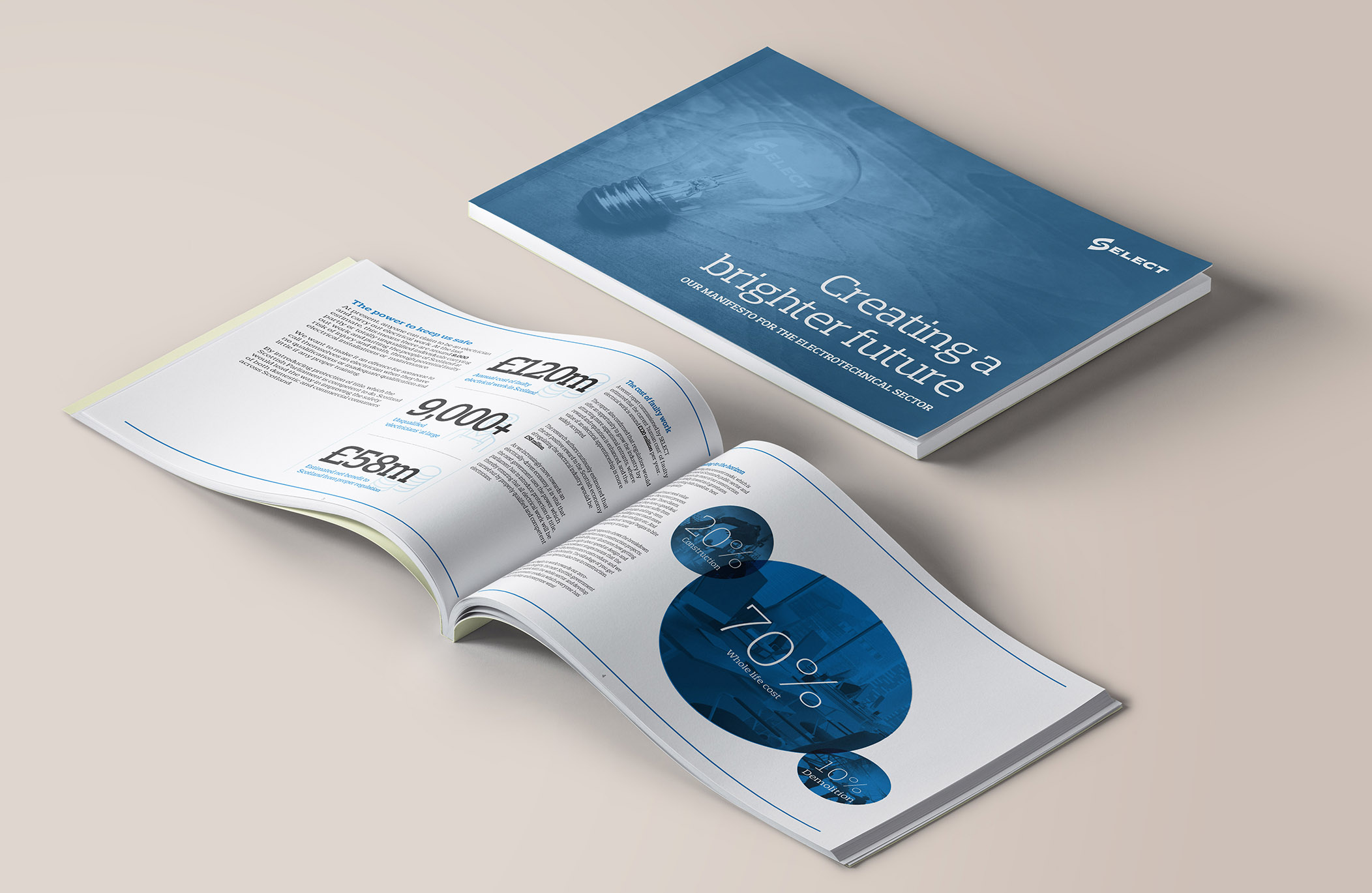
As one of the most influential voices in the Scottish construction industry, SELECT has issued its own manifesto ahead of the Scottish Parliament elections, in which it makes a clarion call for a brighter, more efficient and more sustainable future for the sector. Entitled Creating a Brighter Future, the manifesto has been issued by Scotland’s largest construction trade association, which represents more than 1,250 businesses across the electrotechnical industry. Among its key declarations, SELECT is asking the next Parliament to introduce: Protection of title to stamp out unqualified electrical workers  Laws to make it illegal to carry out electrical work when unqualified  Procurement based on quality, not best bids  Timely payment and no retentions  Recognition of the sector’s role in delivering a sustainable future.  Among its focus on regulation and renewables, the manifesto also emphasises the vital role that electrical professionals will have in delivering the next Scottish government’s plans for reduced energy use, decarbonisation, climate change and other principal policy objectives. Alan Wilson, Managing Director of SELECT, says: “As our ‘wish list’ for the next Scottish government, this manifesto reflects real needs, not aspirations, when it comes to the future of our industry, our economy and our country. “Ongoing feedback shows that the sector wants, needs and demands the changes we are seeking, so we are merely reflecting the opinions of a significant workforce which contributes so much to Scotland’s economy.” He comments: “We have made great progress in the outgoing parliament on the issue of protection of title and professional recognition, and it is of the utmost importance that our regulation campaign comes to fruition in the next parliament.  “The pivotal role we will play in the roll-out of renewable energy must also be addressed, and our political representatives must recognise how vital it is not only to train and upskill the existing workforce but to make sure new entrants are similarly skilled. These skills will be crucial to the nation achieving its zero-carbon goals.” The manifesto – which will be distributed to candidates ahead of May’s Parliamentary elections – also points out that the existing procurement model used by most of Scotland’s public sector is fatally flawed, as it is skewed towards bids based on always accepting the lowest price rather than favouring a more balanced price and quality approach. Mr Wilson adds: “SELECT favours a whole-life cost bias to construction projects which places the emphasis on getting decisions right at the design and procurement stage to dramatically reduce whole-life performance costs, benefitting everyone. “Tied into a better procurement model, it’s crucial that all businesses are paid in full and on time and we must end the iniquitous practice of retentions, which divert monies away from improvements to the industry.”

Get inspired by @gira.uk Instagram
Gira brings a new level of interior design to Instagram’s thriving online community with the launch of @gira.uk. As the importance of social media grows and platforms like Instagram attract over 1 billion users a month, Gira UK is pleased to launch its brand new Instagram Profile this March, with a focus on inspiring the modern homeowner with the latest smart home solutions and system technology, all characterised by outstanding design quality and technical innovation. Mark Booth, Managing Director at Gira UK says “Following the continued market acceptance from our UK customers and growing network of Gira partners nationwide, we are now in a position to engage the end user and extend the benefits of why a connected home can be flexible, convenient and design oriented. We are more than switches, ‘We are Gira’ and we want to be able to share a more detailed picture with every one of our customers and continue to broaden our multi-layered approach to branding this year.” The company’s new Instagram Profile @gira.uk is now live and gives a detailed overview of the latest designs and innovations by Gira. Providing a unique insight into its range of products, showrooms, events, company news, project references and interior design trends, you can now experience, share and connect with Gira UK by simply following www.instagram.com/gira.uk/.

Carry on screening: EDA Training Awards go virtual
For the first time on screen, the EDA’s Annual Learner Achievement Awards trophies were presented to 10 outstanding individuals from wholesaler and manufacturer businesses recently. Around 70 guests – family members, friends, and business colleagues – joined the virtual ceremony alongside the Association’s Board of Management, celebrating outstanding performances in the Electrical Distributors’ Association’s Product Knowledge Modules or in an apprenticeship. “As President, this event is a high point in my year,” says CEF’s Chris Ashworth. “It is a pleasure to acknowledge the hard work and dedication that these people have invested in their careers and to share their achievements far and wide to encourage other talented individuals to look for careers in the UK’s electrotechnical sector. We need people like this in our businesses today. “It also proves that learning is lifelong: some of our winners are just starting out in their careers but we are also presenting an award to a Managing Director – Joanne Southgate, MDE Electrical Supplies in Suffolk.” Margaret Fitzsimons, EDA CEO, adds, “The EDA wasn’t going to let the pandemic stop us celebrating these fantastic achievements. Now in its seventh year, this is the first time (and hopefully the last) that we’ve held it virtually. We hope that next year we’ll be back at our usual location high above the London skyline at The Shard. Of course, this year’s winners will join us there next year alongside the 2022 winners, for a double celebration.” The Awards were sponsored by the EDA’s partner in the delivery of the apprenticeship service, EDA Apprenticeships Plus. EDA Learning Achievement Awards 2021 winners in alphabetical order by company: Olli Jeffs, Sales Assistant, CEF, Wellingborough, Northamptonshire: for outstanding performance in the EDA Product Knowledge Modules Megan Longden, Profit Centre Manager, Electric Center, Brighton, Sussex: for outstanding performance in the EDA Product Knowledge Modules Joanne Southgate, Managing Director, MDE Electrical Supplies, Ipswich, Suffolk: for outstanding performance in the EDA Product Knowledge Modules Molly Neary, Trade Counter and Admin Assistant, Medlock Electrical Distributors, Waltham Cross, Hertfordshire: for outstanding performance in an apprenticeship Dyllon Parsons, Sales Advisor, Power Wholesale Ltd, Netherfield, Nottinghamshire: for outstanding performance in the EDA Product Knowledge Modules William Burrows, Trade Counter Manager, Regent Electrical Distributors, Rochester, Kent: for outstanding performance in an apprenticeship Callum Partridge, Branch Assistant, Rexel UK Ltd, Braintree, Essex: for outstanding performance in an apprenticeship Lewis Welham, Warehouse Assistant, Stearn Electric Co Ltd, Leighton Buzzard: for outstanding performance in an apprenticeship Lauren Notton, Sales Office Apprentice, Termination Technology, Bristol: outstanding performance in the EDA Product Knowledge Modules James Gulliver, Trainee, Western Electrical, Exeter, Devon: for outstanding performance in an apprenticeship

Innovation lab enables digital solutions for smart buildings and micro grids
Priva has launched a new innovation lab to accelerate the development and deployment of technology and software solutions that enable better, healthier buildings and smarter approaches to energy use. From its base in De Lier, Holland, Priva Lab for Innovation (Lin) has been developed in response to the major energy challenges faced within the built environment supply chain. Together, building and construction are responsible for 39% of all carbon emissions in the world, with operational emissions (from energy used to heat, cool and light buildings) accounting for 28%. The Lab’s growing suite of smart building technologies will also help organisations to participate in the ‘energy transition’. This will make it easier for carbon-conscious businesses and the public sector to take advantage of smarter, more flexible approaches to energy consumption. It will also enable more efficient balancing of demand from green, renewable sources. Technology suite The Lin Lab capitalises on sophisticated digital twin technology and artificial intelligence (AI) to bring new, data driven solutions to the smart buildings / smart energy market. The launch portfolio is focused on two technologies: ecoBuilding – an already proven technology which is an intelligent layer of cloud-based software that sits on top of an existing building management system. Already deployed in sites across Europe, ecoBuilding uses digital twin and AI technology to learns how to balance indoor climate control against external factors such as fluctuations in energy tariffs and make continuous operational improvements to a buildings. ecoGrid - a cloud-based smart microgrid solution which enables fully-automated balancing of energy consumption, demand and storage by optimising the flows between the connected energy elements. It makes buildings with renewable energy sources even more self-sufficient and ready to connect to energy grids at a local level. Commenting on the launch of Priva’s Lab for Innovation Peter Vandendriessche, VP Strategy & Commerce, says: “We are extremely excited to share Priva’s Lab for Innovation with the world. We are a business that never stands still; we always look to the future. The Lin Lab will act as an important accelerator for cutting-edge technologies that will re-shape the way our customers and partners use – and resource – energy. In doing so, it will be possible to embrace the smart energy revolution and accelerate the journey to Net Zero emissions. We very much look forward to inviting you all to the Lab as soon as we are able.” Online profile To support the launch of Priva’s Lab for Innovation a comprehensive website has been developed which includes case studies and references of ecoGrid and ecoBuilding as well as regularly updated content on topics around energy in the built environment.